A British Special Forces base in northern Iraq repelled a record 14 Iranian suicide drones last night in a dramatic escalation of the conflict.
Despite US President Donald Trump offering an olive branch to the Tehran regime, its military launched its biggest attack yet on UK troops.
Confirmation has been sought from the Ministry of Defence regarding whether any British troops were wounded as the deadly drones rained down.
The Special Forces base in Erbil, in the Kurdish-controlled sector of Northern Iraq, has been singled out by Iran over recent weeks.
More than 50 Iranian drones have been aimed towards the multinational camp, though the figure could be much higher.
Following previous attacks Italian troops withdrew from the base.
Earlier this month an Iranian attack killed a French soldier who was conducting a counterterrorism training exercise, which French president Emmanuel Macron condemned as ‘unacceptable’.
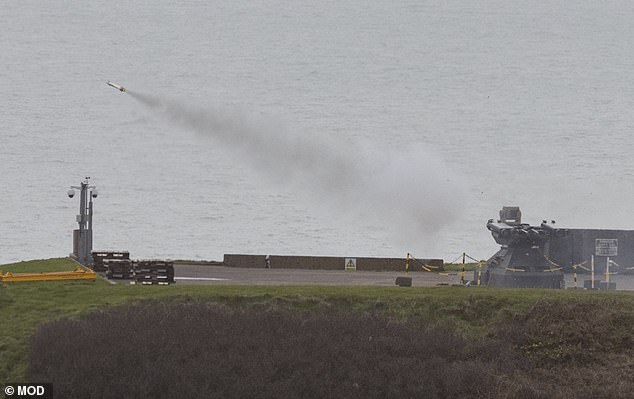
Rapid Sentry (pictured) is a vehicle-mounted system that fires Lightweight Multirole Missiles
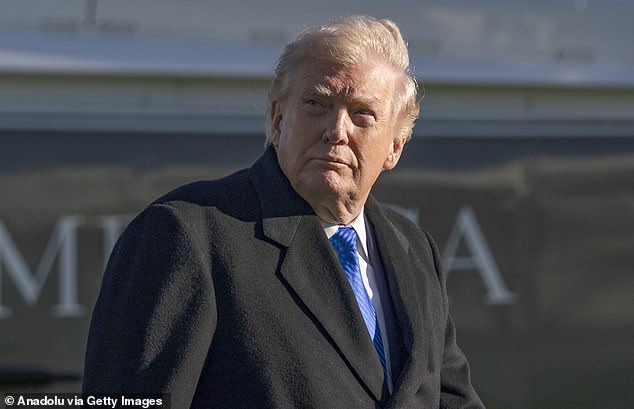
Donald Trump walks toward the White House upon his arrival in Washington, DC yesterday
The same attack convinced the Italians to withdraw its ground forces, despite no Italians being injured. Some 102 Italian troops returned home while 40 relocated to Jordan.
The move was another blow to President Trump considering his relationship with the country’s right-wing prime minister Giorgia Meloni.
The 14 drones were shot out of the night sky by troops from the elite Royal Air Force Regiment who are specialists in protecting bases using ground to air rocket systems. Rapid Sentry is a vehicle-mounted system that fires Lightweight Multirole Missiles.
The first line of defence is the Orcus uncrewed drones that patrols the airspace around Erbil. Another RAF Regiment system Ninja is able to intercept drones by hacking into guidance systems.
The RAF Regiment practiced intercepting enemy drones on exercise in Wales before deploying to northern Iraq. Drills at Air Defence Range Manorbier in Pembrokeshire have proved effective in the warzone.
In a post on Facebook the RAF Regiment said its specialists were playing a vital role in defensive operations in the Middle East.
It said: ‘They are actively detecting, tracking and neutralising airborne threats, working closely with coalition partners to ensure the safety of personnel and the continuity of operations.
‘Through precision, professionalism and coordination, they remain committed to protecting people and critical infrastructure in a complex and evolving environment.’
More than 500 additional UK troops from across the services have deployed to the Middle East and the Eastern Mediterranean to combat the Iranian threat.
But in a hugely controversial move a Royal Navy warship HMS Dragon only reached Cypriot waters earlier this week. The destroyer, that would have provided a reassuring presence in the conflict zone – and may have prevented an Iranian attack on RAF Akrotiri, the UK base on the island – spent weeks in docks before being declared fit to sail.
Today, a senior Western official said: ‘The Iranians retain the ability to fire ballistics. While the US is focusing on destroying the industrial base. The attack on Erbil came after a reduction in tempo at the time of Eid [the end of Ramadan].’
It remained uncertain today whether the Iranian state or Iranian-backed proxy groups were behind the attack.
The Tehran-sponsored Ashab Al-Kahf group has pledged to rid Iraq and the region of Western influences.
Meanwhile officials have confirmed that while the UK and France and leading international efforts to draw together a naval coalition to secure the Strait of Hormuz, no Royal Navy warships will deploy to the crucial waterway before the warring parties have agreed a ceasefire.
The UK is planning to send a combination of crewed ships, and autonomous sea drones designed to identify and destroy mines but only once the United States and Israel have reached an agreement with Iran.
Iran has mined the Strait though it is unclear how many explosives devices it has positioned. There is a clear path through the Strait as Iran has been permitted small numbers of Indian, Chinese, Pakistani and Turkish cargo cessels to pass through.
The cash-strapped Royal Navy is looking into leasing commercial ships to operate alongside the uncrewed systems.
Unmanned sea drones deploy from so called ‘mother ships’ to search for mines. A Royal Fleet Auxilliary vessel Lyme Bay, currently patrolling the Mediterranean, could fulfil that role.
The multinational coalition to free the Strait of Hormuz, where Iran is effectively holding the international community to ransom, began with six nations.
Officials declared today the coalition has expanded to 30 states. Military chiefs are expected to meet in either London or Portsmouth later this week to finalise their plans.
The move is being driven by the Chief of the Defence Staff Air Marshal Richard Knighton. He faced questions earlier in the campaign over the UK’s failure to deploy Royal Navy warships.