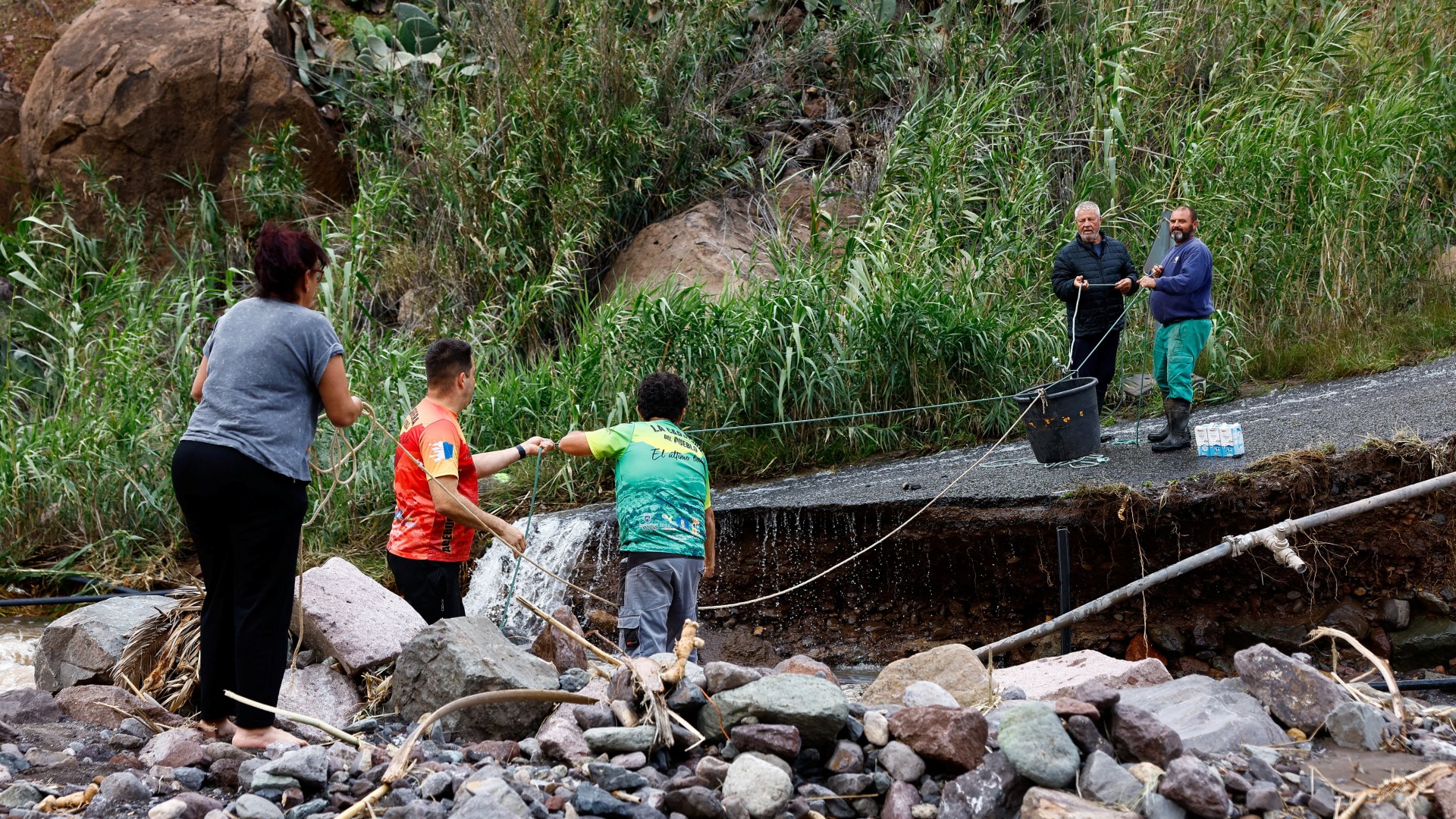
AN URGENT threat to life alert has been issued across the Canary Islands as Storm Therese batters the Brit holiday hot spot.
The brutal storm has caused widespread devastation to the Spanish archipelago, leaving dams bursting, roads collapsing and residents stranded.
British tourists have been caught in the chaos just days before the Easter holidays.
Landslides have disrupted transport links, isolated communities and stranded residents.
An orange alert has been issued by AEMET, warning of a significant meteorological risk from unusual weather conditions with dangerous potential.
At least 110 calls for help were recorded in just two hours Tuesday morning between 6am and 8am.
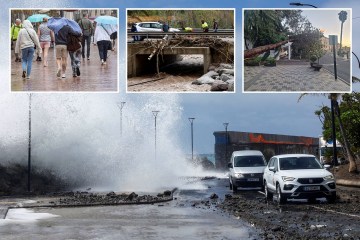
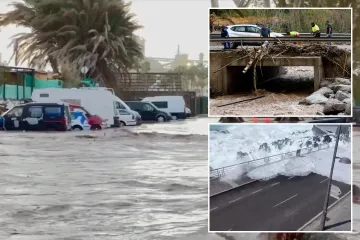
Emergency workers helped pump several homes, garages and basements.
Pinto 1 and 2 reservoirs are nearing capacity due to the heavy rains brought by Storm Therese and will begin spilling water, El Diario reported.
The Arucas City Council said: “The public is urged to exercise extreme caution, as are residents of towns and villages along the ravines, due to the anticipated increase in water flow.”
The Military Emergency Unit has been called in to help manage the emergency response.
Schools in Firgas and Arucas have closed their doors this morning over safety concerns of students.
The storm has sparked mass evacuations with more than 3,000 people rescued or left stranded across Gran Canaria alone.
It followed a night of relentless rain sent water levels surging and cut off entire communities.
Holidaymakers have been told to stay inside as hotels are battered, roads collapse and reservoirs teeter on the brink of overflowing.
Local media has dubbed it “the storm of the decade”.
The worst-hit areas include the Arguineguín ravine, where rising floodwater has left dozens isolated and triggered emergency measures.
In Agaete, authorities ordered the evacuation of neighbourhoods including Los Pérez and El Hornillo amid fears a nearby reservoir could burst.
Evacuees have been moved to a temporary shelter at a secondary school, while emergency services warn the situation could deteriorate further.
Across the island, rivers have burst through ravines, with at least 10 reservoirs releasing water and fears growing that the Las Niñas dam could overflow next.
Intense downpours have caused havoc in key tourist areas including San Bartolomé de Tirajana, Santa Lucía, Mogán and Telde.
A main road was shut after the Arguineguín ravine burst its banks, while landslides have blocked more than ten roads – leaving some areas almost completely inaccessible.
In mountainous regions like La Culata in Tejeda, residents have been forced to use alternative routes as access remains severely restricted.
Coastal areas have also taken a hammering, with properties damaged overnight in places such as Pozo Izquierdo.
Travel plans for Brits have already been hit, with flights from London, Manchester and Newcastle among those diverted as storms swept across the islands.
Lanzarote was worst affected, with one cancellation and eight diversions, while flights were rerouted to Gran Canaria and Fuerteventura from cities including Hamburg, Frankfurt and Rotterdam.
Air travel is now slowly returning to normal, particularly in La Palma, though delays remain.
In Tenerife, winds reached up to 73mph overnight in Izaña, knocking out power and street lighting in parts of the southwest and northwest.
Around 30 people were initially affected by outages, with only a handful still without electricity.
Torrential rain has battered areas including Cruz de Tea, Vilaflor, Trevejos and Santiago del Teide, while coastal hotspots like El Médano, El Puertito de Adeje and Guía de Isora have been lashed by dangerous waves.
One hotel roof reportedly collapsed under the extreme weather, as guests were warned to stay indoors.
Across the islands, dramatic rescues are underway.
On La Gomera, 15 residents – including children – were cut off after a retaining wall collapsed, leaving a huge crater in the road in Vallehermoso.
Emergency teams have offered evacuations, with three people set to be airlifted out, while others have chosen to remain in their homes.
In Tenerife, around 80 people – many of them homeless – are being housed in emergency shelters in Adeje, Puerto de la Cruz and Santa Cruz.
Meanwhile, in Gran Canaria, five residents have been evacuated near the mouth of the Agaete ravine, while another 60 remain isolated in Arguineguín.
Storm Therese is refusing to budge, with yellow weather alerts in place across the islands – and orange warnings issued for mountainous areas as conditions worsen.
Forecasters warn of intense rain of up to 30 litres per square metre, along with thunderstorms and hail.
Authorities have urged Brits and locals alike to avoid travel, stay away from ravines and ignore closed roads amid the risk of further landslides.
Teide National Park remains shut due to ice, with multiple hiking trails, forest tracks and high-altitude routes also closed.
Meteorologists say the storm should begin to ease between Wednesday and Thursday as trade winds return – but warn the forecast could still change.