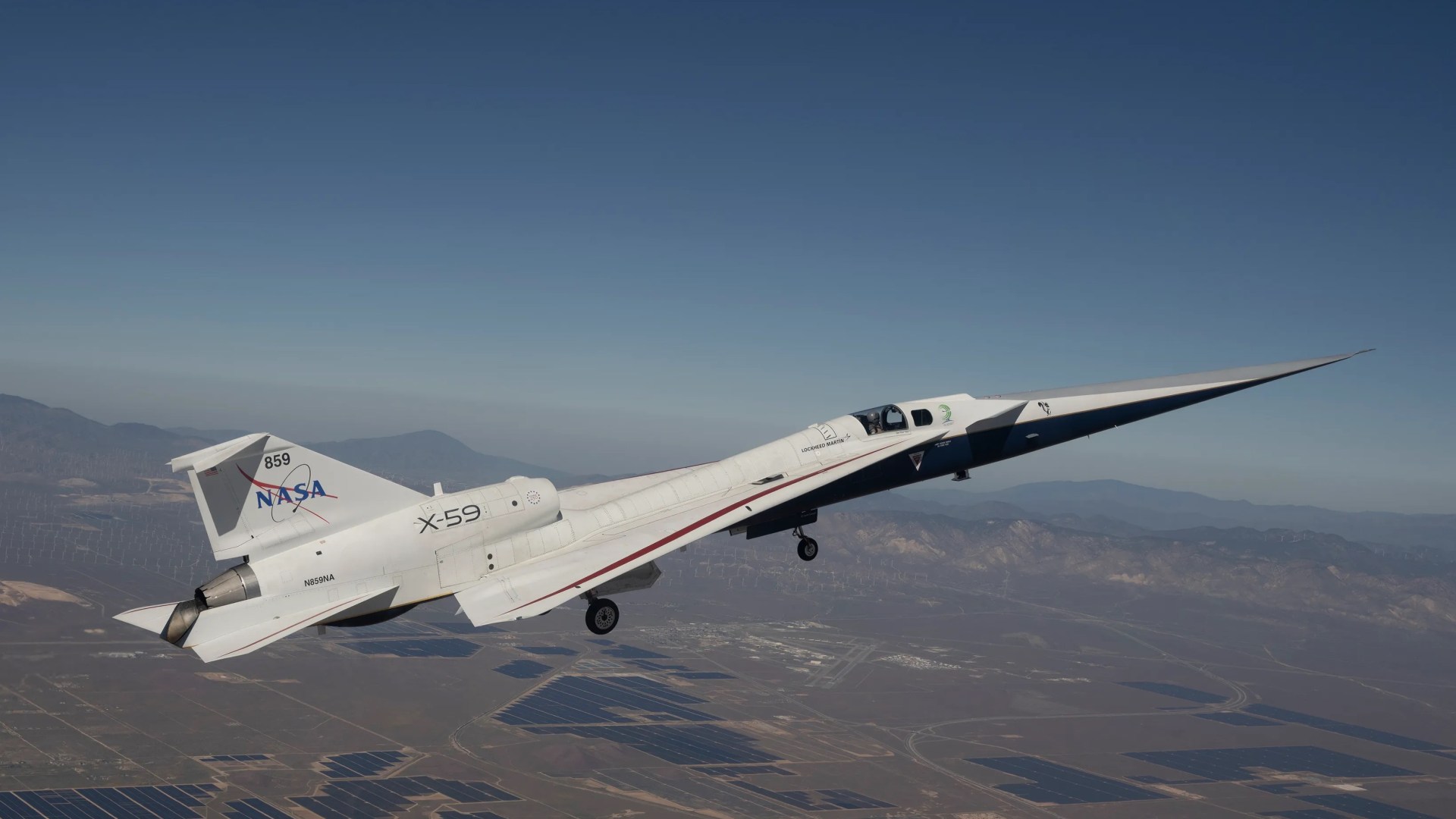
NASA’S attempts to bring back Concorde-style supersonic flights have suffered a setback after its latest major test.
The space agency is one of several organisations vying to become the so-called “Son of Concorde”, 23 years after the iconic speedy service ended.
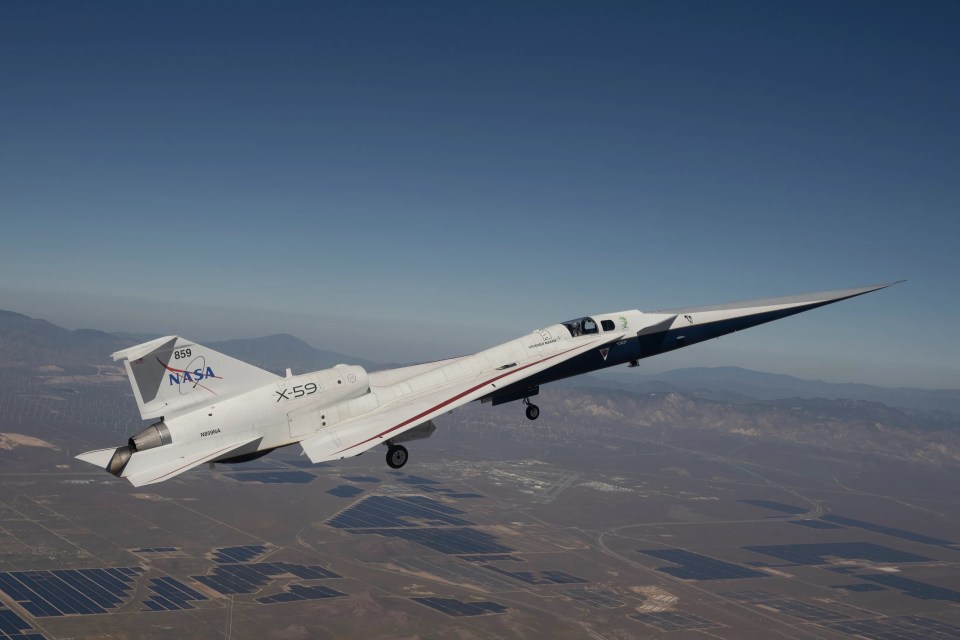
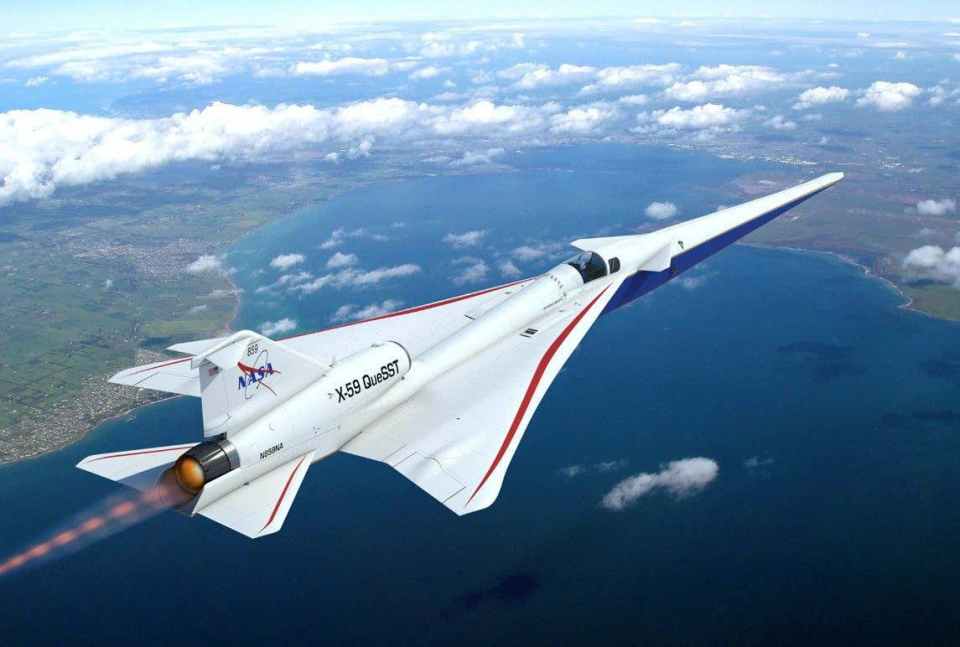
Nasa has only just tested its second flight of the experimental X-59 aircraft.
But the key moment only lasted nine minutes in the air before pilot Jim “Clue” Less was forced to abort early due to a technical issue.
It was supposed to last about an hour.
The flight took off at 10.54am local time on Friday at the Edwards Air Force Base in California.

Several minutes in a vehicle system warning flashed up in the aircraft’s cockpit prompting the pilot to land safely at 11.03am.
“I certainly hoped to have more to talk about than nine minutes of flight,” Less said.
“Although I had not intended to have to land quite as urgently for my first landing, the plane performed beautifully.”
Bosses have insisted that they were still able to collect information that will help them on future tests.
But they haven’t revealed what caused the technical glitch.
“Despite the early landing, this is a good day for the team,” said Cathy Bahm, project manager for NASA’s Low-Boom Flight Demonstrator.
Sign up for The Sun Tech newsletter for gadgets, games & more

Hello! I’m Sean Keach, The Sun’s Head of Technology and Science
I’ve been writing about gadgets, games and the future of technology for more than a decade.
During that time I’ve penned thousands of articles, filmed hundreds of videos, talked tech on TV and radio, and travelled around the world to bring you the latest on Apple, Meta, Google, Amazon, Netflix and more.
And I’ve got a weekly newsletter called The Sun Tech that you can read for free every Thursday.
I bring you the latest from the world of tech, including behind-the-scenes action, exclusive content, expert analysis, and plenty of help advice – so please follow along!
“We collected more data, and the pilot landed safely.
“We’re looking forward to getting back to flight as soon as possible.”
The X-59 jet hasn’t even flown at supersonic speeds yet.
Nasa’s overall Quesst mission with Lockheed Martin is already behind schedule, initially due to Covid restrictions that prevented the first test flight from going ahead in 2021.
Their maiden flight finally blasted off in October last year.
It’s all part of a wider plan to bring back supersonic flights that are faster than the speed of sound while generating only a quiet thump instead of a loud sonic boom.
In theory, supersonic flights could eventually cut a trip between London and New York City to only 3.5 hours.
WHY DID CONCORDE STOP?
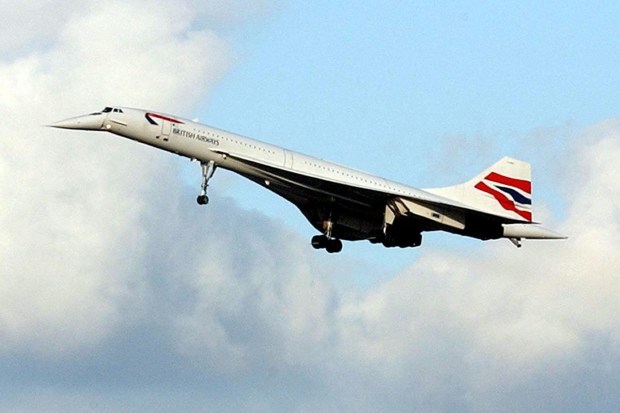
THE CONCORDE was the first supersonic passenger-carrying luxury airplane.
Two decades ago the Concorde took its first-ever flight.
It became supersonic in 1969, flying passengers from New York to London in less than three hours.
It was the only aircraft in the British Airways fleet that required a flight engineer.
Concorde needed unsustainable amounts of fuel and created very loud sonic booms.
Then, in July 2000, a horror accident saw 113 people killed when an Air France Concorde ran over a small piece of metal while taking off from Charles de Gaulle Airport.
It caused the tyre to explode and the engine to ignite.
A year after the horrific crash, 9/11 majorly affected passenger numbers.
Ultimately a combination of these events led to its downfall.
By 2003, Air France and British Airways announced they would be retiring their fleet of Concorde planes.