There are disturbing differences between how British Muslims and non-Muslims see the world
No one can definitively predict the outcome of the conflict between the United States, Israel and Iran. But what does the man or woman on the Clapham omnibus think about it?
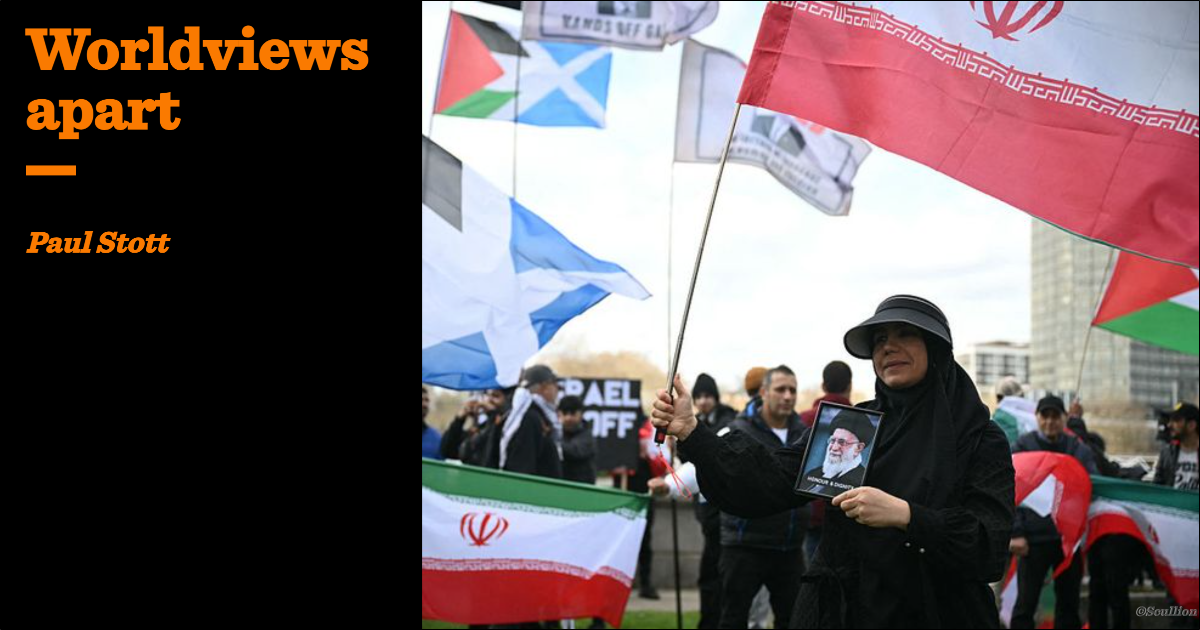
The first attempt to assess the impact on our domestic politics came this week in a Policy Exchange report entitled “Worlds Apart: British Muslim Attitudes on the Iran Conflict.” Written by my inestimable colleague Rakib Ehsan, with polling from JL Partners, findings suggest that British Muslims hold very different views on foreign policy to many of their fellow citizens. British Muslims tended to be more critical of the United States and Israel and expressed more favourable or less critical attitudes towards three countries successive British governments have identified as either hostile states, or at the very least problematic – the Islamic Republic of Iran, Russia and China.
For instance, many British Muslims expressed highly critical views of the US-Israeli military action in Iran. They were more likely than the general population to cite gaining control of oil supplies as a motive behind the US-Israel military action (40 per cent/15 per cent) and more likely to consider US-Israel airstrikes as “definitively wrong” (50 per cent/17 per cent).
Of course, everyone has the right to oppose a war that is at best hazardous. But when we look at who Muslims and non-Muslims feel positively towards, a concerning trend develops. The Iranian Government has had negative press in the UK for decades — the chargesheet including the Rushdie fatwa, evidence it sponsors terrorism across the Middle East via groups such as Hezbollah and Hamas, through to its intimidation of the Iranian diaspora in this country. When this is considered, it is unsurprising only 8 per cent of people in the UK view Iran favourably. However, this rises to nearly two in five people — 39 per cent — among British Muslims.
While the Iranian government has long strived to create an infrastructure of sympathetic mosques and charities in this country, it is unlikely that sympathy for Shia Iran can be explained simply by sectarian adherence. The number of British Muslims who are Shia is estimated at only 7-8 per cent. Remarkably British Muslims view Iran more favourably (+22) than they view Saudi Arabia (+11), even though the latter is the custodian of the two holiest places in Islam — Mecca and Medina.
While the reputation of Saudi regime is blackened by the gruesome 2018 murder of Jamal Khashoggi, here it should be noted Iran is a nation which earlier this year massacred thousands of its own citizens, and in 2021-22 crushed an earlier protest movement largely led by women opposed to the compulsory wearing of the hijab.
Significant differences in attitudes were also found towards the two powers of Russia and China. To the question “Do you have a favourable view of Russia” — the general public gave a net favourability rating (favourable minus unfavourable) of -52, suggesting that should Vladimir Putin board a Clapham omnibus this evening he is unlikely to receive a warm reception.
For British Muslims the figure was +2, a completely different response. Whether this is rooted in Putin’s generally positive relationship with Muslim nations in recent years (something not always present in the early years of his rule), sympathy for his social conservatism or opposition to a US led world order, is an area academics may find worthy of further study.
On China, British Muslims and non-Muslims are again as different as chalk and cheese. Net favourability rating for China was -22 among the general population and +22 among British Muslims. This is all the more remarkable given that China is widely accused of persecuting Uyghur Muslims in its Xinjiang province.
How to explain all this? Our survey found differences in the news sources consumed and perhaps most importantly a pronounced rejection of the United States and Israel, indicative of a broad distrust of Western geopolitical assumptions.
There was some good news — both Muslims and non-Muslims have similar views on how they perceive Britain (+25 for Muslims, +33 for the general public) but that figure appears an outlier. Overall, these findings present sober reading for politicians. While it seems Muslims and non-Muslims are content to board the Clapham Omnibus together, where it goes, and who it travels with, appears a much more complicated question.