The Hezbollah special forces fighter could be any Lebanese man in Beirut’s southern suburbs.
Stocky and with a reddish beard and short hair, he is clad in civilian clothes to avoid detection from the Israeli drones that fly constantly overhead.
But this Hezbollah veteran is part of a leaner and more potent Iran-backed force that he says is committed to a long-awaited “final battle” against Israel – opening a second front as the United States and Israel attack Hezbollah’s patron, Iran.
Why We Wrote This
In Lebanon, Iran ally Hezbollah has plunged into a battle with Israel that its rank and file has embraced as existential. Yet the regional conflict involves far larger powers with much higher stakes, and how Hezbollah emerges and what it achieves might be out of its hands.
Lebanon’s Shiite “Party of God” remains the most powerful of Iran’s regional allies, despite its drubbing at the hands of Israel in late 2024, and even though it withdrew its forces from southern Lebanon, as required by a November 2024 ceasefire agreement.
But instead of disarming, as required, it reformed, rebuilt, and rearmed, despite 15 months of near-daily Israeli airstrikes aimed at preventing exactly that.
“Hezbollah is definitely back on its feet,” says the fighter, who gives the name Ahmad.
“We were definitely preparing and restoring our capabilities” since the 2024 ceasefire, he says. “We knew that the Israelis are not done with [Hezbollah], so we played the ‘strategic patience’ card, and it paid off.”
Indeed, two days after the U.S. and Israel launched a Feb. 28 surprise attack against Iran – assassinating supreme leader Ayatollah Ali Khamenei, who was also Hezbollah’s spiritual guide, in the first wave of strikes – Hezbollah joined the war.

Yet, after its plunge into a battle that its rank and file has eagerly embraced as existential, the organization finds itself embroiled in a conflict in which far larger powers are bent on a high-stakes bid to remake the Middle East.
How Hezbollah emerges from the battle almost certainly depends in large part on how Iran fares in the fight, analysts say. While the militia is likely to survive, they add, it can exact only limited harm upon arch-foe Israel, achieved at very high cost to itself and Lebanon.
Since joining the war, Hezbollah has kept up missile and drone launches into northern Israel, triggering Israeli airstrikes on militia strongholds, and in central Beirut. Israel’s response has killed more than 1,000 Lebanese – a figure that doesn’t differentiate between civilians and fighters – and displaced some 1 million people, about one-fifth of the country’s population.
Israel has also ordered the evacuation of southern Lebanon, south of the Litani River, but Hezbollah units have emerged there, reportedly stalling Israeli ground advances with fierce fighting in three locations.
An unpopular war
“We do see this as the ‘final war,’ because the Israelis want to finish Hezbollah,” says Ahmad, in Beirut. As he speaks, the rattle of AK-47 assault-rifle fire signals an Israeli evacuation order for a nearby building, before striking it.
“Our families and friends have a strong faith in us, but I can tell you one thing: They were upset with us, because we waited so long to retaliate,” says the fighter.
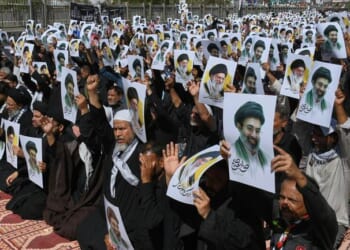
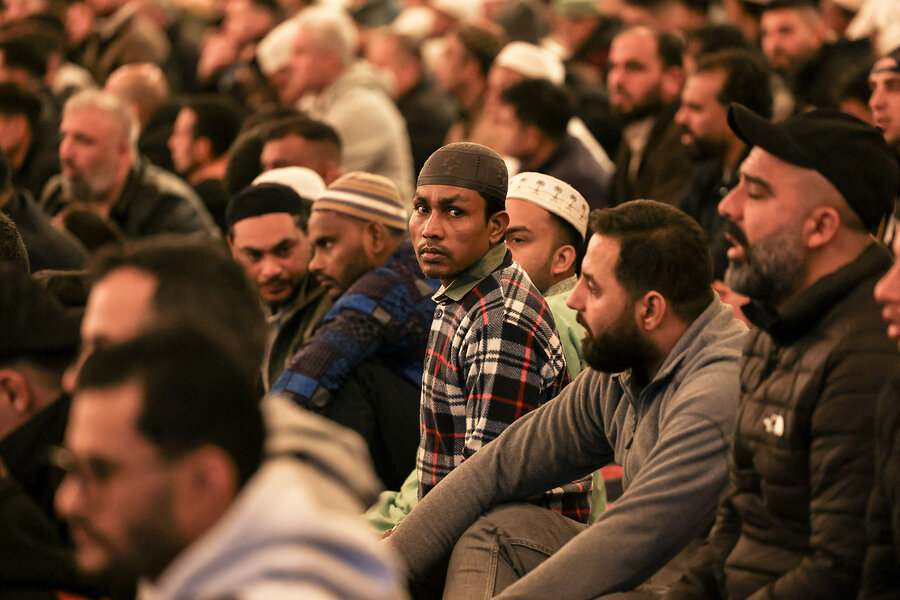
Nevertheless, the resumption of war in Lebanon is widely unpopular – even among many of Hezbollah’s Shiite Muslim supporters – because of the costly scale of destruction wrought by Israel.

It is a fight that many Lebanese blame on Hezbollah, yet it is a fight that analysts say might well have been ordered by Iran, bypassing Hezbollah’s more cautious political leadership.
The Lebanese government has tasked the Lebanese army with disarming the militia. The army declared the region south of the Litani River free of Hezbollah last November.
Israeli Prime Minister Benjamin Netanyahu said Thursday that Israel was “defeating” Hezbollah. “We’re not talking about the same Hezbollah anymore,” he said, noting an arsenal of 150,000 rockets and missiles before Israel’s 2024 offensive, “and terrorist infrastructure right next to our border, along our fence and underground, ready to invade.”
“We pushed them back. We destroyed the bulk of their missiles in six hours. We eliminated [former Hezbollah chief Hassan] Nasrallah,” he said of 2024. “Obviously, our No. 1 effort is geared toward Iran. If the regime goes, you know that Hezbollah goes.”
Rebuilding efforts
Days before Mr. Netanyahu’s comments, Hezbollah Secretary-General Naim Qassem promised “victory,” saying in a statement read on Hezbollah’s al-Manar channel that “the final word will be on the ground.”
He praised Hezbollah’s “level of preparedness,” and said, “history will record that you resisted the enemy under the worst conditions.”
Indeed, Hezbollah’s rebuilding and rearmament efforts over the past year have been effective, though only up to a point, says Nicholas Blanford, a Beirut-based expert for the Atlantic Council.
“The Israelis seem surprised that Hezbollah still has these capabilities to fight back, [but] it was clear that Hezbollah still retains some powerful military strength, in terms of remaining rockets and precision-guided missiles that they’ve got stashed away,” he says.
“The fighting force itself is highly motivated” and was “delighted” to get orders to fight, after absorbing 15 months of Israeli strikes, says Mr. Blanford, author of “Warriors of God: Inside Hezbollah’s Thirty-Year Struggle Against Israel.”

“They’ve thrown themselves into what they call the ‘Last Battle,’” says Mr. Blanford. “They are not going to defeat Israel. They can inflict damage and harm on Israel, but I think this is being led by the Iranians. If the Iranians are able to get something out of this, even at the expense of their Lebanese ally, then so be it.”
Political-military divide
Iran appears to have bypassed Hezbollah’s political leadership, including Mr. Qassem, and has gone straight to commanders to open the second front, says Mr. Blanford.
“I think the political leadership didn’t want to get into this fight, because they could see that it was potentially existential,” he says. In the first week of battle, Hezbollah’s military leaders delivered an open letter to fighters, extolling the virtues of jihad and martyrdom.
“Hezbollah will definitely be weakened, because they are being degraded every day – even though they are hitting the Israelis – and they are expending ordnance that I don’t think they can replenish,” says Mr. Blanford. “Then you may come to a crunch moment, where the Hezbollah as we know it may change [and] can no longer play the same deterrence role on behalf of the Iranians as before. … That’s why they see this as the last fight.”
The previous climactic battle between Hezbollah and Israel took place in 2006, when Hezbollah fought Israel to a standstill over 33 days.
When Iran-backed Hamas in Gaza launched a cross-border attack against Israel in October 2023, Hezbollah joined in solidarity. Tit-for-tat exchanges escalated in 2024 into a full Israeli offensive. Now, the Iran war is transforming the Middle East even further, with previous calculations changing.
“Hezbollah is convinced that if it loses, it will have to disappear – not only as a military force but even as a political entity,” notes an analysis in Beirut-based news outlet L’Orient Today. “Therefore, what is at stake today is its very existence, which is why it is determined to commit all its resources to the fight.”

Scott Peterson/Getty Images/The Christian Science Monitor
What does Israel want?
Israel, for its part, also wants to decisively end the threat along its northern border, and has raised the possibility of mobilizing up to 450,000 soldiers for a possible ground incursion. But top of mind for Israel will be lessons from the “security zone” it occupied for 18 years, until 2000, which provided limited security.
“It’s not absolutely clear what the Israelis want to do,” says Michael Young, the Beirut-based senior editor at the Carnegie Middle East Center. “If it’s a buffer zone, how do the Israelis manage it?”
“I don’t see any decisive outcomes here; I see more of a long stalemate,” says Mr. Young, author of “The Ghosts of Martyrs Square: An Eyewitness Account of Lebanon’s Life Struggle.”
“I don’t really think the Israelis are going to disarm Hezbollah in a systematic way,” he says. “If they don’t do that, and the Lebanese army can’t do that, we’re going to be in a prolonged situation, a deadlock with no easy solutions.”
That might also explain why there is still apparent debate in Israel about how much to intervene in Lebanon.
“We have to understand what this war is teaching us, across the board,” Mr. Young says. “That there are limits to what you can do with military power.”
A researcher in Beirut contributed to this report.