Designing a home from scratch is the ultimate ambition for many creatives, but coming up with one that floats is another challenge entirely.
For Rosanna Irwin, founder of off-grid cabin company Samsú, and her husband Killian, a film producer, the chance to design a bespoke houseboat – while travelling the length of London’s waterways and keeping costs down – proved irresistible.
‘It felt like we’d found a way to game the system,’ says Irwin, who took on the project after renovating another houseboat in Northeast London.
‘We’d previously rented a place in East London for £1,200 per month plus bills, but the property ladder was out of reach for us – prices start at around £550,000 for a new- build two-bed flat in the area – so we started looking for another way to live in the city.’
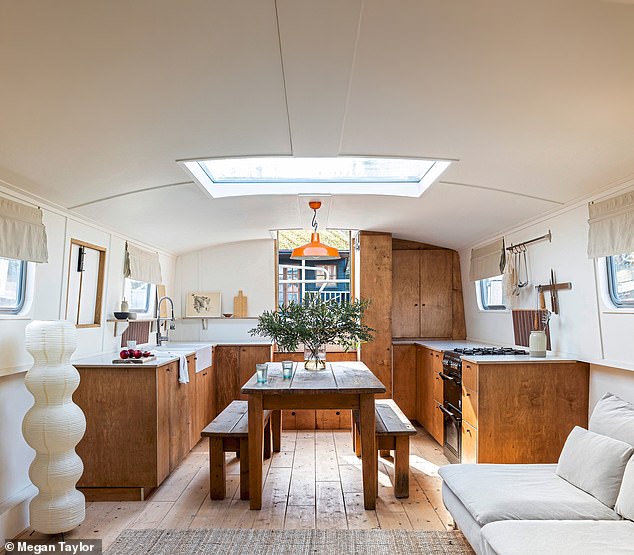
The boat’s main room features an open-plan kitchen and living room with a concealed snug at the other end that Rosanna opens up to enlarge the space. The kitchen is made from stained birch ply with cupboard handles from Etsy.
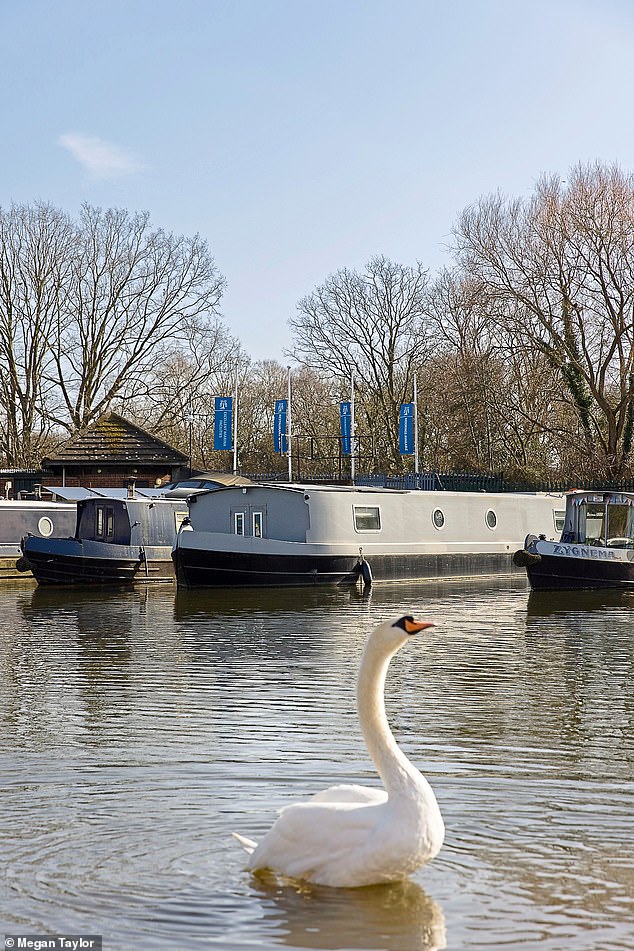
The boat exterior, with a view of swans from the windows
The couple made the move in 2022 after selling their previous boat on TikTok for £160,000 (after just one post). They designed a 70 sq m wide-beam canal boat that was built in Liverpool in five months, before being moved to Southall, West London.
‘The average size of a two-bed flat in West London ranges from 45 to 60 sq m,’ explains Irwin, ‘smaller than the boat and often more expensive, with average prices from £400,000, and higher monthly outgoings.’
By contrast, Irwin designed, built and decorated the boat (named Pomeroy) for under £200,000, including materials and manual labour.
‘It’s roughly the size of a two-bed flat,’ she says, ‘but has a small second bedroom to make space for a bigger bathroom.’
Irwin’s living costs are just £250 per month, including boat insurance, wood for the stove, diesel and gas. Thanks to the sale of the first boat and investing savings, Irwin is also in the rare position of being mortgage-free at the age of 30.
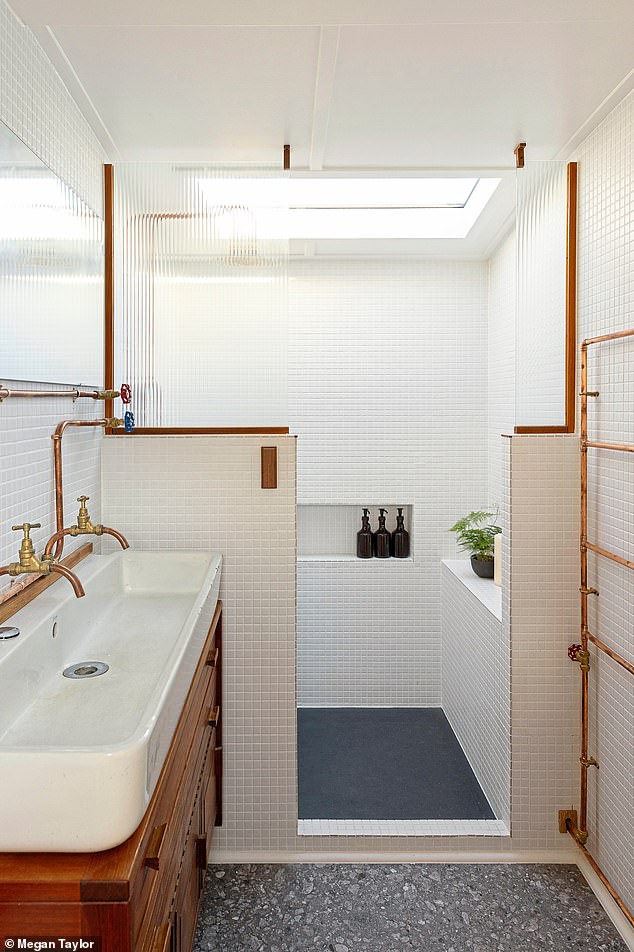
The bathroom is Rosanna’s favourite space on the boat. It features a secondhand butcher’s sink that Irwin found on Ebay, mosaic tiles from Victorian Plumbing and exposed copper pipes.
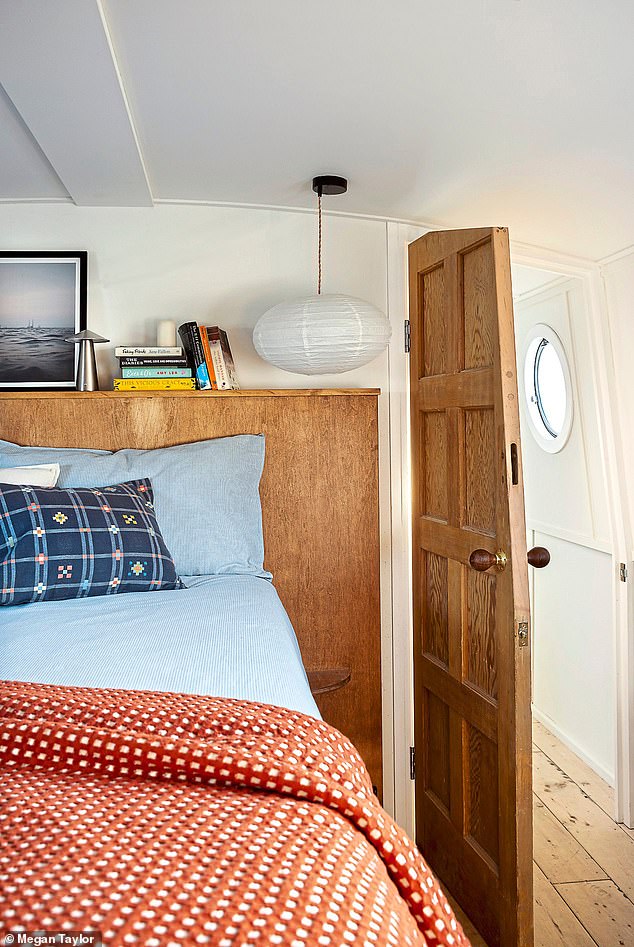
The main bedroom features a bespoke wooden headboard that Rosanna uses as a storage shelf
She has a continuous cruising licence, which costs £1,200 per year and exempts her from paying mooring fees and council tax.
The only rules are you need to move on every two weeks and cover a distance of around 15-20 miles over the year.
‘It allows access to all of the infrastructure – water points, pump-out stations, maintenance and bins,’ says Irwin. ‘But it stops people just whizzing back and forth to Little Venice.’
Still, boat life has enabled Irwin to live in some of London’s hot spots.
‘I can be in Richmond and two weeks later 14 miles east in Limehouse. It makes life an adventure,’ she says. Some of the areas would otherwise cost ten times the price of the boat to live in.
A permanent mooring in a prime canalside area such as Canary Wharf is more expensive at between £1,000 and £1,300 per month. This includes access to electricity, a shower block, laundry and waste disposal.
Inside, the boat is insulated and filled with light from the seven windows, a porthole, and two large skylights.
It also includes a full kitchen, double glazing, spacious shower and a king-size bed, as well as an electricity inverter that converts energy from the solar roof panels.
Reclaimed wooden floors feature throughout, a wood-burning stove anchors the living space, and bedroom two, a concealed snug currently used by Irwin as an office, is behind folding doors in the living room. There is even reliable WiFi.
‘I wanted it to look and feel like a house on the water,’ says Irwin. ‘That was my north star for any design decisions.’
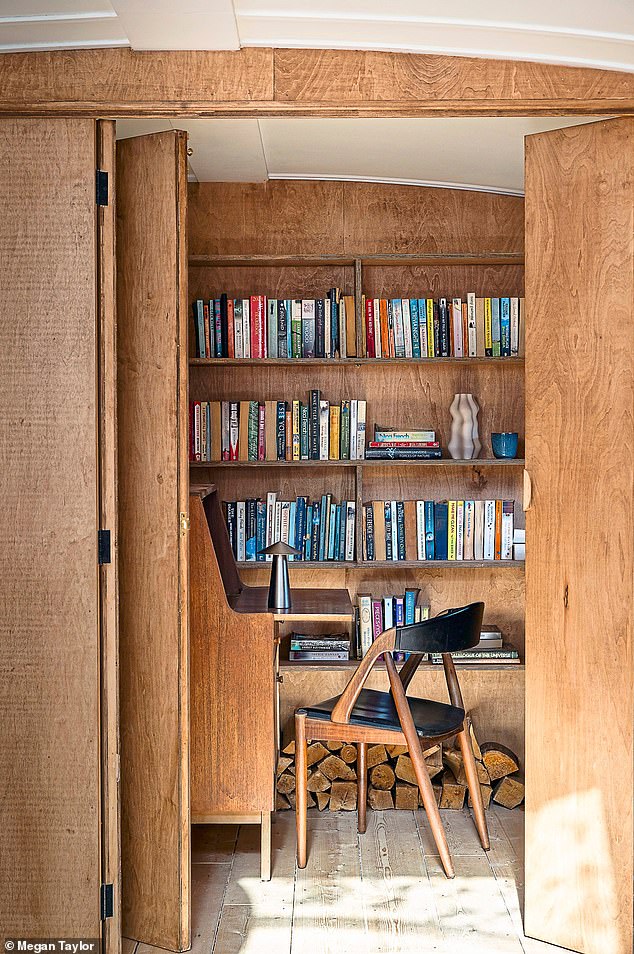
Folding doors conceal the snug, currently used as an office. ‘It could also be used as a second bedroom,’ says Rosanna
Furniture is all preloved. The sofa was £90 from Facebook Marketplace and reupholstered in linen.
‘I saw it on the Ikea website, then searched for it secondhand,’ she says.
The wood-burning stove was picked up on Ebay for £300, while the pine dining table and bench set also came from Facebook Marketplace for £350.
‘Good design has nothing to do with sky-high prices. It’s about considered choices,’ she says.
But Irwin knows life on the water isn’t for everyone. There is the loo situation, which is either a pump-out system, which requires taking the boat to a pump-out station to be cleared, or a separating toilet, like Irwin’s, which separates solids and liquids.
There are also frequent fuel top-ups and knowing your water supply will soon run out if you’re partial to long showers.
After four years on London’s waterways, Irwin is relocating to her native Ireland and is selling Pomeroy at auction this month for the base price of £195,000. But she is devoted to life afloat.
‘I’d never go back to a London house again,’ she says. ‘Boat life is the ultimate freedom. And you get to see wildlife from the kitchen window.’
For details on the 25 March auction, see @rosanna_irwin_ or london.townandcountry propertyauctions.co.uk