WARNING: GRAPHIC IMAGES
In the middle of the island, there are a couple of streams that wind their way down to Crater Bay. We’d always pause here because it was a good place to make sure the groups were close together after a bit of a walk, and also to discuss the taste of the water.
The two streams tasted very different, as they came from different sources – one very iron-y, one sharp and acidic. I was busy explaining to everyone that they could dip their finger in the water to taste it, and telling them why it tasted the way it did, when suddenly everyone started talking and pointing all at once.
I heard someone say, ‘Wow!’
And someone else exclaimed, ‘Look at that!’
Then my radio started screaming.
I had my back to the crater.
I turned around.
The moment I saw it, I knew what was happening. The island was erupting.
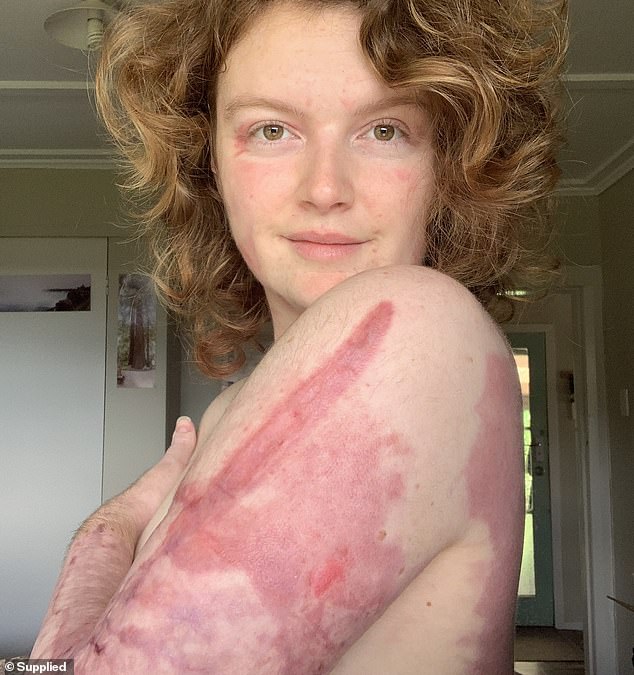
Kelsey Waghorn was a 25-year-old tour guide and one of 47 people on New Zealand’s White Island when it erupted on December 9, 2019. She has written a book about that day and its aftermath. She is pictured IN April 2020 showing some of her injuries
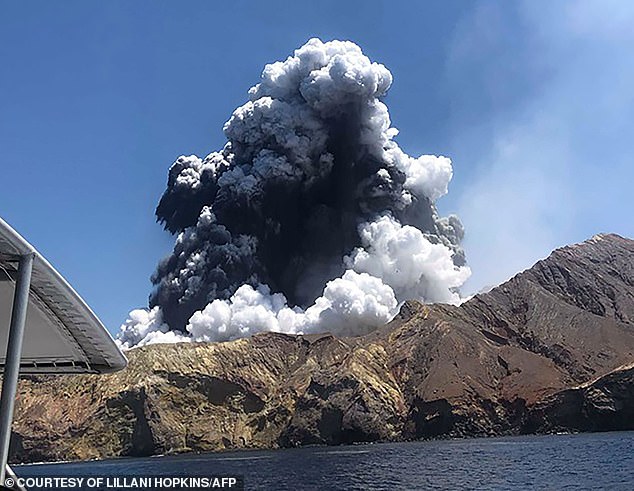
Twenty-two people died and 25 others were injured when White Island erupted (above). The bodies of two of the dead were never recovered
From about this point, for the next two minutes, time slowed down. What I thought happened in the space of about ten to twenty minutes was actually over in 120 seconds.
An enormous black-and-grey plume was rising rapidly above the island – already higher than the peak. It was beautiful, actually, set against the bright blue sky.
Beautiful and awful. And silent.
There was no sonic boom. No earth-rumbling heads-up. No hiss or roar or bang.
The only noise now was the radios blaring something along the lines of ‘ERUPTION! TAKE COVER!’ and me yelling, ‘Everyone, with me! Run!’
My reaction was immediate. My safety training kicked in, and I headed for shelter, running along the track about 10 metres, up through some mounds of boulders, and ducking around to the right to hide behind one.
The absurdity of the whole situation bubbled through like a tiny laugh in my head: ‘This feels just like our drills. This is insane.’
Most of the tour group came my way, while some went to the left and hid behind another mound of rocks, still within sight. We were 300 or 400 metres from the main crater.
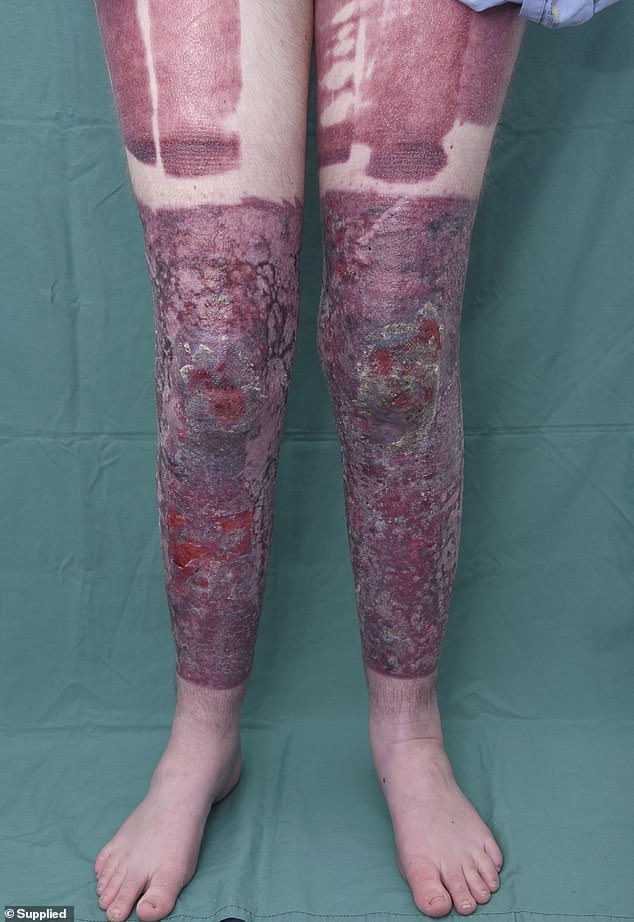
‘I heard someone say, “Wow!;” Waghorn writes of the eruption. ‘And someone else exclaimed, “Look at that!”‘ She is pictured on the day she was discharged from hospital as her legs were beginning to heal
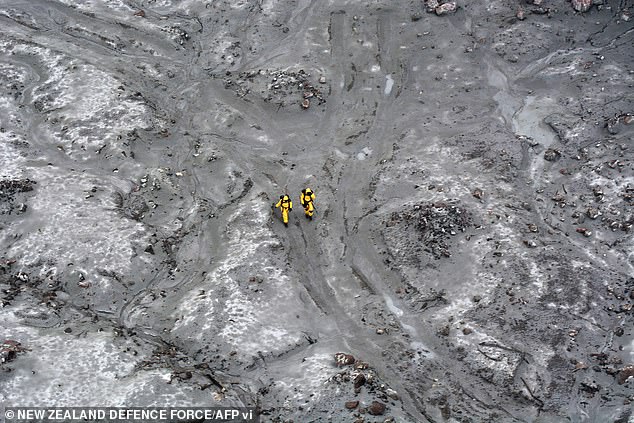
An aerial photograph shows two members of the New Zealand Defence Force taking part in a mission to recover bodies from White Island
My thinking was that, once we’d taken shelter, I’d assess the situation and decide our next move. That was the best-case scenario.
Worst-case scenario? A pyroclastic surge.
There are a few ways pyroclastic surges can happen, but one is when an eruption column collapses.
The column goes shooting up with a huge amount of force – a massive ejection of acid, gases, ash, rock, all that business. That’s what the black-and-grey cloud now looming above us and the island was made up of.
But all that heavy stuff just can’t keep going up, because gravity.
It begins to collapse, and a massive wave of hot gas and volcanic debris bursts out of the bottom of the column and rolls along the ground – it’s denser than air, which causes it to drop and flow rapidly along the ground.
If you’ve watched a video of this type of eruption, the pyroclastic surge is that huge wave that comes out at the bottom of the plume.
I knew enough about pyroclastic surges to know that, if you saw one coming for you, it was a white-flag moment. The stats were terrible: people usually don’t survive being engulfed by one.
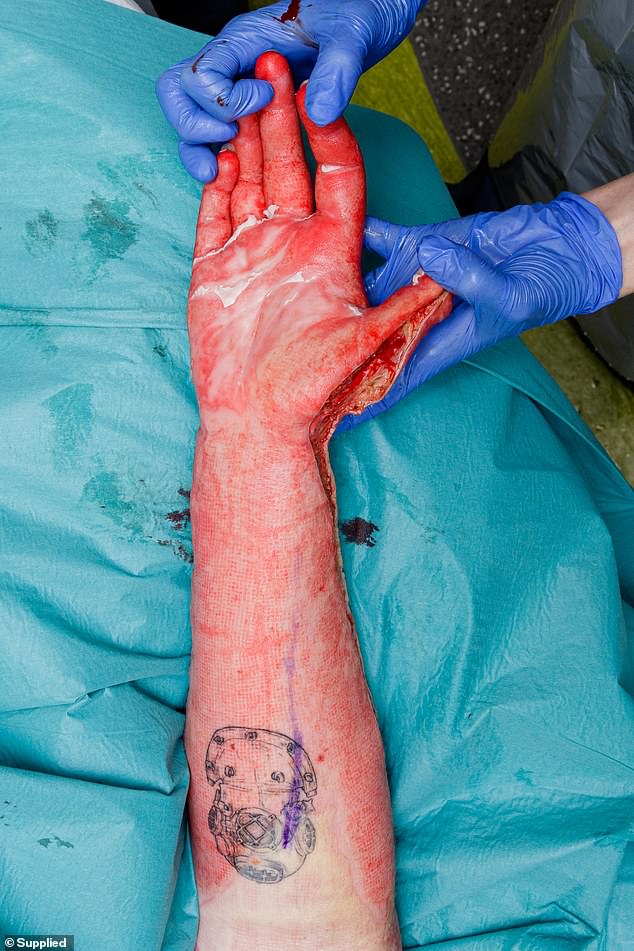
‘My exposed arms started to feel like they were on fire,’ Kesley Waghorn writes in Surviving White Island. A section of her right elbow (above) escaped damage because she kept her hands over her face as long as she could
[Workmate] Jake came running in and joined me behind the mound of rocks. I remember him crouching down right next to me and just saying my name, his voice wavering. I remember saying, ‘It’s going to be okay.’
Less than a minute had passed, and some people were still running to find shelter, but to me every second stretched out like a lifetime.
I turned and looked at the northern wall, as the main crater was obscured by the mounds of rocks now sheltering my group.
And that’s when I saw the pyroclastic surge – our worst-case scenario – rolling along that wall towards us.
A pyroclastic surge is not a slow-moving beast, but as this one bore down on us my mind was in overdrive, and that made it seem to be moving a lot more slowly than it actually was.
In that moment, I felt as though we may as well have still been standing on the main crater’s edge, completely exposed. A brief thought crossed my mind, Maybe we can make it farther down the island – somewhere more sheltered.
But, besides Jake, I’d only known the people I was with for a few measly hours. I had no idea of their fitness or agility levels, and it’s not smooth terrain out there. It’s all rocky and unstable underfoot – not an easy run – and hell, I’m not even a good runner on flat ground.
Ignoring every fibre in my body telling me to run, I stayed still. I kept the group where it was. Seek shelter. Cover yourself. Hold your breath.
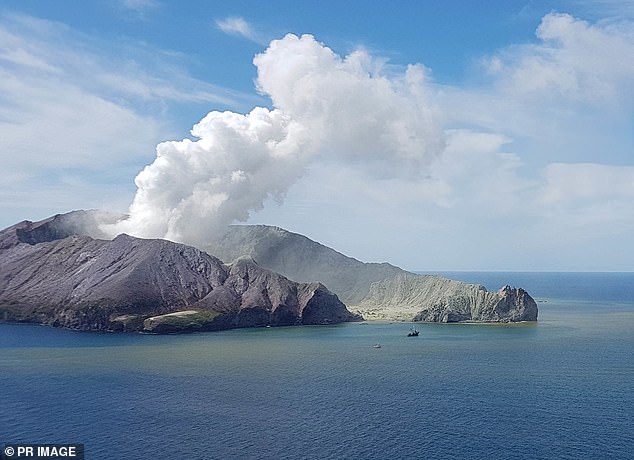
‘The moment I saw it, I knew what was happening,’ Waghorn writes. ‘The island was erupting’
That voice echoed in my mind with the same clear, calm firmness it had back when it told me Not now when I was with Lionel on Whale Island. I understand why people believe in God in these moments.
Fear had filled my body as soon as I saw that ashen cloud barrelling down the island. My breathing increased tenfold. My body shook. I knew our odds of survival were basically zero.
In an effort to do something, I put my gas mask and sunglasses on. If there was to be any hope – and it was minimal – I knew I needed to be able to see and to breathe. I pressed that mask and those glasses as hard as I could against my face.
There was no way I could hold my breath. Despite trying to slow my breathing, I couldn’t. I was panic-breathing. Hyperventilating. My body and brain knew what was coming. This is how you die.
I thought of my family. Mum was going to be so mad. She had been right: this was dangerous and I should have quit.
I thought of [my then boyfriend] Tom. I thought of [my dog] River, and how I was never again going to pat his soft head while he looked up at me with his big brown eyes. I thought of my dad and my sister.
David knows we’re in the streams. At least they’ll find our bodies…
And then the pyroclastic surge hit us.
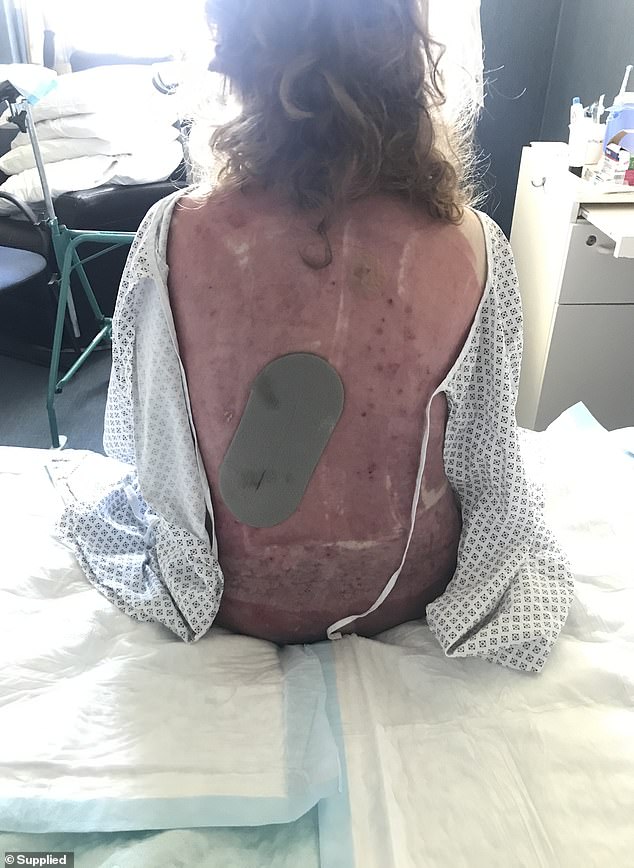
‘Fear had filled my body as soon as I saw that ashen cloud barrelling down the island,’ Waghorn writes. She is pictured recovering from her injuries, including severe burns to her back
Everything went dark.
Initially, it felt like standing on the beach on a really hot, windy day – loose sand and little sticks swirling around.
Hiding behind the mound would hopefully block anything bigger from hitting us, but even though I was squatting behind the rock, curled into a foetal position, the rush of air and gases wrapped around the mound and a deluge of tiny rock fragments kept hitting me.
Quickly, the temperature rose. It got hotter, and hotter, and hotter.
This is how you die…
I knew from history, and the kind of volcano White Island is, that these eruptions tend to be short but sharp. I knew the last one had lasted about 90 seconds, and I held onto that:
90 seconds… 90 seconds… you can hold on for 90 seconds…
I want to say it was quiet, but it wasn’t. People around me began screaming as their – our – skin began to burn.
This is how you die…
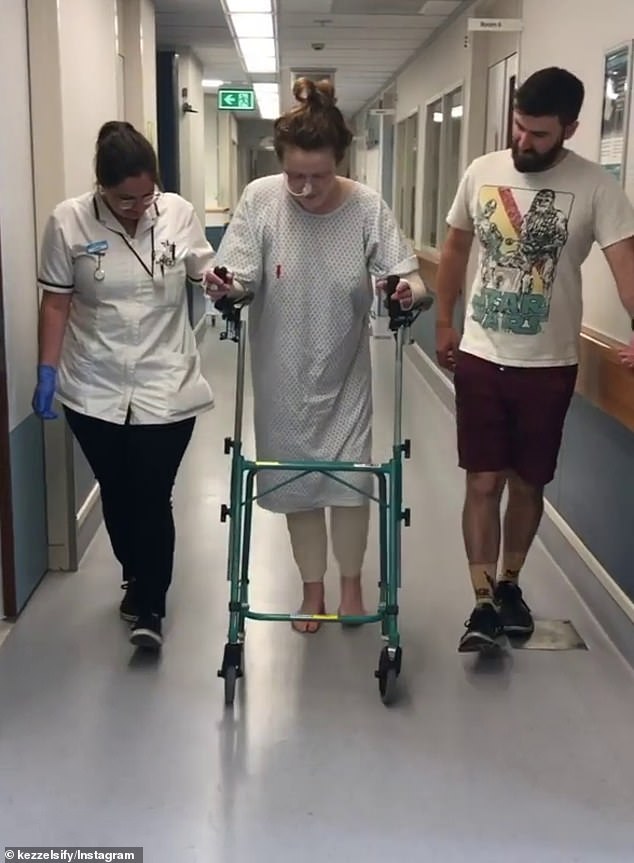
Kelsey Waghorn is pictured in hospital recovering from the serious injuries she suffered in the White Island eruption
It felt like being in an oven, and the temperature just kept rising.
90 seconds…
My exposed arms started to feel like they were on fire. I fought the urge to start trying to brush it out.
90 seconds… keep your hands on your face.
My body began vibrating. Everything in me was screaming at me to drop my hands, swat at my arms, run.
90 secon-
I couldn’t bear it any longer. I dropped my left hand from my face and began frantically brushing at the burning of my right forearm. Then I dropped my right hand to start brushing my left forearm. My screams now joining those around me.
This is how you f***ing die…
90 sec-
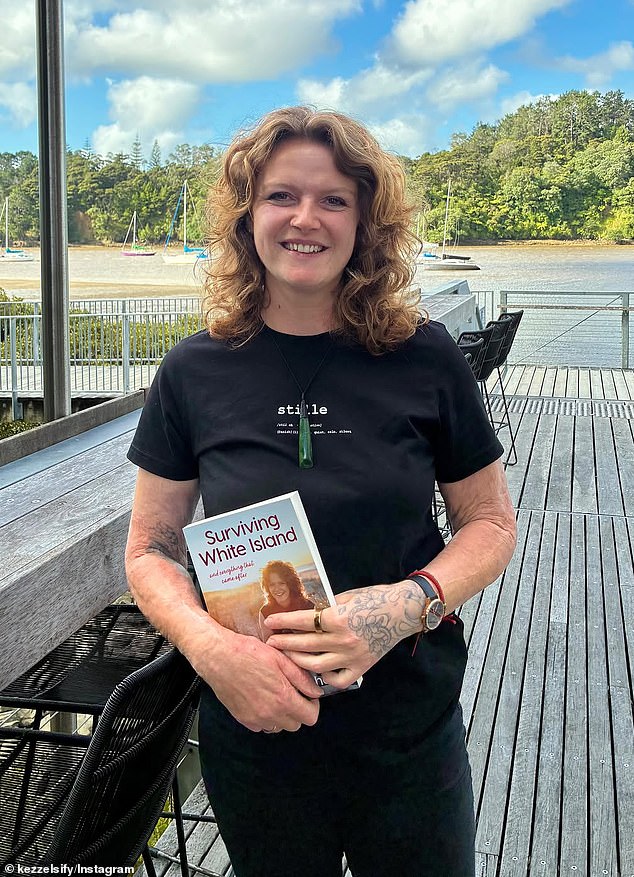
Waghorn (above) tells her story for the first time in Suriviving White Island, from physical rehab for life-threatening burns to her struggles with PTSD
And then everything went still.
And everything went quiet.
The air around me stopped moving, and everything was silent. Even the screams from my group were now reduced to whimpers and quiet crying. I couldn’t hear the swell on the rocks.
I couldn’t hear the rush of steam escaping the vents. Just the sounds being made by my group, and my own breath heaving through my clogged gas mask.
I didn’t move for a moment. Waiting. My eyes were still slammed shut, I was still crouched behind the boulder, and for a couple of seconds I just listened. Was there more to come?
My breathing slowly reduced from whole-torso pumping to more air-grabbing gasps. Tentatively, I pulled down my sunglasses and opened my eyes.
The island was coated in a dull, grey-green ash, and my group – the people I could see around me – were slowly moving, covered with the same ash. I couldn’t tell who was who, but I knew that Jake was no longer next to me.
I caught a glimpse of my arms and hands as I lowered my sunglasses, and realised that the burning sensation had been my skin starting to… melt? Almost like cooling candle wax, my skin was whitening, blistering and falling off.
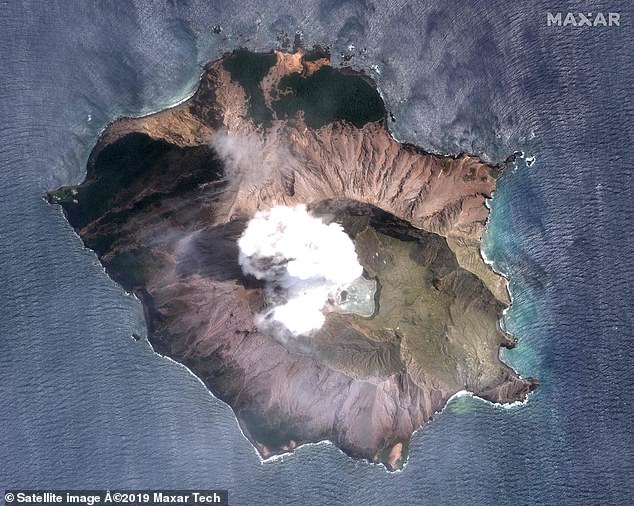
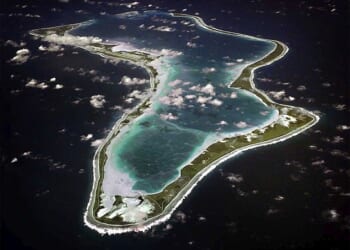
White Island, also known as Whakaari, is an active stratovolcano in New Zealand’s Bay of Plenty region. The island covers an area of approximately 325 hectares
It’s not lava or fire that makes a pyroclastic surge so lethal: it’s the extreme heat of the steam and gas, and the combination of toxic gases and acid fluids, and the projectiles that come with it. I didn’t know this at the time.
My hands dropped to my thighs and felt for my pockets, where my radio should have been. It wasn’t there. Maybe it had fallen out while I was running for cover, or it may even have been directly underneath me. But there was no way I was sifting around in the ash with these hands.
I had no idea if White Island had a Round Two up its shifty little sleeve, but I wasn’t planning on sticking around to find out. The fact that we were still alive after passing through a pyroclastic surge was a f***ing miracle, and I wasn’t about to waste whatever time we had left tempting fate.
Move. Now.
Decision made, my fight kicked in. I stood up abruptly.
‘Get up! We’ve got to go! Get up!’ I shouted at my group.
No one was moving.
‘GET UP! WE HAVE TO GO NOW!’
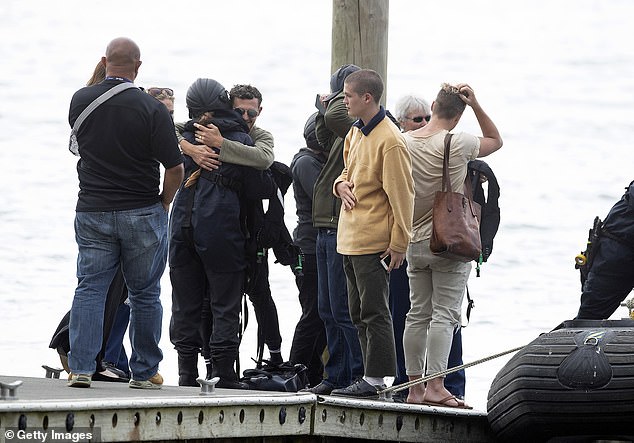
Families of victims killed in the White Island eruption are pictured upon their return from observing a minute’s silence near the site, a week after the disaster
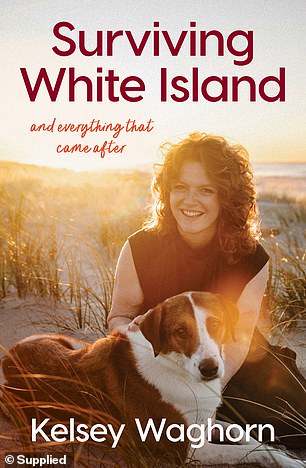
Surviving White Island by Kelsey Waghorn, published by HarperCollins, is out now
‘We can’t… we’re really hurt…’ someone in the ash replied.
‘SO AM I. GET UP.’
Things weren’t moving fast enough for me. I glanced back towards the main crater. It was still sending up a huge column of ash and gas, but it looked like we were in the clear. For now, at least.
I needed to get my group moving. By any means necessary.
‘No one is coming for you,’ I barked. ‘You need to get up.’
I’m going to get in so much trouble for saying this, I remember thinking. Of course they’re coming… I didn’t know it then, but what I’d said would turn out to be true – there would be no official rescue party.
Surviving White Island by Kelsey Waghorn, published by HarperCollins, is out now and available at all good bookshops.