Brits are being urged to work from home and use ovens less as the Middle East crisis deepens today.
Amounting mounting concerns over global supply chains, the international energy watchdog has issued advice to cut down on car use and cook with air fryers.
The stark message comes as households start to feel the ‘Trumpflation’ impact from the Iran war, with oil and gas prices spiking.
Fears over a new wave of inflation today sent the UK Government‘s borrowing costs to the highest levels since 2008 – the peak of the credit crunch misery.
That has raised more doubts over whether Rachel Reeves will be able to find the money to help families cope with the looming pain – as happened after Russia’s full–scale invasion of Ukraine in 2022.
The Tories have accused the Chancellor of ‘maxxing out the nation’s credit card’ with ‘runaway welfare spending’, as figures showed February’s public sector borrowing was the highest on record outside of Covid.
Downing Street stressed the IEA advice was not official in the UK, saying people should behave ‘normally’.
The PM’s official spokesman said: ‘This is the IEA’s general advice for countries across the world. It is not in place in the UK.
‘We have a diverse and resilient supply. People in the UK should continue to go about their days in normal fashion.’
In other twists and turns today:
- Iran’s foreign minister has fuelled concerns about direct reprisals against the UK, saying helping the US-Israeli strikes is seen as ‘aggression’;
- Interest rates on ‘gilts’ – the main way the government borrows money – have surged to nearly 5 per cent, as investors price in more risk to the public finances;
- A major poll found 88 per cent of Brits saw the cost of living as one of the biggest challenges facing the country even before the Iran war erupted.
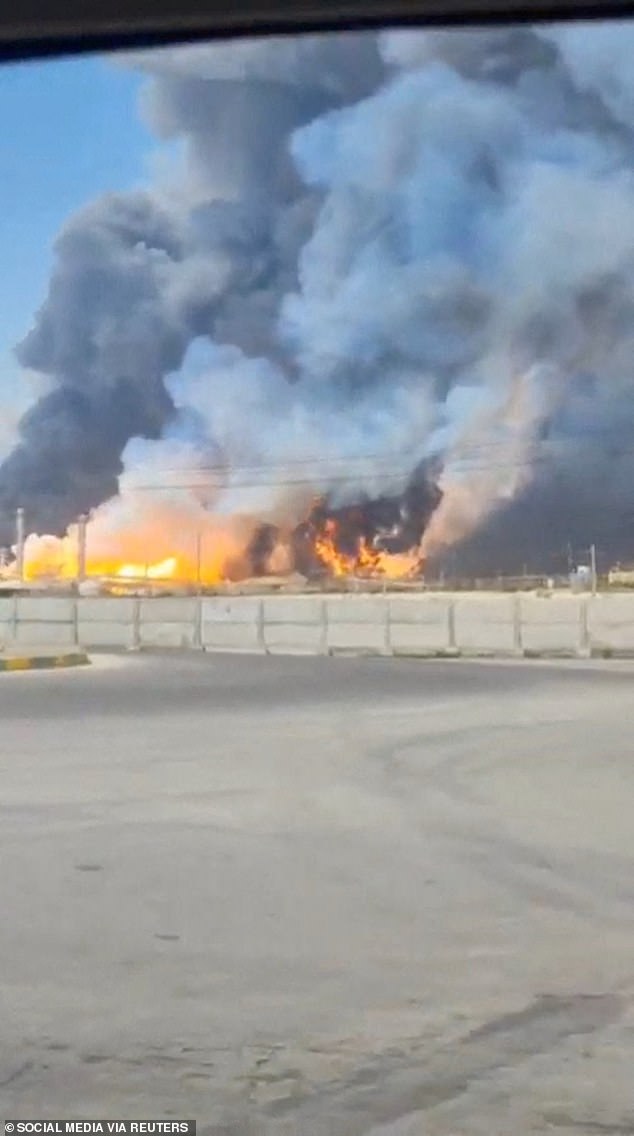
The South Pars gas field in Iran after a strike in recent days
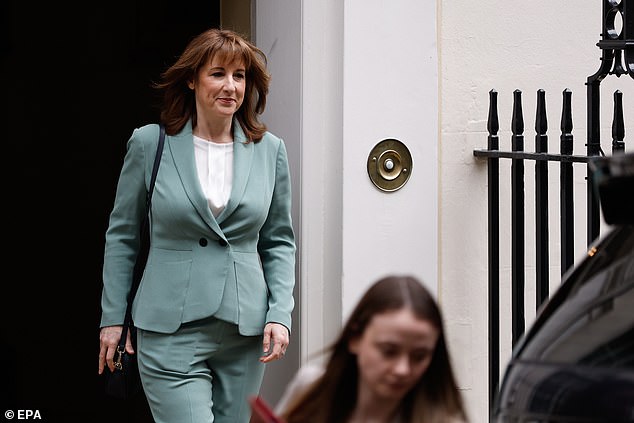
Rachel Reeves is facing doubts over whether she can afford to help Brits with ‘Trumpflation’ today after grim government finance figures
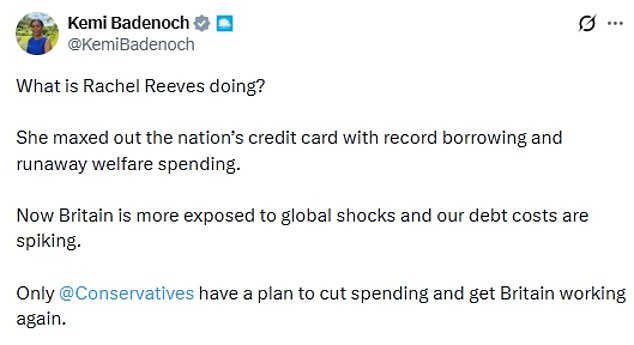
Tory leader Kemi Badenoch warned that Ms Reeves had ‘maxxed out the credit card’ with ‘runaway welfare spending’, and left families at the mercy of global shockwaves
A fifth of global oil supplies are shipped through the Strait of Hormuz, which Iran has effectively shut since the start of the war.
That has steadily pushed oil prices higher, before a sharp rise on Thursday to nearly $118 after Iran threatened ‘full-scale economic war’ before striking Qatar‘s main liquefied natural gas (LNG) facility, which suffered ‘extensive further damage’.
The chief executive of QatarEnergy said the attacks on gas facilities would take between three and five years to repair.
Drivers have already been feeling the effects at UK pumps, and experts estimate that energy bills could go up by more than a fifth when the cap next changes in July.
The International Energy Agency (IEA) stressed that member states had already agreed to release 400million barrels of oil from reserves to prop up supplies.
But it warned that ‘supply-side measures alone cannot fully offset the scale of the disruption’.
‘Addressing demand is a critical and immediate tool to reduce pressure consumers by improving affordability and supporting energy security,’ the body said.
It urged people to take measures including car sharing and avoiding air travel.
The IEA said that would help to alleviate ‘the largest supply disruption in the history of the global oil market’.
The proposals focus primarily on road transport, which accounts for around 45 per cent of global oil demand.
The energy agency said working from home and lowering motorway speed limits by at least 10 kilometres per hour will reduce fuel consumption.
It also suggested ways of reducing gas use, including ‘encouraging electric cooking and other modern options’.
The Bank of England warned yesterday that the growing conflict in the Middle East could send inflation spiralling and trigger a surge in unemployment – and any ‘protracted’ shock could force it to put up rates.
Markets have been placing bets on three base-rate increases of a quarter point, which could add around £100 a month to repayments on a £250,000 mortgage.
After freezing interest rates at 3.75 per cent, BoE governor Andrew Bailey said: ‘War in the Middle East has pushed up global energy prices. You can already see that at the petrol pump and, if it lasts, it will feed into higher household bills.’
Many of the cheapest mortgage deals have been withdrawn in recent days. Most energy deals offering rates below the price cap had also been pulled by last night.
Analysts had predicted two more interest rate cuts this year, but those expectations have been thrown into reverse as experts warn the world faces crippling ‘Trumpflation’.
Aviation chiefs warned that travellers faced a summer of price rises and cancellations as a global shortage of jet fuel started to bite.
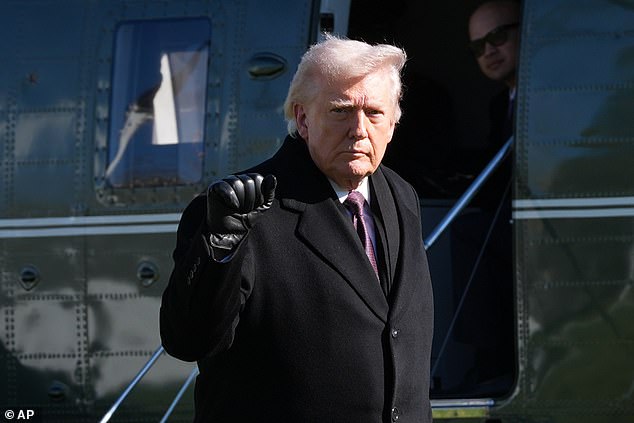
Donald Trump has given conflicting signals over how long the war with Iran might go on