One night, I was in the pub with a friend when a man came up to me. He looked a bit drunk as he pointed at the skin between my shoulder blades with a sneer.
‘You’ve got ringworm,’ he announced. Completely caught off guard, I froze, unsure what to say.
He certainly wasn’t the first, nor will he be the last, to comment on my skin. But I felt so embarrassed, I wanted to disappear. Luckily my friend stepped in, telling him he didn’t know what he was talking about and ushering him away.
Ringworm is a contagious fungal skin condition, which I absolutely did not have. The red, scaly patches that cover my body are due to psoriasis, a condition that often makes people stop and stare.
It has affected everything, from where I live to how I approach dating. And I’ve tried so many treatments, from powerful steroid creams to red light therapy and probiotics to wrestle it under control.
I was 16 when I first noticed an itchy red patch of skin on my scalp. My GP referred me to a dermatologist, who diagnosed psoriasis. I had never even heard of it and assumed it would disappear eventually. But there is no cure and no guaranteed treatment; 17 years on, my arms, legs and face are still speckled with red patches.
Initially I was prescribed topical steroid creams to manage the coin-sized itchy, sore patches on my back.
I was never given any information about the cause. But having learned more about how it can fluctuate with hormonal changes, I now believe the initial trigger for me may have been the contraceptive pill, which I’d started taking at 16 due to heavy periods.
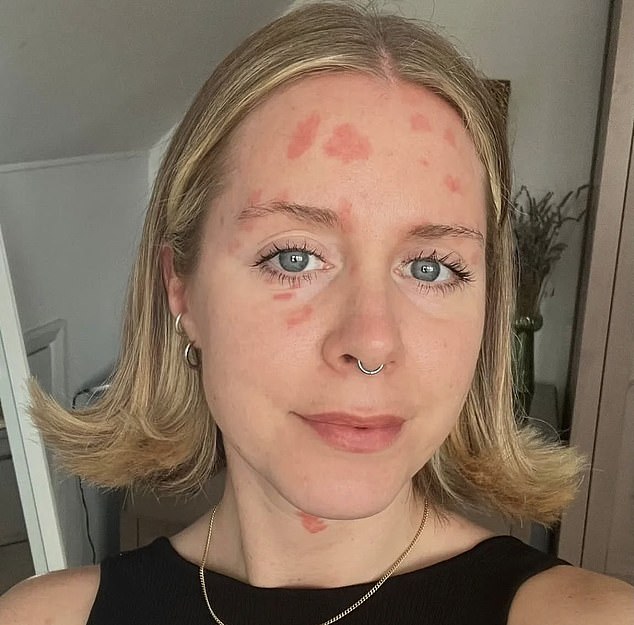
There’s no cure for psoriasis and no guaranteed treatment; 17 years on, my arms, legs and face are still speckled with red patches
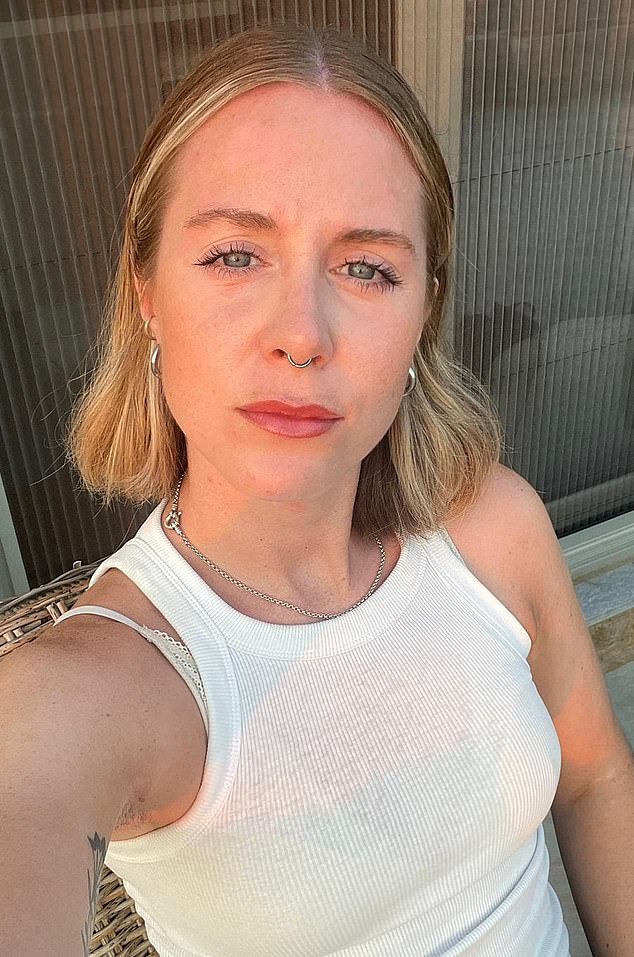
I became self-conscious about my psoriasis at college when another student asked if I’d been intentionally burning myself with a lighter
I became self-conscious about my psoriasis at college when another student asked if I’d been intentionally burning myself with a lighter.
At university, I realised stress was a major trigger. In my final year, every time I worked late on my coursework, more red, intensely itchy patches would appear.
Frustratingly, every time I found a treatment that worked, my skin seemed to become resistant. After the mild steroid cream stopped working, I was prescribed a stronger topical corticosteroid – which only worked for six months.
It was the same with UVB (ultraviolet B) phototherapy, which uses a wavelength of light to penetrate the skin and can clear psoriasis completely for some people – sadly not for me.
When I got an exciting new job as a graphic designer in Berlin in 2016, the stress exacerbated my irritable bowel syndrome, which in turn triggered the worst bout of psoriasis I’d ever had. The flare-up covered my face for the first time, and my legs, arms, back and torso, which were agonisingly itchy and red raw. It made me so miserable, anxious and unable to function normally that I cut right back on socialising.
After six months, I returned to the UK feeling deflated. I saw a kinesiologist – someone who studies the movement of the human body to identify imbalances and stress – who suggested probiotics, digestive enzymes and magnesium, which helped.
But the fluctuations continued. In April 2023, after 13 years of using steroid creams, I decided to go cold turkey. They had become less effective and long-term use is not recommended.
I then experienced topical steroid withdrawal in the form of intense burning, itching, extreme dryness and sensitivity that felt worse than the original condition.
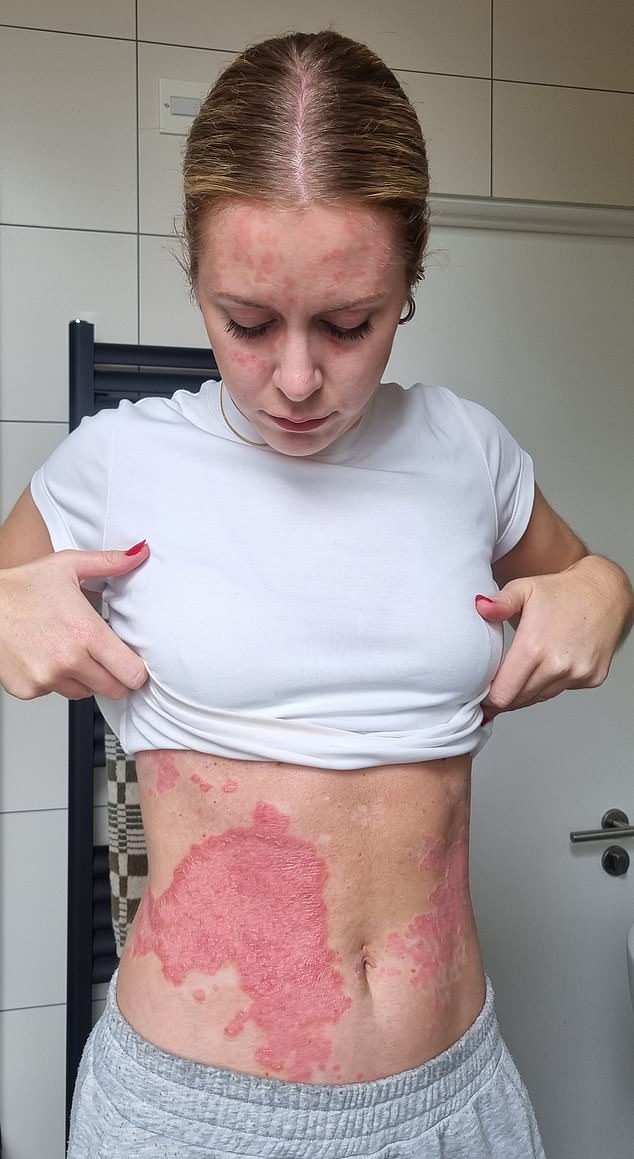
Some days it doesn’t bother me too much, sometimes I still want to hide
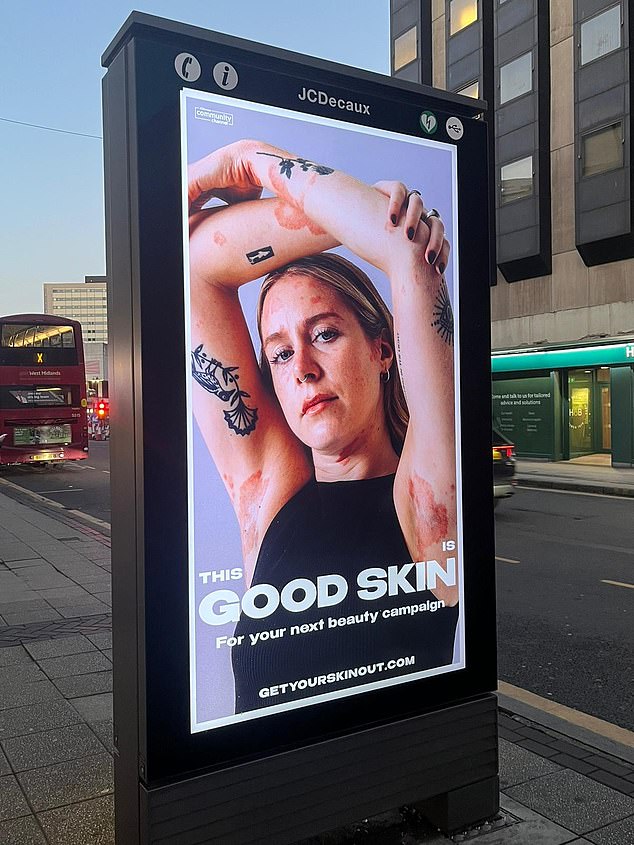
Along with around 15 other women, photos of my body – psoriasis on show – were featured on digital billboards in London and New York, photo taken by Kate Ford of Fordtography
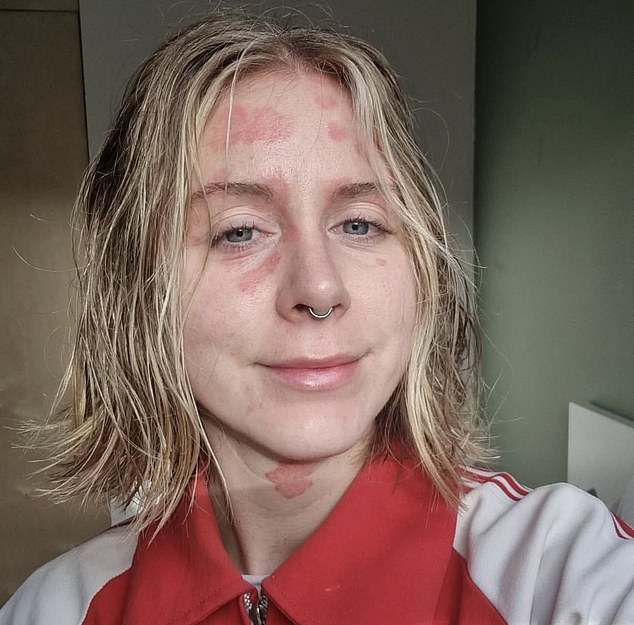
I’ve started sharing photos of my skin on social media. The more I do it, the easier it gets
From then on I opted for a more natural route, using organic creams, sea moss gel, red light therapy, techniques to manage my mental health, exercising and supplements to support my body from the inside out.
At the end of that year, I even took part in a campaign called Get Your Skin Out, which raised awareness of people living with visible skin conditions.
Along with around 15 other women, photos of my body – psoriasis on show – featured on digital billboards in London and New York. I couldn’t believe it when I saw myself on the screens. I felt honoured to advocate for others living with skin conditions. My family and friends were so proud.
This helped me come to terms with myself and care less about what others thought. I wouldn’t say I became immune to negative comments but I bounced back more quickly.
Last year, the small patches of psoriasis I’d had on my face started to get worse. Even the best concealer couldn’t hide the scaly, raised, bumpy skin. In the end, I had to brave the world bare-faced, which felt terrifying.
Once, a stranger in the supermarket assumed I was sunburnt and warned me to be careful. Over time, I’ve come to realise that thoughtless comments say more about the person making them than they do about me.
Dating used to intimidate me but now I see psoriasis as something that separates the wheat from the chaff. I’ll usually tell someone on the first date, or within the first few, that I have a skin condition. I’d rather get it out in the open, and so far everyone has been understanding and non-judgmental. If the person I’m on a date with does have a problem, then I know straight away they weren’t right for me.
That’s not to say all remarks are derogatory. Last month a woman approached me in the gym changing rooms and said she wished she had skin like mine. She told me it was beautiful, and that the red patches across my body looked like flowers.
Because it was winter and my skin was at its worst, hearing something so kind meant a lot. These days, I try to see it the way she did – that my face is simply full of colour, texture and life.
Now 33, I’m doing my MA and am considering moving to a warmer climate, as the sun and sea really soothe my skin. In the meantime, I’ve started sharing photos on social media. The more I do it, the easier it gets, especially when others with psoriasis tell me I inspire them.
I connect with people living with all kinds of skin conditions and their stories and photos inspire me, making it feel far less isolating and more of a community.
At the moment I have red patches on my forehead, under my eyes and across my neck, and on my arms, legs, stomach, back and ears. Some days it doesn’t bother me too much, sometimes I still want to hide.
But I’ve learned to prioritise my mental health and keep my gut happy by avoiding too much refined sugar, alcohol, dairy and wheat. I go to the gym, meditate, create artwork, have therapy and see my family and friends.
Talking about it always helps; there’s no point in hiding away. Psoriasis isn’t just about the skin, it’s deeper than that. I like to think I’m showing others that healing, both physically and mentally, is possible.
Sophie is on Instagram and TikTok @sophies_skin_
As told to Julia Sidwell