MANY of us may still associate chimney sweeps with Victorian times – but hundreds of young people are brushing up on their skills for the job.
Figures from the National Association of Chimney Sweeps show that its membership has risen from 590 in 2021 to around 750 now, including 40 female sweeps.
This revival of the career is being driven by the rising popularity of open fires and woodburners.
As householders battle rocketing gas and electricity prices, figures from the Heating Equipment Testing and Approval Scheme show around 100,000 new stoves are installed and replaced every year.
But there are only 2,000 chimney sweeps covering the 1.5million-plus homes with stoves or open fires.
Yet regular annual sweeping is needed to ensure that fireplaces work properly.


And with 60 per cent of sweeps now over the age of 50, there is a need for younger people to enter a trade — and plenty of opportunity.
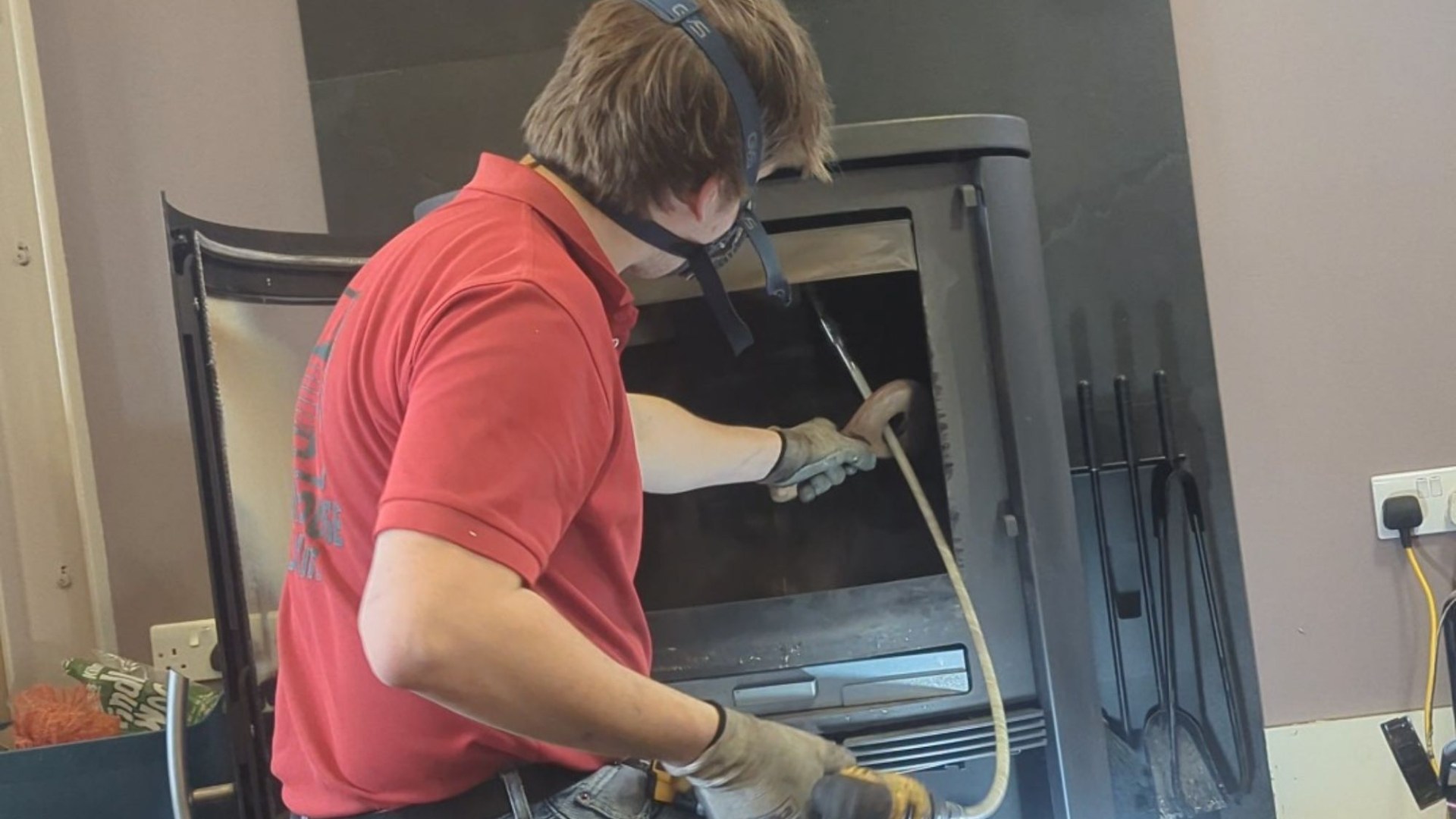
The job has changed radically in the last few years, with sweeps using CCTV to inspect chimneys, then power-brushing and high- powered vacuums to zap the dirt and debris that has built up.
Martin Glynn, president of the National Association of Chimney Sweeps, says: “We don’t send little boys up chimneys any more — instead it’s CCTV and smoke-testing equipment. It’s almost like being a chimney technician.”
Entry-role salaries start at £22,000 and an experienced sweep can expect around £43,000 — but self-employed individuals can earn around £75,000, and some business owners £150,000.
So the work offers good reward and prospects.
On average, training costs around £1,600 and takes five days, which is cheaper and quicker than most other trades — and a tiny fraction of the average university graduate debt of £53,000.
AT the age of only 19, Thomas Dale runs his own chimney-sweeping company, having shelved plans to study for a degree in law or architecture.
The boss of Dale Sweeps, based in Launceston, Cornwall, says: “Growing up, I wanted to go to uni – but when it came to it, I didn’t like the idea of wasting time and money when there was no guarantee of a job at the end of it.
“No one in my family is a sweep but my dad swept our chimneys himself, which gave me a great introduction to the trade.
“I started off working for a stove retailer and installer, then spent time sweeping with other companies before taking the not-for-profit registration and training course with the HETAS (the Heating Equipment Testing and Approvals Scheme).
“There’s a lot of work out there and, once you’re established, it’s a solid living. Compared to other trades, it’s relatively cost-effective to get a qualification under your belt and get to work.
“There are so many options. Even if sweeping isn’t for you, you can be an installer or technician, or do camera surveys.
“All it takes is the time and effort to learn the trade, and a willingness to get your hands dirty and learn from others.”
Key routes into the job
- HETAS Sweep and Service Scheme
- NACS (four-day course with assessment)
- Guild of Master Chimney Sweeps (intensive training + CPD)
- ICS / APICS / Chimney Sweep Academy
- Government-recognised NVQ Level 2 Certificate in Chimney Sweeping
How to tell all about real you
IT is one of the most dreaded questions in any job interview, when your potential employer leans in and asks simply: “Tell me about yourself.”
How much should you reveal? What does the interviewer really hope to find out?
Is there anything you should maybe leave out of your answer?
Tim Richards, from career development platform Futureresume.com, says: “Most people struggle with this question simply because they do not know themselves well.
“Identifying your differences and developing them is not taught, so people often resort to talking about hobbies, sports or positions held at their school.”
Here are Tim’s top tips to prepare yourself . . .
1. Draw a lifeline from your birth to present day and identify what things you have remembered with the passage of time, and what highlights you remember with pride.
2. Talk, too, about setbacks you have faced, how you felt about them and, most importantly, how you recovered.
3. Ask family and friends to add what they remember. This will identify your blind- spots – maybe the things you do differently but only others are aware of.
4. Pick out storylines or themes from all this, which have shaped how you look at yourself and the world.
5. In particular, as you look back in time, notice any similarities in WHAT you did at different times in your development, HOW you reacted to challenges and WHY these moments stand out to you as important.
6. All of this will help you to think about the talents and values you have that others don’t, and talk about the way you use them.
7. Knowing yourself is crucial in life, as it helps you to look at any job opportunities and see whether or not they are good fits for you.
8. Always remember, interviews are a two-way process and a role has to be right for you, too.
Jobspot
FOOD producer Cranswick has more than 100 vacancies, for roles ranging from production operative and team leader, to factory manager.
To find out more, check out cranswick.plc.uk/careers/vacancies
The A.Iprentice
A NEW apprenticeship starting this month aims to help firms maximise the benefits of AI.
The Artificial Intelligence And Automation Practitioner course, over 18 months, is for a Level 4 qualification and available to all employers regardless of sector
Developed by Skills England, it aims to help staff solve problems that slow down work, such as duplicated data entry or repeti-tive manual processes.
Kanishka Narayan, Minister for AI, said: “AI offers so much potential to grow our economy, create new oppor-tunities for people and help businesses boost productivity.”
Toby Jones, who works for tourism body Visit Somerset and is among the first people to start the apprenticeship, says: “I work in marketing and AI needs to be a key part of the profession.”
Jobspot
CARD FACTORY has jobs around the UK for store managers, team leaders and sales assistants.
Search for your role at jobsearch.cfjobs.co.uk
The French bliss
COULD taking a “French Sunday” help you work better?
The viral trend encourages Brits to copy French culture and use Sunday to rest, rather than catch up on tasks like clearing your email inbox.
Across the Channel, Sundays have long been considered protected time for relaxation and time with family and friends.
But in many other countries, they have become what some call “the unofficial start of the work week”.
Charles Hipps, CEO of recruitment form Oleeo, says: “Many people spend Sunday trying to ‘get ahead’ for the week but that can mean they arrive at work tired.
“A true break is often more valuable than squeezing in extra productivity.”