“Gone” was President Donald Trump’s verdict this week on the state of Iran’s navy, its air force, its anti-aircraft batteries, its radar installations – and “perhaps most importantly, its leaders.”
And on all of the above, with just a bit of his trademark hyperbole, he was absolutely right.
Yet even with tit-for-tat attacks on energy facilities threatening to widen the conflict further, Mr. Trump has been making another, broader claim: “We won.”
Why We Wrote This
In the “asymmetric” Iran war, victory looks different for each side: The U.S. and Israel must decisively win – or convincingly claim they have – while the Iranian regime only has to survive.
And that isn’t true. At least not yet.
Nearly three weeks into the conflict, he has come face-to-face with the sobering complexities of what security experts call “asymmetric war” – an overwhelmingly powerful military force pitted against an ostensibly far weaker adversary.
On paper, it ought to be no contest.
In this case, the combined might of arguably the two most fearsome fighting forces in the world – the American and Israeli militaries – should surely be able to make Iran surrender, or simply implode.

But in an “asymmetric” war, the definition of victory, for the weaker party, is very different.
Knowing it can’t win a conventional military contest, that party aims merely to survive.
And its path to survival? Widen the war on its terms. Draw it out. Deny the more powerful adversary a quick or easy triumph, while inexorably raising the economic and political cost of a protracted conflict.
Mr. Trump isn’t the first U.S. president to face the potential perils of assuming raw power would subdue an enemy that is fighting by different rules: Lyndon Johnson and Richard Nixon learned that lesson, at great political cost, during the Vietnam War six decades ago.
But America’s military commitment, and its final forced retreat in Vietnam, came over a period of years. By comparison, Mr. Trump’s Iran challenge is playing out at warp speed.
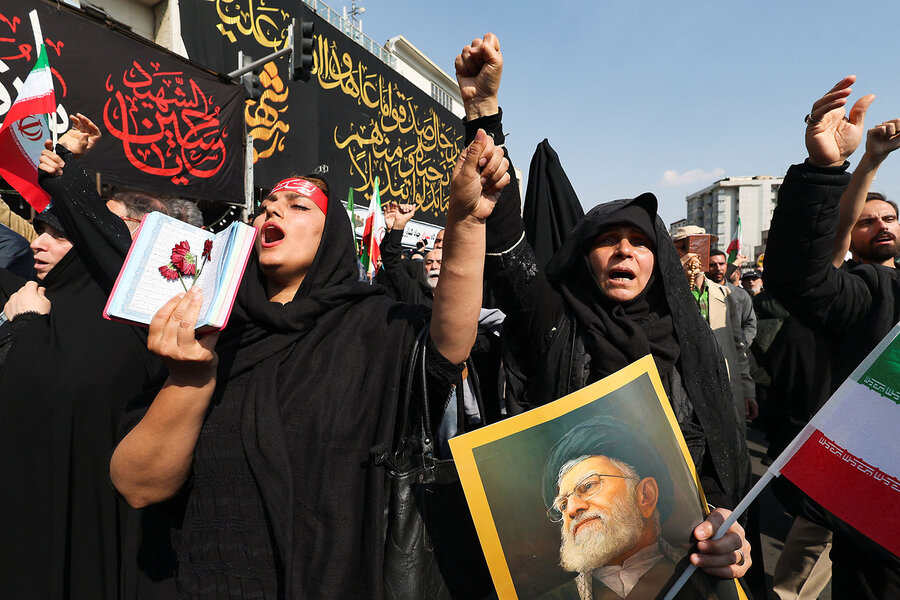
It began with an audacious daylight strike in late February that eliminated Iran’s leader, Ayatollah Ali Khamenei. In the days since, relentless U.S. and Israeli attacks have combined pinpoint intelligence, precision weaponry, and deadly force.
They’ve killed other senior clerical, political, and military leaders in Iran. They’ve targeted missile and drone forces, arms-manufacturing facilities, security police posts, and headquarters buildings.
They’ve hobbled much of Iran’s conventional military power.
Yet the Iranians’ asymmetric response has been equally rapid, and it is already having an effect.
Iran has widened the conflict by targeting America’s wealthy Gulf Arab allies, including the United Arab Emirates, Saudi Arabia, Qatar, Bahrain, and Oman.

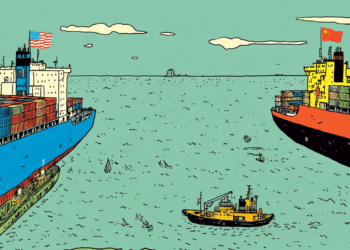
It has also been barring all but its own, and ally China’s, ships from passing through the Strait of Hormuz – the narrow Gulf choke point through which some 20% of the world’s oil supply ordinarily passes.
The overall result has been a major spike in the world price of oil, gas, jet fuel, and a range of other commodities including fertilizer – increases being felt, in Mr. Trump’s political backyard, by American motorists and farmers.
The stakes have been ratcheted up further in the past few days. An Israeli attack on Iran’s vast South Pars natural gas field on Wednesday prompted Iran to strike energy facilities in Arab Gulf states – including a facility in Qatar providing about one-fifth of the world’s liquid natural gas supply.
This asymmetric version of a stalemate has confronted the president with a stark decision: escalate further, or begin looking for a politically viable route to wind down the war and disengage.
So far, at least, he seems minded to escalate, hoping that the cumulative effect of the military battering Iran is enduring, and the Israelis’ systematic elimination of its senior leaders, will ultimately leave the Iranians unable to sustain their asymmetric fightback.
Mr. Trump, himself, seems aware that until that happens, any claim to “victory” could ring hollow.
Even when telling a rally last week that America had already been victorious, he clearly recognized that point hadn’t yet arrived.
“We won,” he said, arguing that with Ayatollah Khamenei’s elimination in the war’s first hour, “it was over.”
But he quickly added: “We’ve got to finish the job, right?”
That may explain why some 2,500 U.S. Marines have been added to the initial attack force, as well as a new range of targets the Americans and Israelis began to strike on Wednesday this week: Israel’s attack on Iran’s natural gas processing facility; and U.S. forces’ firing of bunker-busting munitions at potential sources of Iranian missile attacks along the Strait of Hormuz.

The arrival of the Marines could open up two further options: seizing Iran’s main oil export facility on Kharg Island at the northern end of the Persian Gulf, or mounting a limited boots-on-the-ground operation to try to secure the strait.
Both, however, carry potential risks. Taking Kharg could mean removing Iranian exports from a world oil market already upended by the choking off of the Strait of Hormuz. And, especially if paired with a military move to take control of the strait, it could provoke Iran to expand missile and drone attacks on Arab oil and gas facilities.
Mr. Trump reminded his social media followers this week that he was “President of the United States of America, by far the Most Powerful Country Anywhere in the World” – hardly the words of a leader reluctant to “finish the job.”
But unless he can virtually eliminate Iran’s missile and drone capacity, he’ll have to reckon with another reality of war – summed up by Jim Mattis, Mr. Trump’s defense secretary during his first term in office.
“No war is over,” he said, “until the enemy says it’s over.”
“We may think it over, we may declare it over, but in fact, the enemy gets a vote.”