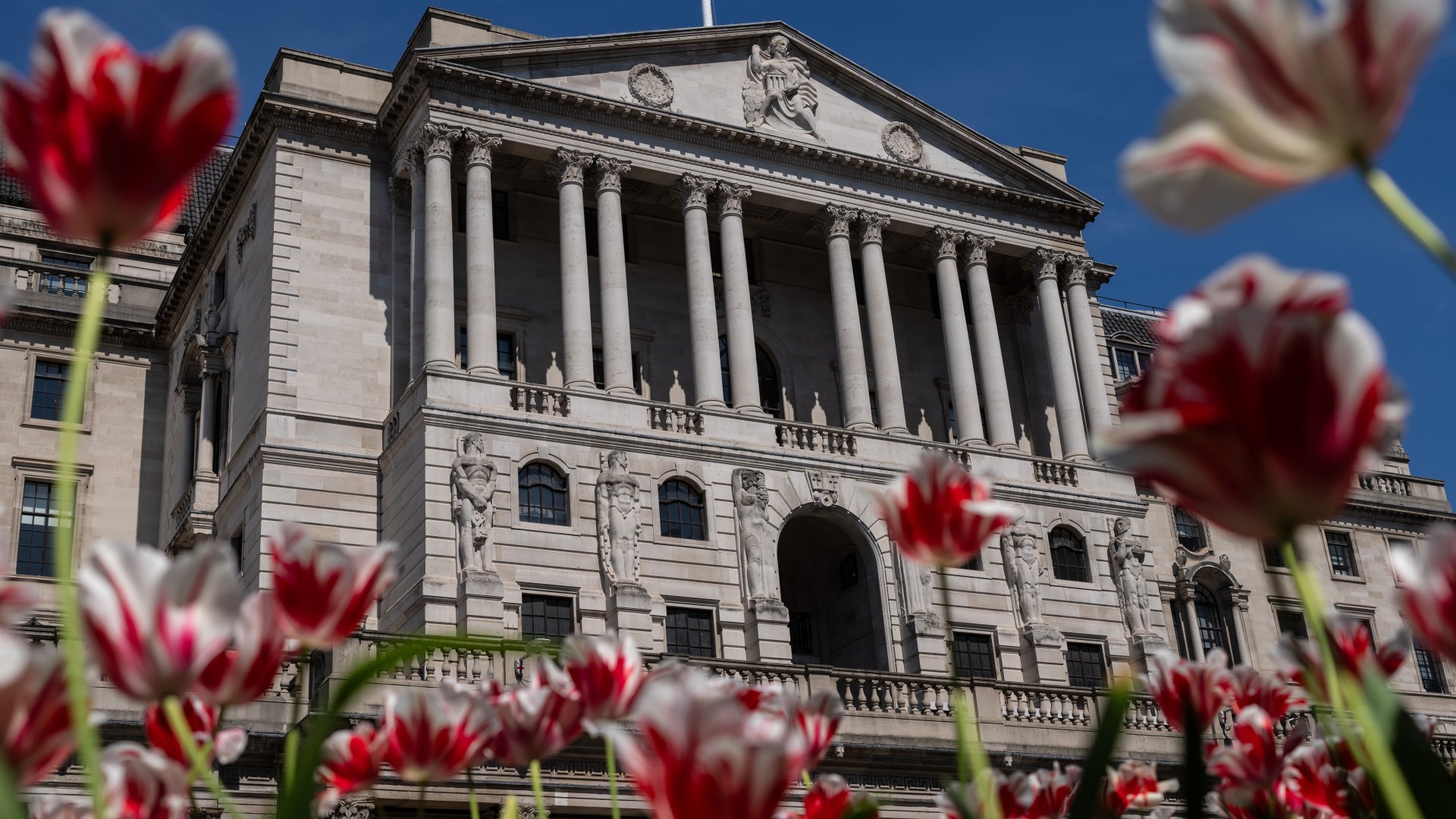
THE Bank of England base rate has been held at 3.75% as officials fear the war in Iran is to send costs soaring for British households.
Hopes of interest rate cuts in the short term by the Bank’s Monetary Policy Committee (MPC) have rapidly disappeared, off the back of fighting in the Middle East and soaring gas and oil costs.
In turn, mortgage lenders have reacted by slashing the number of low cost mortgages available to homeowners.
When inflation is higher, the Bank’s Monetary Policy Committee (MPC) is less likely to cut interest rates, as this can fuel borrowing and spending.
Before the outbreak of fighting in the Middle East the central bank had been expected to keep on cutting rates over the course of 2026.
But higher fuel costs and energy bills have already filtered through to British households, and the cost of living is now only expected to rise the UK over the coming weeks.


Expectations of higher interest rates for longer in finance markets, prompted the banks to pull hundreds of mortgages.
At the same time, rates have rocketed past 5% with the average five-year rate now at 5.37%, up from 4.96% just two weeks ago.
This is the highest level since August 2024, according to data from data firm Moneyfacts.
The average two-year fixed rate has jumped to 5.32% from 4.84% in the same time period.
Inflation as measured by the Consumer Prices Index (CPI) is currently sitting at 3%.
The Bank targets an inflation rate of 2%.
At the same time, figures released today showed that unemployment remains at a five-year high, while wage growth has slowed to the lowest rate since 2020.
Britain’s jobless rate was at 5.2% in the three months to January, official figures showed.
Nicholas Mendes, mortgage technical manager at broker John Charcol, said: “The rise in oil and energy prices has created a fresh inflation risk the Bank will not want to wave through.
“Monetary policy cannot stop an external supply shock, but it can try to stop it feeding into inflation expectations and broader pricing across the economy.
“A hold therefore should not be read as a change in long-term direction. It looks more like a pause while policymakers judge whether this is a short-lived disruption or something that starts to embed itself more widely.”
If you are on a fixed-rate deal there will be no immediate change to your bills.
But around 1.8 million fixed-rates are due to end in 2026, according to trade body UK Finance.
If you are coming to the end of a deal in the next six months it’s a good idea to secure a rate sooner rather than later.
Nicholas said locking in a rate now “gives protection if pricing worsens, while still allowing time to switch to something better before completion if rates improve.”.
As well as higher cost mortgages, borrowers face higher interest rates on the likes of credit cards and loans.
However, the good news is that savers could see better returns on cash squirrelled away.
Over the coming months, the Bank of England will keep monitoring the outlook for inflation and economy growth.
If inflation comes down, interest rates later in the year could be possible.
Nicholas added: “The domestic backdrop is not especially strong, and the Bank will not want to leave policy too restrictive for too long if growth and the labour market continue to weaken..
“If energy prices stay elevated for longer, or inflation expectations start to drift again, rates may stay higher for longer than markets were expecting at the start of the month.”
The Bank last delivered a cut to the base rate before Christmas, from 4% to 3.75%, marking the fifth rate reduction since 2020.
At the time, governor Andrew Bailey said that the UK had “passed the recent peak in inflation and it has continued to fall”.
Sarah Pennells, consumer finance specialist at Royal London said: “Anyone looking for a new mortgage deal would be well advised to speak to an independent mortgage broker, who can help navigate a fast-changing market and identify mortgages that may not be available directly from lenders.
“Even for the 39% of adults without a mortgage, today’s decision is likely to affect confidence. When interest rate cuts are pushed further into the future, people often become more cautious, reining in spending, holding back on big financial decisions, or prioritising building up a financial buffer in case household costs rise again.
“While interest rates may still fall over time, today’s decision is a reminder that the path down is unlikely to be smooth, and that expectations can change quickly.”
What is the base rate and how does it affect the economy?
NINE members of the Bank of England’s Monetary Policy Committee meet eight times each year to set the base rate.
Any change to the Bank’s rate can have wide-reaching consequences as it directly influences both:
- The cost that lenders charge people to borrow money
- The amount of savings interest banks pay out to customers.
When the Bank of England lowers interest rates, consumers tend to increase spending.
This can directly affect the country’s GDP and help steer the economy into growth and out of a recession.
In this scenario, the cost of borrowing is usually cheap, and the biggest winners here are first-time buyers and homeowners with mortgages.
But those with savings tend to lose out.
However, when more credit is available to consumers, demand can increase, and prices tend to rise.
And if the inflation rate rises substantially – the Bank of England might increase interest rates to bring prices back down.
When the cost of borrowing rises – consumers and businesses have less money to spend, and in theory, as demand for goods and services falls, so should prices.
The Bank of England is tasked with keeping inflation at 2%, and hiking interest rates is a way of trying to reach this target.
In this scenario, the losers are those with debt.
First-time buyers will lose out to cheaper mortgage rates, and those on tracker or standard variable rate mortgages are usually impacted by hikes to the base rate immediately.
Those on a fixed-rate deal tend to be safe if they fixed when interest rates were lower – but their bills could drastically increase when it’s time to remortgage.
The cost of borrowing through loans, credit cards and overdrafts also increases when the base rate rises.
However, the winners in this scenario are those with money to save.
Banks tend to battle it out by offering market-leading saving rates when the base rate is high.