Conspiracies exist — but the temptation to use them as an all-purpose explanation is wrongheaded

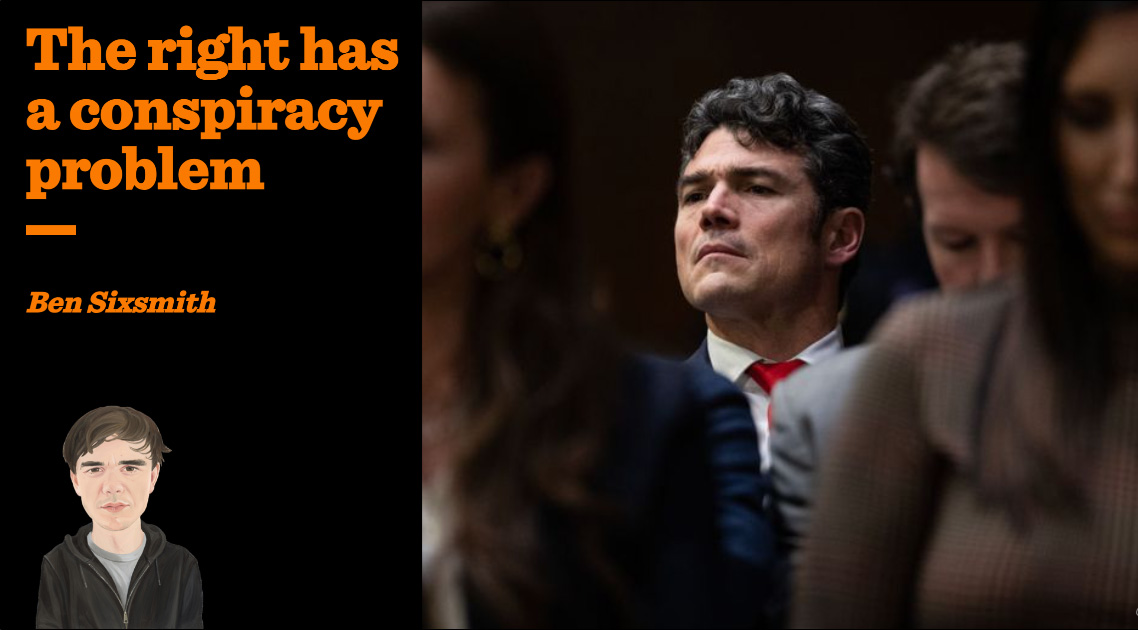
Joe Kent resigning from the Trump administration was eminently understandable. The U.S.-Israeli attack on Iran is dangerous and destructive, and it seems very plausible to argue that in abandoning his anti-interventionist commitments Trump has betrayed his voters.
It is also very reasonable for Americans to ask about the extent to which US and Israeli interests are aligned. This is completely uncontroversial when it comes to the extent to which US and British, EU or Ukrainian interests are aligned, and there should be no different standard here.
The case against the war is profoundly strong and extremely popular. So, I’m not sure why Mr Kent has to add things like the heavy implication that Israel might have killed Charlie Kirk.
The idea that Charlie Kirk was the victim of a conspiracy has become ubiquitous since Kirk’s murder in September 2025. Its leading advocate has been Candace Owens — a social justice warrior turned right-wing firebrand who is currently producing a podcast series in which she implies all sorts of villainous things about Kirk’s widow.
Kent’s is a far more authoritative voice. But I still find him unconvincing. To be clear, we can’t definitively say who was responsible for killing Kirk. Tyler Robinson has not been convicted. But there seems to be substantive evidence and a clear motive. (If nothing else, online celebration of Mr Kirk’s death makes a motive very clear.)
This does not mean that a conspiracy is impossible. But I don’t see an a priori or a posteriori case for one. Mr Kent observes that Kirk had been an advocate against regime change in Iran, and this is true. What seems more dubious is the idea that Kirk would have been a powerful and consistent anti-war advocate. After the Twelve-Day War between Israel and Iran in 2025, Kirk said that while he opposed “another quagmire and ground invasion in the Middle East”, “if Trump decide[d] to act to stop Iranian nuclear program[sic], then I would have his back because he’s earned my trust”.
The horrific nature of Kirk’s death has made him an almost messianic figure, in various senses, on the American right. But the truth is that Kirk was more of an advocate for Trump than he was an adviser to Trump. In 2025, Kirk was briefly upset about the Trump administration’s handling of the Epstein files. A call from Donald Trump put an immediate stop to that. “Honestly, I’m done talking about Epstein,” said Kirk on his show, “I’m going to trust my friends in the administration, I’m going to trust my friends in the government.” Would this really have been a decisive dissenting voice?
One should not sweepingly dismiss “conspiracy theories”. After all, there is such a thing as conspiracies. If there is such a thing as conspiracies, “conspiracy theories” can be correct. I agree with the philosopher Charles Pigden that the conventional wisdom that conspiracy theories “should be neither believed nor investigated” is wrong.
But the temptation to posit and accept conspiracy theories can still be rooted in irrationality. For example, it can express the hope that world events can be transformed not as a result of hard and complex political work but of some kind of investigative revelation. If only it could be proved that there was a conspiracy to kill Charlie Kirk, America would finally stop getting involved in destructive interventions. This also fuelled conspiratorial ideas about 9/11, though at least it could have been plausibly argued that 9/11 was decisive in stirring up support for the invasions of Iraq and Afghanistan.
An excess of conspiratorial populism has also been visible in the UK
“Conspiratorial populism”, observes the right-wing American commentator Scott Greer, is simple and inclusive: “It paints a clear picture of bad elites and good people. Bad things happen because the bad establishment is in charge, not the good people.” It also has the advantage of being entertaining: “Going over congressional battles and complicated ideological explanations is rather dull. Talking about Satanic pedophiles controlling the world is a lot more exciting.”
An excess of conspiratorial populism has also been visible in the UK. The horrific mass stabbing attack perpetrated by Axel Rudakubana should most certainly have raised questions about immigration and counter-extremism policy. For some, though, there had to be a deep scandal, quite possibly involving Keir Starmer, which could end up bringing down the government. Somehow, nothing emerged and the government survived.
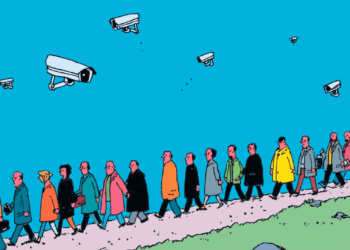
This, again, is not to claim that one should never argue that a conspiracy has taken place. From the Enron accounting fraud to the NSA mass surveillance programs, there have been actual conspiracies in modern times. But we should always ask ourselves if we are indulging conspiracy theories on the basis of logic and evidence or on the basis of sensationalism and anxiety.
The case against war is clear, substantive and popular. There is no point in getting bogged down in esoterica.