An NHS Trust reportedly took hours to notify health officials about a potential meningitis outbreak after a student died from contracting the disease last week.
Juliette Kenny, 18, a sixth form student at Queen Elizabeth’s in Faversham, died in the early hours of Saturday morning after contracting meningitis.
East Kent Hospitals NHS Trust supposedly took several hours to notify health officials of Juliette’s death, only informing the UK Health and Security Agency (UKHSA) later that evening, The Telegraph reports.
On the same day an unnamed, female, 21-year-old student at the University of Kent also died at one of the Trust’s hospitals, the newspaper reported, raising questions as to why NHS bosses did not act sooner.
But, the UKHSA itself waited until Sunday to announce that it would be arranging antibiotics for some students following an outbreak in the area.
The agency said it had been alerted of 13 cases between March 13 and 15, a figure which has since risen to 20 as of Tuesday.
Meanwhile, the French Ministry of Health was also made aware of a case after an exchange student returned to France from the University of Kent on March 12.
The person was taken to hospital and is now in a ‘stable’ condition, a spokesperson said on Wednesday, adding no other cases of meningitis linked to the outbreak in Kent have been reported in the country.

Juliette Kenny, 17, died on Saturday surrounded by her family after falling victim to the deadly bug which has swept through several towns in Kent
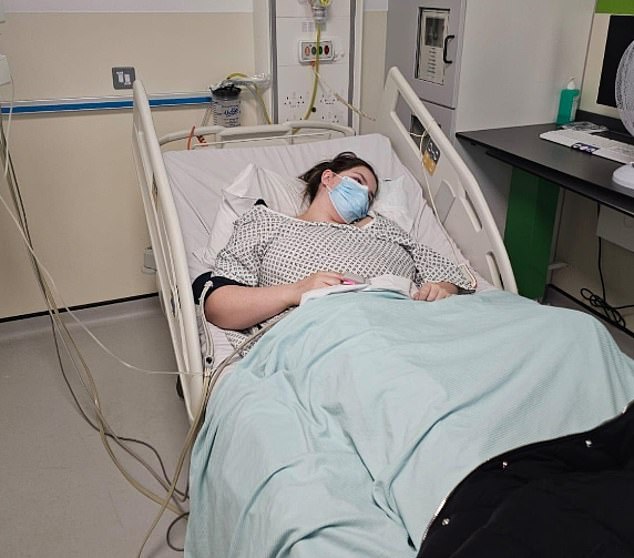
Casey Marlow, 19, was rushed to hospital a few days after her and her friends spent the evening at a nightclub thought to be at the centre of the deadly outbreak of meningitis

Keeleigh Goodwin, 21, has also been diagnosed with meningitis after attending an event at Club Chemistry earlier this month
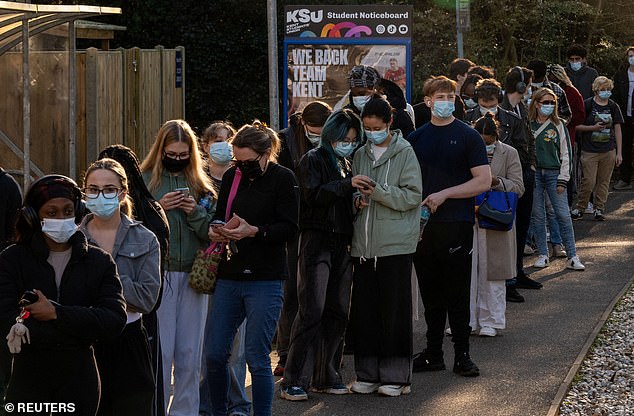
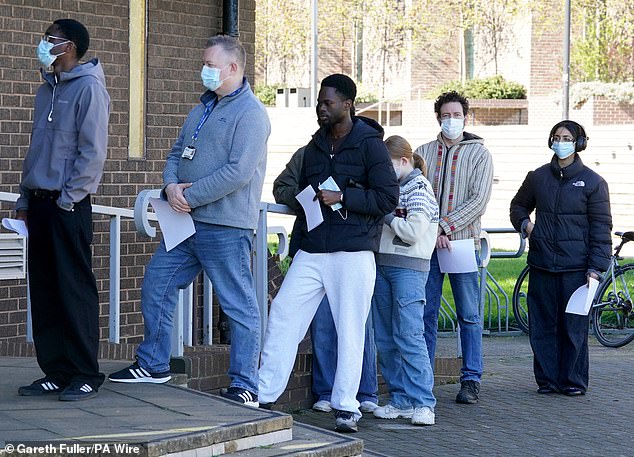
People queue to receive vaccinations at the Sports centre at the University of Kent on Wednesday, following an outbreak of meningitis cases in the area
While Health Secretary Wes Streeting has defended the agency’s response, health experts and MPs have been critical.
Helen Whately, MP for Faversham and Mid Kent and a former health minister, called for the UKHSA to ‘explain the timeline’ of events.
‘I first heard about the outbreak through picking it up on the internet, on Facebook on Sunday evening, but it sounds like actually they knew about it earlier than that,’ she told Times Radio.
‘I didn’t get an update myself until I contacted the Health Secretary first thing on Monday morning.
‘I then had a briefing from the chief executive of UKHSA, Susan Hopkins, and we spoke about the importance of reaching the schoolkids, as well as the students from the university because of the mixing.
‘But there is a question about could that have been acted on quicker if there’d been more public engagement sooner.’
Officials also highlighted that thousands of university students would have likely returned home for Mother’s Day on Sunday and unwittingly passed on the disease to their families before being informed of the outbreak.
One former health official accused the UKHSA of failing to act quick enough and claimed it had not ‘learned from the (Covid) pandemic’.
‘They will have focused too much on discussing the science of the disease and not given much thought to how real people actually behave,’ he told The Telegraph.
‘It probably didn’t occur to them that hundreds of students were flocking home last weekend to see family for Mother’s Day. As a result, they didn’t act quickly enough.’
The UKHSA has since defended its response, saying it acted ‘immediately’. East Kent Hospitals NHS Trust has been contacted for comment.
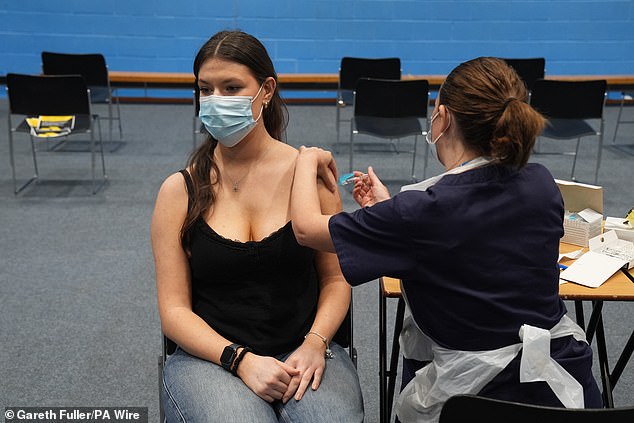
A student receives a vaccine in the sports hall at the University of Kent in Canterbury today

Students wait in line at the entrance to the sports hall at the University of Kent, where the rollout of a meningitis B vaccine to about 5,000 students began on Wednesday

A huge queue of university students snakes around the Sports centre on the University of Kent campus where people are receiving vaccines
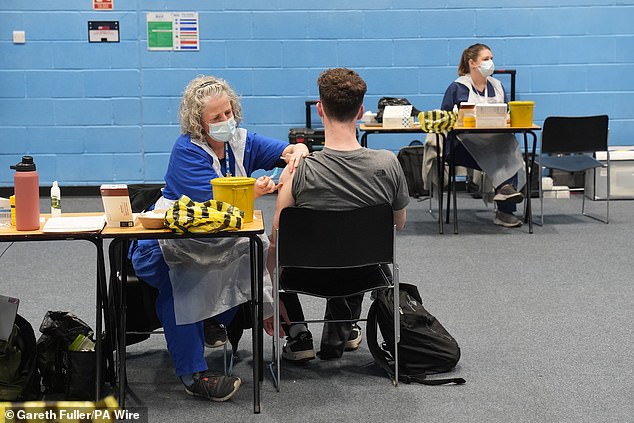
A student receives a vaccine in the sports hall at the University of Kent in Canterbury today
The overall number of cases linked to the Kent outbreak rose to 20 on Thursday, up from 15 yesterday after being declared a national incident by the UKHSA.
Of the 20 total, nine have been confirmed in the lab and 11 remain under investigation. Six of the confirmed cases so far have been established to be meningitis B.
The National Pharmacy Association industry group revealed this morning that there was now no stock of meningitis B vaccines available for people to pay for privately.
The UKHSA also issued an alert for the NHS across England on signs and symptoms of meningitis to look out for, though this does not signal the outbreak is going to spread nationwide.
The alert said the illness being seen in the Kent outbreak ‘has been severe with rapid deterioration’ and urges clinical staff to take infection control measures in the period before patients are put on antibiotics, such as face masks and other personal protective equipment (PPE).
The alert also urges doctors to have a ‘high index of suspicion where a young person aged 16 to 30 attends with consistent signs or symptoms’ of the bug.
The outbreak has already killed Juliette Kenny, an 18-year-old pupil at a sixth-form in Faversham, and a University of Kent student aged 21 who has not yet been named.
A baby is also fighting for her life in a London hospital after becoming unwell on March 4, just days before the cluster of meningitis cases emerged in Canterbury.
Nine-month-old Nala-Rose Fletcher, from Folkestone, is in intensive care at Evelina London Children’s Hospital, as doctors warned she faces ‘life-changing’ surgeries.
Experts fear events at Canterbury nightclub Club Chemistry may have acted as ‘super spreaders’ and cases could rise in the coming days. At least 10 people have been diagnosed with the disease after attending the venue between March 5 and 7.
Meanwhile, the University of Kent said the rollout of a meningitis B vaccine to about 5,000 students who are part of its Canterbury campus has begun.
In partnership with the UKHSA, the university is rolling out vaccines and is continuing to offer thousands of doses of antibiotics to students and staff.
Scenes outside the University of Kent in Canterbury today after the meningitis outbreak

People walk past Club Chemistry today after it was linked to the meningitis outbreak

The empty campus at the University of Kent today amid the meningitis outbreak
It remains unclear how students who have already left campus will get a vaccine, though it is understood they should be able to get one through their GP practice.
At the university, the sports hall has at least 15 single tables for the first wave of meningitis vaccinations. Nurses with plastic aprons and face masks were gathered waiting for students and staff to arrive at Sports Hall 2 on the Canterbury campus.
GPs across the country have now been told to prescribe antibiotics to anyone who visited Club Chemistry from March 5 to 7, plus students from the University of Kent.
The outbreak is being viewed by experts as unprecedented, owing to the high number of cases appearing in such a short space of time.
The UKHSA stressed there is plenty of NHS stock of menB vaccines after pharmacies reported they were struggling to obtain stock for people who want to pay privately.
All reported cases so far have a link to Kent, according to the UKHSA. At least one person who fell ill and had links to Kent attended a London hospital.
This person had ‘no community contacts in London’, the UKHSA said, suggesting the risk of spread in the capital is low.
Meanwhile, French authorities said a person who was admitted to hospital with meningitis in France after coming back from England is now in a ‘stable’ condition.
At Prime Minister’s Questions today, Sir Keir Starmer expressed his condolences.
He said: ‘Our deepest condolences are with the families and friends of the two young people who have died following the outbreak of meningitis B in Kent. Others are seriously ill. This will be a deeply difficult time for their loved ones.’
Health Secretary Wes Streeting told BBC Breakfast: ‘What’s worried us about the Canterbury outbreak is the pace and extent of the spread of the disease.
‘That is unprecedented, and that’s why we are being so proactive in the provision of antibiotics, because they’re an effective treatment, but also standing up vaccination at a pace and in a way that we wouldn’t normally do.
‘I hope that that will give some reassurance to people.’
Asked if there was concern the outbreak could spread to other parts of the country as students leave Canterbury, Mr Streeting said: ‘No, and lots of students from Kent have already gone home.
‘It’s exam week at the university this week, so there are still quite a few students around sitting their exams. Lots of students will have gone home, and that’s fine. That’s OK.
‘What we need people to do is to think through in terms of their individual situations – were they at Club Chemistry on March 5, 6 or 7? If the answer to that question is yes, the sensible thing to do is to access antibiotics.’
He added that other students at schools and the college in Canterbury should still attend. ‘The reassuring thing here is that this disease spreads through close, personal contact. So it is things like kissing, sharing drinks, sharing vapes.’
For people seeking vaccines privately, Boots has implemented a queuing system to enter its website, with a warning that demand for its menB vaccination service is currently high.
Superdrug has also created a waiting list, with a note on its website informing customers of a ‘national shortage’ of the jab. It said it is ‘working with suppliers to access further stock’.
Mr Streeting said he understood why people would want to access vaccines privately but people do not need to, adding there was plenty of NHS stock for those who have been told they need a jab.
Meanwhile student Annabelle Mackay revealed she had been partying at Club Chemistry on March 4 into the early hours of March 5 before falling gravely ill.
The 21-year-old law undergraduate student was left blind and unable to walk after contracting meningitis B, following her birthday celebrations. She collapsed at her home in Canterbury as her condition rapidly worsened.
Unable to see, move or speak by the time she reached urgent care, she survived only because her housemates acted quickly – carrying her to a car after her mother, on the phone, realised something was dangerously wrong.
Doctors later confirmed the diagnosis, with Miss Mackay saying her body had already begun to shut down, reported The Sun.
Laboratory scientists are urgently trying to work out if the spread is caused by a possible mutant strain of menB.
The genome of the menB strain identified in the outbreak is undergoing whole genome sequencing to see if there are any differences from known strains.
It will also be tested against available menB vaccines, though experts stressed people should get a jab if eligible.