This article is taken from the March 2026 issue of The Critic. To get the full magazine why not subscribe? Get five issues for just £25.
In 2021, the Metropolitan Police recruited new officer, PC Cliff Mitchell, who they knew had previously been accused of raping a child. Part of the reason he was able to slip through vetting was because of the colour of his skin. Mitchell would later be convicted of 13 counts of rape, including six against a child.
It is a stark example of British policing allowing the shibboleths of diversity, inclusion and equality (or equity) to take precedence over common sense and protecting the public. It is, however, the logical result of a 30-year march through our policing institutions of a powerful ideology.
The Vetting Panel
Cliff Mitchell was able to become a police officer, despite his past, due to the Met creating a means of overriding its own system for checking the background of new recruits. When candidates failed those background checks (known as vetting), for some candidates that decision was then reviewed by a Vetting Panel. The Met says this panel was created to “address known disproportionality in the vetting system, designed to consider applicants, particularly from underrepresented groups, who had been denied vetting clearances”.

This somewhat opaque wording may appear intended to obscure. But its actual meaning is clear: to prevent so many ethnic minority applicants from failing their background checks. In the process, the Met was willing to throw away the most basic due diligence designed to protect the wider public from rogue officers.
Mitchell was far from the only beneficiary. Of the recruits whose cases were reviewed and had their original vetting decision overturned, more than a fifth went on to commit misconduct or be accused of a criminal offence.
In an internal message following publication of the force’s 10-page mea culpa into the force’s historical vetting practices, the Met’s deputy commissioner, Matt Jukes, issued a defence saying that the 114 cases the Panel overturned represented only a small proportion of the 4,787 “ethnic minority colleagues” the force recruited over those years. That is true — but it entirely misses the point.
The real issue is not that the Panel considered only a comparatively small number of cases, but that the Panel existed at all. After all there are only really two options at play: either the Met believes their vetting officers are racists, or the force is willing to lower its standards for ethnic minority recruits. Which is it?
In a sign that this was not an aberration confined to the Met, a document issued jointly by the Home Office, the College of Policing and the National Police Chiefs’ Council in September 2021 pronounced the Panel to be “good practice”. One former senior policing leader claimed the operation of the Panel was “values based”. But exactly what are the “values” which prioritised the recruitment of a suspected child rapist so long as they were from an “underrepresented group”? What is the history which allowed these “values” to flourish and take over British policing?
The seeds are sown
Modern policing’s headlong drive into the world of diversity, equality and inclusion had its roots in the public inquiry into the 1993 murder of the black teenager, Stephen Lawrence. Established by the newly-elected Blair government in 1997, the inquiry was chaired by High Court judge Sir William Macpherson.
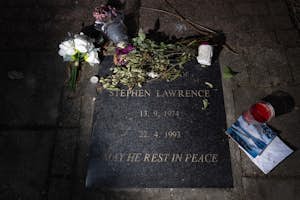
Macpherson’s inquiry revealed one central fact of which there was no doubt: the police investigation into Stephen Lawrence’s murder was botched from the earliest stages. Incompetence, racism and possible corruption were seemingly ever-present. But whilst Macpherson’s report rightly forced policing to confront these uncomfortable truths, it went far wider than purely the operational policing failures. The diagnosis was made that the Metropolitan Police was “institutionally racist” — an accusation which has been hung round British policing’s neck ever since.
Born of critical theory and “progressivist” social justice politics, the accusation of “institutional racism” was an inherently political statement, although it was presented, and has been accepted unthinkingly by many since, as merely a statement of objective truth without any recognition of its inherently political nature. Yet it is a claim which presumes that unequal outcomes are not merely a matter of differential merit or performance by individuals, but proof of a system and policies which are discriminatory and therefore something to be eliminated whatever the costs — a highly contested political assertion.
It was this contention within Macpherson’s report which fired the starting gun on an ideological battle within policing. “Progressivism”, not merely in the loose sense of modernisation but rather a political worldview would eventually become the new orthodoxy. It would require society to be seen principally through the prism of differing identity groups — and in policing the focus was always going to be race and ethnicity.
The slow march of progressivism
In the decade following the Macpherson report, progressivism within policing progressed relatively slowly. The Metropolitan Police’s 2002 “People Strategy” referred to “diversity”, but only three times. Although there is reference to the “Recruitment of Visible Ethnic Minorities” (VEM), it appears far from the document’s pre-eminent concern.
The earliest versions of the now highly controversial Non-Crime Hate Incidents (NCHIs) came into being, but only those incidents declared to be “Racist Incidents” would be recorded. The full panoply of protected characteristics would not be included until High Court judge Sir Adrian Fulford’s review of hate crime and non-crime hate incidents in 2006.
It was the arrival in 2010 of the Conservative-led coalition government which placed rocket boosters under the diversity, equality and inclusion agenda within policing. Keen to present themselves as no longer the “nasty party”, with David Cameron having advocated a more loving approach to youthful miscreants in 2006 (albeit in his speech he didn’t actually use the “hug-a-hoodie” phrase attributed to him), the Conservatives enthusiastically took up the progressive mantle across the criminal justice system.
Over the following years, Cameron-led governments created the Best Use of Stop and Search scheme which sought to substantially reduce the use of stop and search by the police. The government also commissioned the Lammy Review into the treatment of, and outcomes for, ethnic minorities in the criminal justice system.
It was David Lammy’s review which would later lead to two-tier sentencing proposals that would have made it less likely for certain “disadvantaged” groups to be given a prison sentence after being convicted of a crime. As prime minister, Theresa May launched a government audit to “tackle racial disparities in public service outcomes”. The announcement included reference to her project as Home Secretary to reduce the number of black people who were stopped and searched by the police.
It was also during this period that the institutions that would become the cultural homes of the diversity, equality and inclusion industry within policing were created.
The College of Policing is now both fairly well-known and oft-maligned for its central role. Created in 2012, its first chief executive was Alex Marshal, who had previously been chief constable of Hampshire Constabulary. He made headlines in 2014 by advocating for a change in the law to enable police forces to discriminate in favour of ethnic minorities when recruiting police officers.
Less well known, but no less influential, is the National Police Chiefs’ Council — and in particular one of the shadowy groups which emerged from within it — known as the “Workforce Coordination Committee”. Meeting regularly, with representation from the Home Office, College of Policing, police and crime commissioners and chief constables, it is this group, chaired by a chief constable, that would enforce the internal policies and practices which individual police forces would abide by.
Alongside the political leadership and these new institutions were a new kind of chief constable and human resources director. Determined to meet the expectations of ministers and the noisy demands of outside “stakeholders”, it was clear that mere bromides about increasing the recruitment of “Visible Ethnic Minorities” would no longer suffice. The Met declared that its workforce becoming more “representative” of London’s diverse population would be “Priority One” in its People Strategy.
Several police forces started to show themselves willing to break the law in the drive to advance the cause. In 2017 an applicant to join Cheshire Police, who was praised following his interview as being particularly “well prepared”, was rejected because he was a white, heterosexual man. The Force claimed the Equality Act 2010, the last hurrah of the Labour government, gave them the right to do so under the “equal merit provisions”.
An employment tribunal disagreed, declaring the approach to be unlawful and stating that the force approached the recruitment process with a “radicalness” that was “stark”. Thames Valley Police lost an employment tribunal because in 2022 it had passed over three white officers for promotion in favour of a female ethnic minority officer. One senior officer told another to “make it happen” despite being warned about the risks of not holding a competitive process.
It is difficult to believe that these cases are rare exceptions. Such legal rebukes appear to have done little to stymie the careers of those involved. The acting chief constable at the time of the Cheshire case later went on to become the national programme director for the recruitment of 20,000 police officers by Boris Johnson’s government. At least one of the senior officers directly involved in the Thames Valley case has since been promoted.
Neither was this isolated to merely internal issues — the progressivist agenda expanded into operational policing, too. The growth in the recording of Non-Crime Hate Incidents, which led to the police vigorously investigating incidents which Parliament had not prohibited whilst apparently ignoring burglaries and shoplifting, is perverse but was just one of the consequences of the new doctrine.
Similarly, embedding in policing practice the prioritisation of certain “communities” above a focus on serving the wider public — with the secretive consultation of “community leaders” considered sine qua non in the planning of any operational police activity — was no less malignant. The recent West Midlands Police–Maccabi Tel Aviv scandal, which led to the departure of the force’s chief constable, demonstrates the disastrous consequences of such an approach.
Post-BLM policing
Whilst the progressivist agenda had thoroughly gripped British policing by 2020, the murder of George Floyd some 4,000 miles away in Minneapolis acted as an accelerant. Responding to the resulting Black Lives Matter protests in the UK, the College of Policing and National Police Chiefs’ Council published the “Police Race Action Plan”, explicitly committing UK policing to an agenda of “anti-racism”.
Whilst the language is intended to appear uncontroversial, the “anti-racism” concept is anything but. Not merely a stance against racism, “anti-racism” is a political framework which assumes that unequal outcomes between different groups are the result of systemic bias, which require correction to enable equality of outcomes — whatever the impact on the public or any individuals involved.
Post-BLM policing represents the ultimate victory of progressivism over any vestige of British policing’s traditions of impartiality and acting “without fear or favour”. It applies in every domain of policing — including who gets recruited, promoted, searched, arrested, prosecuted or consulted. No longer is diversity merely one consideration amongst several. Any disproportionality is considered evidence of discrimination.
In some cases, it appears the pre-eminence of those from “under-represented” groups, whatever the impact, is considered a moral imperative. Any failure to demonstrate sufficiently enthusiastic levels of “allyship” by those in policing is deemed proof of an individual’s personal, and potentially racist, deficiency. There is little room for dissent, with those in policing who are ambitious to progress knowing they must acquiesce to the new rituals.
At the heart of determining what is legitimate in the post-BLM policing world, alongside many of the most corrosive developments of the last two decades, are policing’s human resources departments. Detached from the realities of the operational frontline yet steeped in the doctrines of diversity, equality and inclusion these bureaucrats have become the internal arbiters of the “right values”.
The future
The diversity, equality and inclusion industry promised a fairer form of policing. What it has delivered is a weaker one. It can be seen on our high streets and in our villages, towns and cities that we now have a police force that is less confident, less capable and less trusted by the public.
The soon to be abolished 37 police and crime commissioners could have been a democratic check on the worst excesses of such progressivism. In practice, many were supportive of the project, and those who weren’t either acquiesced or failed to form any effective opposition. Will whatever the Labour government seeks to replace them with really be any improvement?
There are pockets of resistance to the modern-day approach. Having successfully turned around two failing police forces, the chief constable of Greater Manchester, Sir Stephen Watson, is frequently held up as being the anti-woke police chief many would wish to see as Sir Mark Rowley’s successor as commissioner of the Met or the newly-minted National Police Service — although he will surely have competition from more “enlightened” alternatives.
But Watson is in the minority when it comes to the current crop of chief constables. Most police chiefs over the last three decades have been one of a combination of enthusiastic supporters, sycophantic careerists, or so weak in their opposition to the progressivist cult as to be irrelevant.
The police do not exist to manage “community cohesion” or to perfectly represent society. They exist to protect it by impartial service to, and enforcement of, the law. Turning the tide on the last three decades will require the building of a new consensus for policing — one which is built on the principles of impartiality and meritocracy. It must start by uprooting the progressivist orthodoxy and the diversity, equality and inclusion fruits that have germinated from its toxic wellspring.