India’s justice system has more than 54 million pending cases, with 17.2 million that have dragged on for more than five years. Until recently, Shaheen Malik’s was one of them.
The acid attack survivor’s case had been collecting dust in trial court for more than a decade – not because it was uniquely complicated or lacking critical evidence, but due to a web of challenges that clog India’s lower courts.
Archaic processes, understaffed judiciaries, and superfluous cases have made swift justice a rarity in India, where the average judge is currently dealing with more than 2,200 cases. And that backlog is only growing.
Why We Wrote This
Is delayed justice really justice? Indians have the right to a speedy trial, yet it can take decades for cases to make it through the country’s overworked and understaffed courts.
For victims of violent crimes, this means that justice and closure are often delayed, if they come at all.
“The delay wasn’t just an inconvenience, it was a punishment for being the victim,” says Ms. Malik. “You live in a permanent state of waiting, your recovery tied to a verdict that never comes. The accused got to live, marry, have children, while I was stuck in courtrooms and hospitals.”
A judge shortage
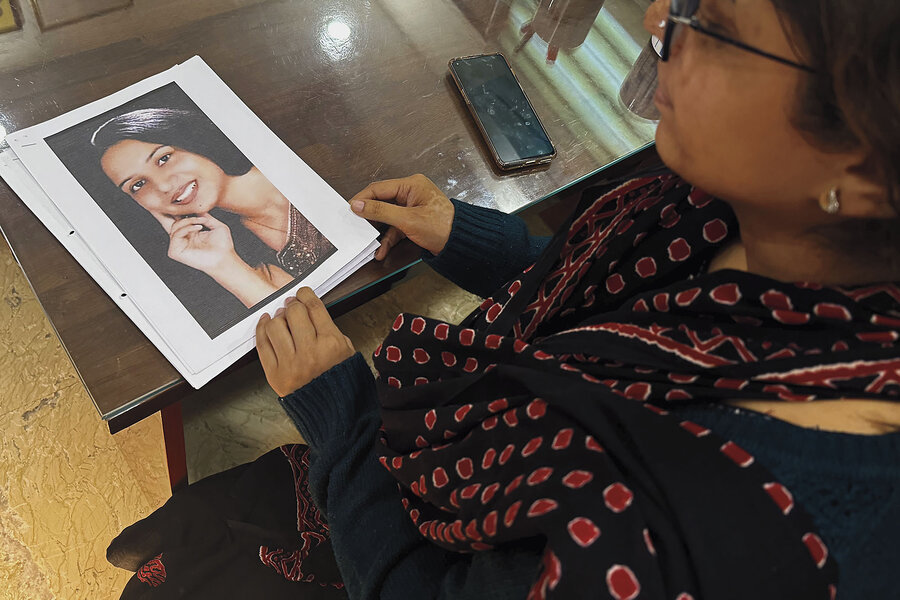
Ms. Malik moved to the city of Panipat from Delhi in 2007, finding work as a student counselor. When she left her office on Nov. 9, 2009, she saw a masked boy waiting by the sidewalk. He flung a thick green liquid at her. The acid blinded her in one eye and led to more than 20 reconstructive surgeries.
It took about four years for the police to arrest the boy – a juvenile who was promptly sentenced to three years in prison – along with three adults allegedly involved in orchestrating the attack: Ms. Malik’s former boss, his wife, and a student. The trial against them stalled. It moved from Panipat to Delhi’s Rohini Court by a 2014 Supreme Court transfer order, which also mandated a speedy trial, but that didn’t happen.

India’s chronically understaffed court system is famous for long delays – some cases have taken generations to resolve. The country has some of the lowest judge-to-population ratios in the world, and courts struggle to fill all their sanctioned posts. The judges they do have are often overworked, entrusted with several other administrative roles in India’s legal system and judicial academies. They can’t keep up with new cases, much less make a dent in the backlog.
“Without adequate support to enable judges to focus on their core role, they are left grappling with so much more than the adjudication of disputes,” says Shruthi Naik, head of the Justice, Access and Lowering Delays in India initiative at the Vidhi Centre for Legal Policy, a Mumbai-based think tank.
She says the system needs hearings to be efficient and predictable, with a dedicated administrative cadre and alternative mediation mechanisms to ensure that judges can focus on resolving the most serious and complex cases.
Some courts have tried to make changes, including using AI tools for case summarization and real-time translation. But experts say efforts at widespread reform are constricted by lack of resources. India’s total judiciary budget for 2026-27 is $540 million, or about 0.08% of the country’s total budget.
Justice Pradeep Nandrajog, former chief justice of Bombay and Rajasthan high courts, says that without a major “institutional rethink,” people could eventually lose faith in the justice system.
“We are stressing the judicial organ towards failure; many believe it has already collapsed,” he says. “If timely justice is denied, society descends into lawlessness.”
Searching for justice
Ms. Malik says that, in many ways, her 16-year search for justice put her life on hold – but she hasn’t been idle.
“My life changed completely” after the attack, she says. “I wanted to dress like a normal girl, have a career, and be free. … My old identity was lost. The purpose of my life changed.”
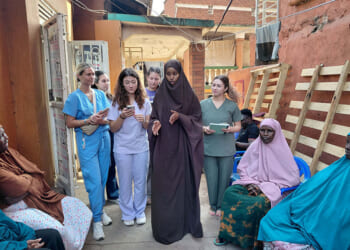
She eventually founded Brave Souls Foundation in Delhi, an organization that provides health support, housing, and counseling to hundreds of women like her – as well as legal aid.
Brave Souls is currently pursuing over 150 acid attack cases, and has secured $350,000 in compensation for survivors since its founding in 2021, says Ms. Malik. The foundation is also fighting for a ban on acid sales in Delhi, and other systemic reforms that would allow for speedy convictions.
While Ms. Malik fought for other acid attack survivors, her own case crawled along. Her evidence was recorded in 2015, cross-
examination finished in 2019, and final arguments concluded in 2024. On Dec. 24, 2025, the court finally reached a decision: All three of the accused were acquitted.
Ms. Malik describes the verdict as devastating. But she is filing a petition to challenge the acquittal.
“If I lose courage, then a lot of survivors will, too,” she says. “I have given the most precious time of my life to this fight. I don’t know if I will get justice or not, but I will fight.”