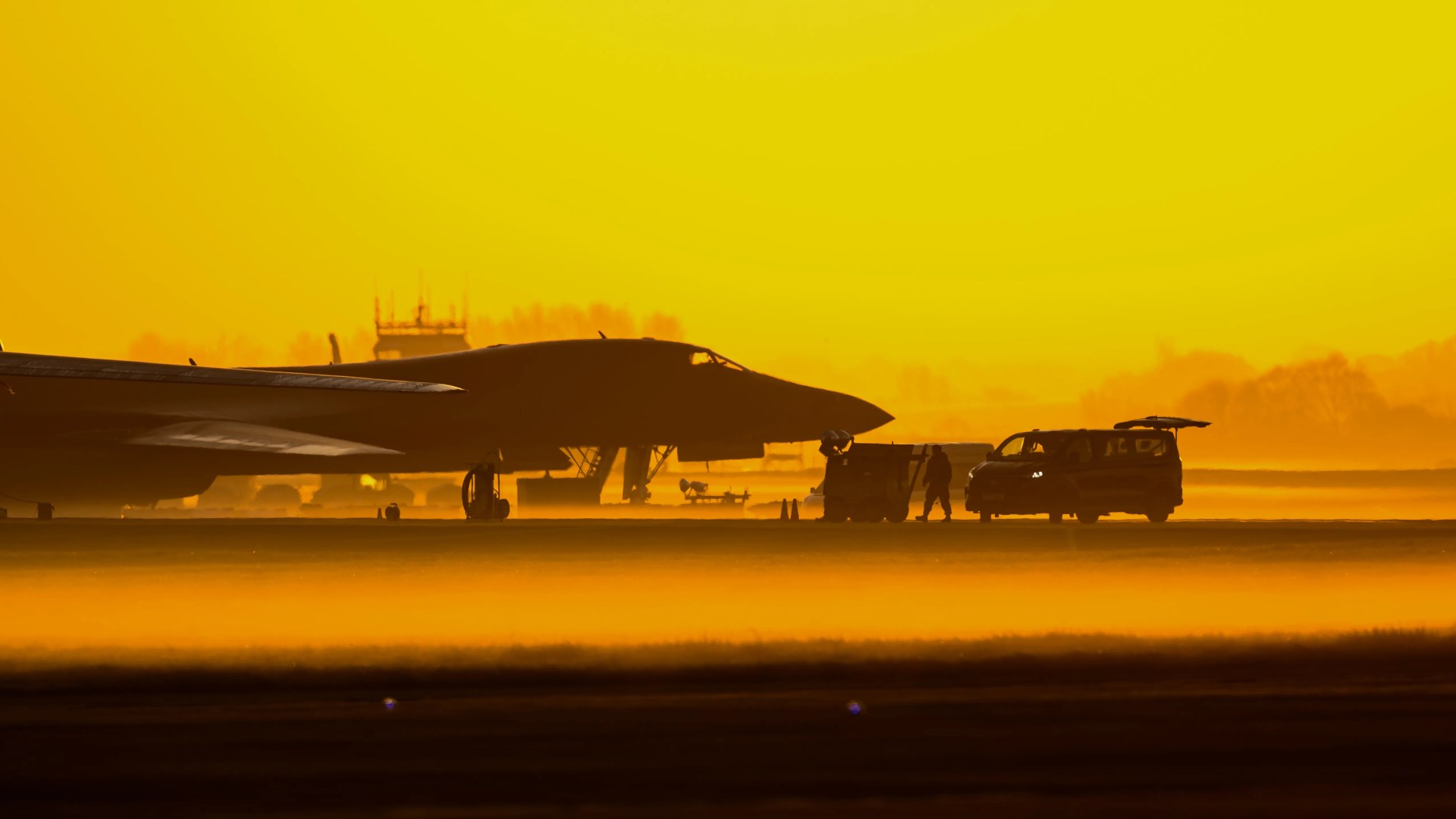
DONALD Trump’s forces have unleashed a powerful barrage of 5,000lb bunker-buster bombs on Iran.
Underground missile sites were hammered in a dramatic push to break Tehran’s chokehold on the world’s most vital oil route.
The thunderous strikes targeted hardened positions along Iran’s coastline near the Strait of Hormuz – the flashpoint waterway now strangled by the regime’s blockade.
US Central Command confirmed the hit, saying: “Hours ago, US forces successfully employed multiple 5,000-pound deep penetrator munitions on hardened Iranian missile sites along Iran’s coastline near the Strait of Hormuz.”
CENTCOM added: “The Iranian anti-ship cruise missiles in these sites posed a risk to international shipping in the strait.”
The devastating weapons – designed to smash through deeply buried targets – were identified as the GBU-72 Advanced 5K Penetrator.
Read more on Trump & Iran
A US official told CNN the bombs were the cutting-edge bunker busters first deployed in 2021.
Built to obliterate heavily fortified underground threats, the monster munitions mark a major escalation in Trump’s campaign to crush Iran’s grip on global shipping.
The Strait of Hormuz – a narrow artery carrying roughly a fifth of the world’s oil – has been effectively shut down by Iran using mines, drones and naval forces.
The fallout has been immediate and brutal as oil prices have surged past $100 a barrel and nearly 27 per cent of global maritime energy flows have been choked off.
It comes as Trump vowed to break the blockade – with or without allies.
The US President erupted at Nato partners and European leaders who have refused to join the fight, declaring in a fiery post: “WE DO NOT NEED THE HELP OF ANYONE!”
He also took a swipe at Sir Keir Starmer, branding him “no Winston Churchill” and blasting Britain’s refusal to back US military action.
Speaking from the Oval Office on Tuesday, Trump said: “He hasn’t been supportive, and I think it’s a big mistake.
“I’m disappointed with Keir – I like him, I think he’s a nice man, but I’m disappointed.”
Despite the diplomatic fallout, US forces are pressing ahead as they pound Iranian positions while ramping up deployments across the region.
Adm. Brad Cooper made clear the mission is far from over, warning: “The US will continue to rapidly deplete Iran’s ability to threaten freedom of navigation in and around the Strait of Hormuz.
“Our progress remains steady, and we remain vigilant against the enemy.”
The high-stakes battle is now the central front of the war, with Washington determined to reopen the waterway and restore the flow of global oil.
Trump is also weighing a do-or-die commando strike that could smash Iran’s nuclear threat once and for all.
It comes as…
The daring plan would see elite US and Israeli troops deep into hostile territory to seize – or destroy – Tehran’s hidden stockpile of enriched uranium.
The target is Iran’s remaining uranium stockpile buried deep beneath heavily bombed nuclear sites in Isfahan, Fordow and Natanz.
Despite devastating US-Israeli airstrikes last year, hundreds of kilos of highly enriched uranium remain – enough to be turned into weapons-grade material in weeks.
The goal would be to physically seize or neutralise the radioactive material, finishing the job airstrikes couldn’t.
Experts say it could take days, involve hundreds or even over 1,000 troops, and require total military dominance in the skies and on the ground.
The operation could potentially include forces such as the 75th Ranger Regiment or the 82nd Airborne Division.
Meanwhile, experts say the killing of one of Iran’s most powerful figures could push the regime closer to collapse, handing Trump and Israel a major strategic edge.
Ali Larijani – a key powerbroker dubbed the regime’s “shadow leader” — was wiped out in Israeli airstrikes after overseeing a brutal crackdown that left tens of thousands dead.
Jason Brodsky, policy director of United Against Nuclear Iran, told The Sun his removal could fatally weaken Tehran from within.
He said: “Ali Larijani’s demise is a loss for the Islamic Republic.”
But he added the hit could actually speed up the regime’s downfall — stripping it of experienced leadership and leaving hardliners exposed.
Brodsky warned: “Now the more hardline leadership will make mistakes and that will accelerate the decline of the Islamic Republic faster than would have otherwise been the case.”