The UK may have chosen not to join the American-Israeli airstrikes on Iran, but it has not been able to escape the political fallout. The question of whether to intervene has proven agonizing for both the Labour government and its opponents on the right. It has also painfully exposed the limits of Britain’s power in the 21st century.
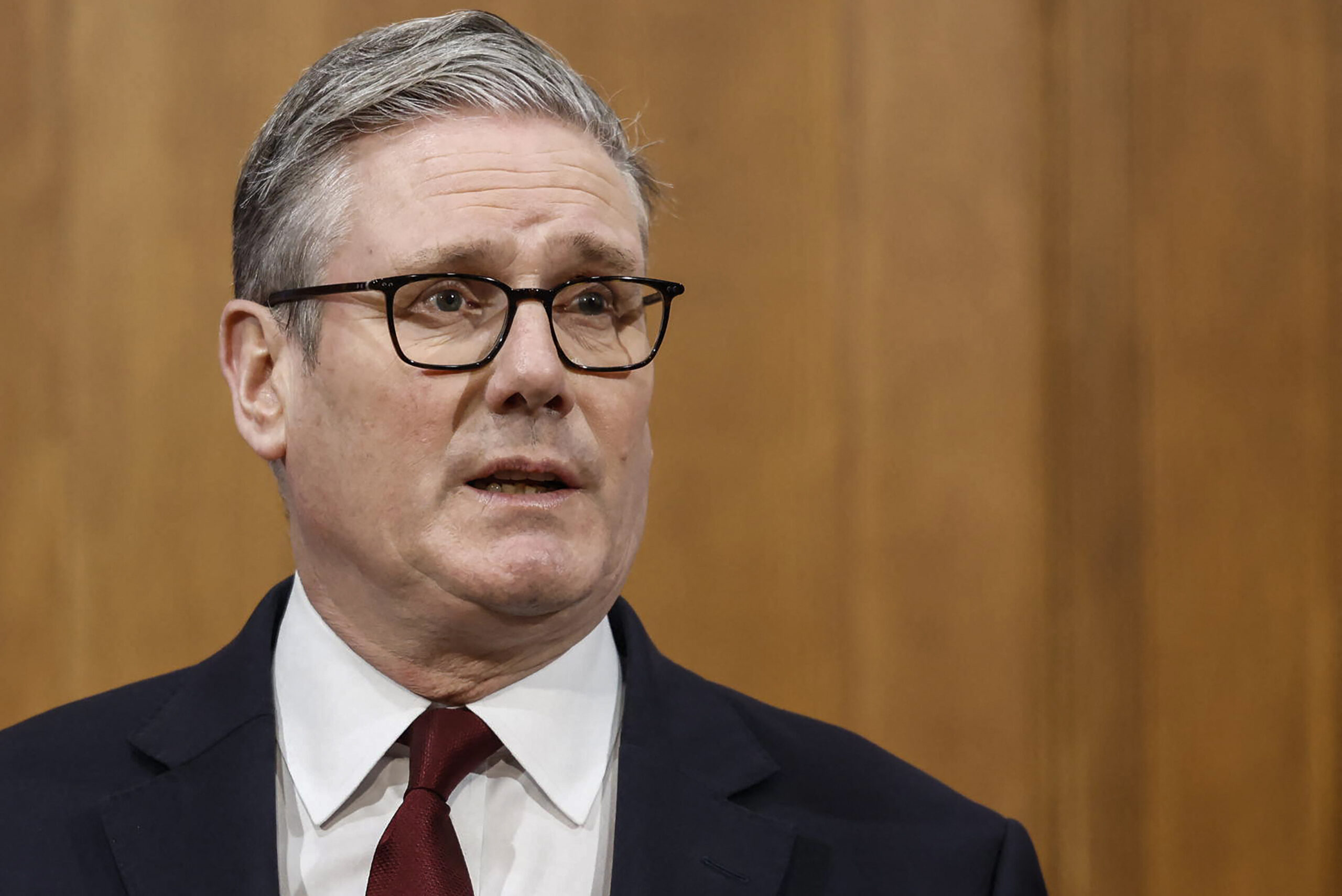
Keir Starmer’s decision before the bombing began not to allow the U.S. to use British airbases was initially seen as a product of the PM’s slavish devotion to international law (a hangover from his pre-parliamentary career as a human-rights barrister). Any pre-emptive action, UK government lawyers concluded, would be illegal unless Iran posed an “imminent” threat to Britain. The truth, it now seems, is more nuanced. Starmer reportedly made the case to his cabinet that, while the UK should not get involved in the war directly, it should allow the U.S. to use British bases, as this would help them hit their targets more quickly. He also felt it was important not to put unnecessary strain on the relationship with the Americans, or give the mercurial Trump any excuse to rip up recent U.S.-UK trade agreements.
But a weakened Starmer, who had just barely survived the scandalous appointment of a friend of Jeffrey Epstein as UK ambassador to Washington, failed to make this case to his cabinet. The “soft left” faction of his government, best represented by the Net Zero minister and former party leader Ed Miliband, urged against intervening—partly on pacifist grounds, citing the disasters of Iraq and Afghanistan; partly based on an intense dislike of Donald Trump; and most extraordinary of all, partly out of fears that it would upset British Muslims.
In fact, only the day before the war began, Labour lost one of its safest parliamentary seats in a by-election in Greater Manchester. The Green Party pulled off a decisive victory by aggressively courting the Muslim bloc vote, including by producing campaign material in Urdu, the national language of Pakistan. Even before Labour’s bruising by-election defeat, the question of “Will it go down well with Muslims?” is now central to foreign-policy decisions. (A senior diplomat recently suggested Starmer’s recognition of a Palestinian state was driven by appeasement of Islamic sectarian voters.)
In any case, perhaps it doesn’t matter much what a British prime minister may want to do. Starmer’s actions have been constrained not only by domestic politics, but also by Britain’s waning military capabilities. On 1 March, when a Hezbollah drone strike hit a Royal Air Force base in Cyprus (considered British sovereign territory), the UK was initially in no position to respond. For the first time in years, there were no active Royal Navy ships in either the Mediterranean or the Gulf. Even when Starmer had taken the decision to send a single ship—HMS Dragon, an air-defense destroyer—to defend Cyprus, it sat idle for a week before it could set sail. It is expected to take another week before it arrives in the Eastern Mediterranean to defend the RAF base.
For a nation whose identity is wrapped up in “ruling the waves,” the Cyprus affair has been experienced as yet another humiliating reminder of Britain’s diminished global status. On the plus side, it has injected some much-needed realism into the national discussion on Iran—and something resembling a debate on what might be in Britain’s national interest.
One political scientist has suggested you’d have to go back to the Suez crisis of the 1950s to find opposition parties opposing the government’s line on British military action. The right has always been more militaristic and Atlanticist, and thus predisposed to getting involved in American military ventures. The left, meanwhile, has supported various interventions and wars on “humanitarian” grounds. The Labour Party backed Margaret Thatcher’s invasion of the Falklands in 1982. The Conservatives, when in opposition, backed Tony Blair’s adventures in Iraq and Afghanistan. Even Miliband, who led the cabinet revolt against Britain’s involvement in Iran, supported the Tories’ war in Libya to topple Muammar Gaddafi. Yet, with each Middle Eastern intervention proving disastrous, the elite consensus in favour of Britain meddling in global affairs has frayed considerably over the past two decades.
As a result, British politicians have struggled to find their footing on Iran. Starmer seems to have landed, almost by accident, on a position that’s broadly aligned with public opinion: using military force to defend Britain’s own bases, but without getting involved in the broader war. For the Greens—a pacifist, anti-NATO, anti-Israel, and increasingly Islamist-tinged party—there was never any chance they would back British involvement in Iran.
For the main parties of the right, adjusting to the prevailing mood has proven more difficult. When the American-Israeli airstrikes began, the Conservative Party leader Kemi Badenoch immediately hit out at Starmer for failing to endorse them and for not himself taking ‘offensive’ action against Iranian missile sites. Yet she was immediately forced to clarify that she did not want the UK to join the war fully.
The party with the most difficult tightrope to walk is Reform UK, with polls suggesting its voters are evenly split on intervention. Nigel Farage gave his immediate and full-throated backing to “the Americans in this vital fight against Iran,” only to climb down within a week, citing the Cyprus debacle. We “don’t have a navy” and “cannot get involved directly in another foreign war,” Farage told a press conference. Robert Jenrick, Reform’s shadow chancellor, put it more pithily: “We are the party for working people, not drawn-out wars in faraway places.”
Subscribe Today
Get daily emails in your inbox
As well as the broader opinion polling on the unpopularity of the war, Farage has also faced opposition from his right. Rupert Lowe, a former Reform MP, recently set up the Restore party, which takes a far harder line on migration than even Reform and is starting to stake out an “isolationist” foreign policy. Although most Britons have no idea who Lowe is, he has a vocal and assertive online following, particularly on X, where he is boosted by retweets from Elon Musk. As such, Lowe’s interventions do seem to worry Reform insiders. One thing that can certainly be said of him is that he’s been far more consistent on Iran than Farage, stating unequivocally at the start of the war: “ZERO British troops on the ground—in Iran or Ukraine. Our priority is the British people – that is our only priority.”
Farage initially tried to make a virtue out of “not following popular opinion,” but his misreading of the public mood on Iran has been a rare misstep. Since Iraq and Afghanistan, most Brits don’t want to get involved in another American military quagmire. Making this war even more unpopular is that it’s being prosecuted by Trump, who is widely seen as an erratic agent of chaos, a view seemingly confirmed by his threats to annex Greenland and his administration’s relentless scolding of Europe. All that, combined with an increasing animus towards Israel in certain sections of society, and you end up with a war that only about a quarter of Brits would support joining, compared with about half who say the UK should only take defensive actions. Whatever the right course of action may be, for Britain or the Middle East, Farage was clearly out of tune with the public’s skepticism.
Trump recognised in 2016 that the mood in America, even among Republicans, had turned against foreign military misadventures. There is a similar skepticism in Britain, but whether Reform UK can credibly speak to it has suddenly been thrown into doubt.