Rationing fears are rising today as a minister admitted the possibility cannot be ruled out amid chaos in the Middle East.
Treasury minister Dan Tomlinson said the government is ‘monitoring’ the situation ‘carefully’, with global supplies under huge pressure.
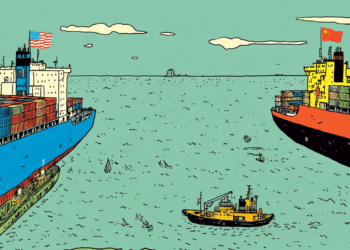
Around a fifth of the world’s oil passes through the Strait of Hormuz, but it has been effectively shut by Iran after the US-Israeli launched attacks.
Pump prices have already been soaring, while there is alarm that the energy price cap could rise dramatically when it changes again in July.
The blockage could have a host of knock-on effects, including on medicine stocks.
Donald Trump has appealed for countries such as the UK, France, Germany, Canada and even China to help tankers pass through the critical Strait.
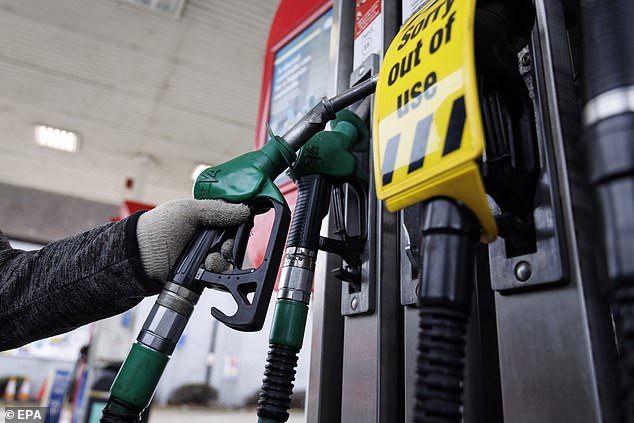
Pump prices have already been soaring (file picture), while there is alarm that the energy price cap could rise dramatically when it changes again in July
But the appeal has been knocked back while the conflict is active, and it is unclear how any patrols would work in practice.
Asked if the Government was making contingency plans for rationing, Mr Tomlinson told Times Radio this morning: ‘We will monitor the situation, and we’ll monitor it carefully.’
He said: ‘At the moment, it is too early to tell what the impact of this crisis will be in the coming months.
‘What we have seen in the last two weeks is that there has been sharp increase in the cost of oil used to heat people’s homes, and the Government has stepped in and said we’re going to provide £50million of support for people across the UK who are reliant on heating oil.’
Former No10 energy expert Nick Butler said yesterday that the effective closure of the Strait would mean a global ‘shortage’ of oil within weeks.
Prof Butler, who was an adviser to Gordon Brown and worked for BP for nearly three decades, insisted ministers must be ready to protect the ‘crucial sectors’ of the economy.
‘I think it does mean a form of rationing,’ he told the BBC.
‘I think we learnt from the tanker drivers dispute in 2000 that oil and gas supplies are absolutely crucial to the running of the economy and you can’t bring on new supplies quickly…’
He added: ‘In the short-term, we have to look at what supply we have and look at the crucial sectors, the health service, food supply, hospitals, those are key elements that must be protected.
‘And beyond that, it is then for the government to decide how to ration what is left if we get to that situation.’