- Elemental by Arthur Snell (Wildfire £25, 400pp)
Our world is going to change in profound ways,’ Arthur Snell writes in this enlightening but often shocking work, ‘and that is going to happen in the lifetimes of many of the readers of this book.’ There can be debate about how much of the changes in global climate are due to human activity but there is little doubt that it is changing. As his title suggests, Snell structures his book around the ancient idea of four elements that make up our world: earth, air, fire and water.
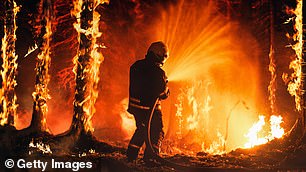
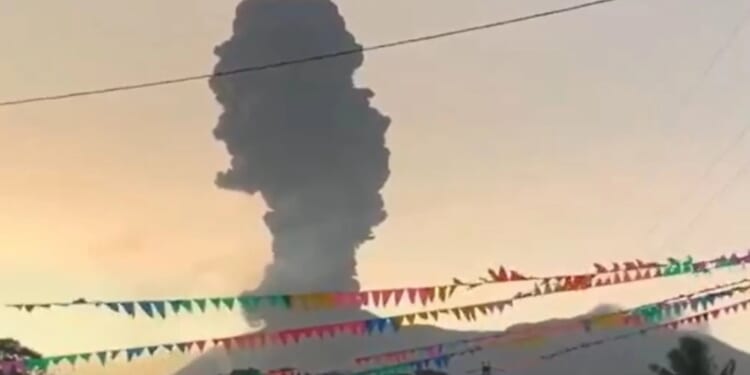
Fighting forest fire
Under ‘Earth’, he looks at the changing climate’s threat to agricultural productivity. According to the World Food Programme, 345 million people are affected by food insecurity. India, which recently overtook China as the world’s most populous country, may struggle to feed its growing numbers.
‘Air’ deals with rising temperatures. Extreme heat is making parts of the world uninhabitable. It will drive migration from south to north. Even areas of the USA are likely to become hard to live in as the air heats up. ‘Fire’ is very evidently a growing problem. Every year brings news of increasingly devastating wildfires from California to Australia.
Of ‘Water’ there is too much in some places and too little in others. Tiny Pacific nations such as Tuvalu face the prospect of sinking beneath a rising ocean. By contrast, the Indian city of Chennai, population 12 million, ran out of water on June 19, 2019, resulting in panic and social unrest. Frighteningly, some authorities predict that the same could happen in London by 2040.
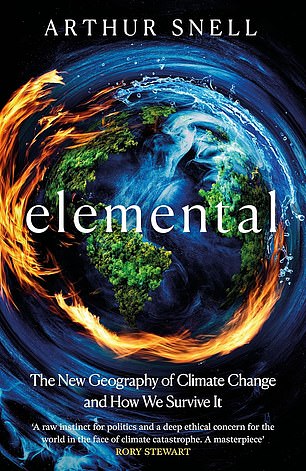
elemental is available now
Exact predictions about the ‘profound changes’ in prospect are difficult to justify, but current trends suggest the geopolitics of the second half of this century will look very different to those of today. As new sources of energy replace oil, the Gulf states will lose importance. China seems to have made better plans for the future than the USA. The melting of polar ice, opening up the Arctic Ocean, will create ‘a new, unplayed field in the great game of global politics’.
Although much of what he chronicles in Elemental is alarming, Snell is no doom-mongering pessimist. He offers a vision of the future in which change can be good news.
African nations might help power Europe with solar energy. Xlinks is a massively ambitious project involving a renewable-energy plant in Morocco. This would export what it produced as far as Britain, via the world’s largest undersea power cable. Planes might be powered by hydrogen; planting forests, rather than destroying them, could become national priorities. New shipping routes across the Arctic could improve trade between Asia, Europe and North America. Different futures are possible. Which we live in is, as Snell concludes, ‘a choice for us to make’.