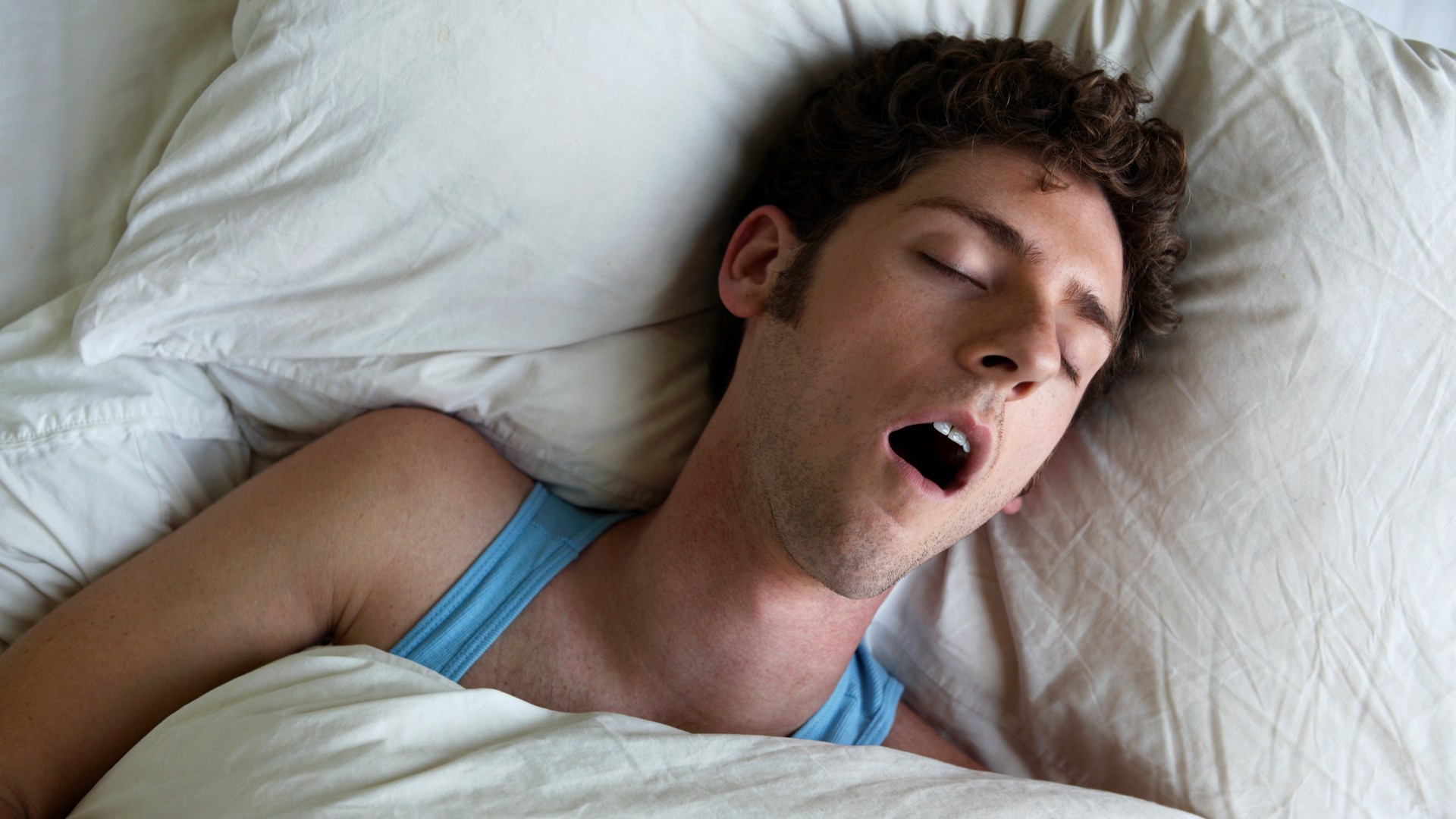
A COMMON epilepsy pill could soon be used to help severe snorers stop for good, research has suggested.
Trials found that Sultiame – used as an anticonvulsant since the 1950s – eased the symptoms of dozens of obstructive sleep apnoea (OSA), sufferers.
Scientists, who labelled the findings “a breakthrough”, discovered it could reduce these issues by almost 50 per cent.
OSA, which impacts nearly a billion people worldwide, causes the walls of the throat to relax and narrow or close for a few seconds during sleep.
This triggers breathing pauses and loud snoring.
Up to 3.9 million people in the UK are estimated to have moderate or severe OSA, although it is considered to be under-diagnosed affecting up to 10million.

Not all snorers have sleep apnoea, but the two often go hand in hand, and the louder the snoring, the greater the chances of having it.
Current OSA treatments usually include lifestyle changes such as losing weight, cutting down on alcohol, sleeping on your side, and using a continuous positive airway pressure (CPAP) device.
This is a mask worn over the face during sleep that gently forces air into the lungs to stop the airway from collapsing.
But, some people find the mask cumbersome and research suggests nearly a third never use the device, or abandon it.
The study, published in the medical journal The Lancet, involved 298 patients with moderate to severe sleep apnoea.
They were split into four groups with one prescribed 100mg of sultiame once per day at bedtime, the second took 200mg, with the third given 300mg.
The fourth group was prescribed a placebo pill.
Over a follow-up of 15 weeks, the researchers found that those who received higher doses of sulthiame experienced up to 47 percent fewer breathing interruptions during sleep compared with those given a placebo.
They also showed improved oxygen levels overnight.
Patients who had been feeling sleepy during the daytime also felt less so when they took sulthiame.
Professor Jan Hedner, an expert in pulmonary medicine at the University of Gothenburg and study co-author, said: “We have been working on this treatment strategy for a long time, and the results show that sleep apnoea can indeed be influenced pharmacologically.
“It feels like a breakthrough, and we now look forward to larger and longer studies to determine whether the effect is sustained over time and whether the treatment is safe for broader patient groups.”
According to the British Snoring & Sleep Apnoea Association (BSSAA), the ratio of male to female snorers is 2.3 to one.
And while the leading cause of snoring is obesity, about a third of snorers are slim.
It is triggered by obstructed airflow during breathing, which causes parts of the respiratory system to vibrate.
This helps to explain why men snore more often and more loudly than women: men tend to have larger airways, into which their tongues fall back when they sleep, plus a higher proportion of fat in the upper part of the tongue.
Do you have obstructive sleep apnoea?
Sleep apnoea is when your breathing stops and starts while you sleep.
The most common type is called obstructive sleep apnoea (OSA).
Sleep apnoea needs to be treated because it can lead to more serious problems.
Symptoms mainly happen while you’re asleep, they include:
- breathing stopping and starting
- making gasping, snorting or choking noises
- waking up a lot
- loud snoring
During the day, you may also:
- feel very tired
- find it hard to concentrate
- have mood swings
- have a headache when you wake up
It can be hard to tell if you have sleep apnoea.
It may help to ask someone to stay with you while you sleep so they can check for the symptoms.
If a GP thinks you might have sleep apnoea, they may refer you to a specialist sleep clinic for tests.
Source: NHS