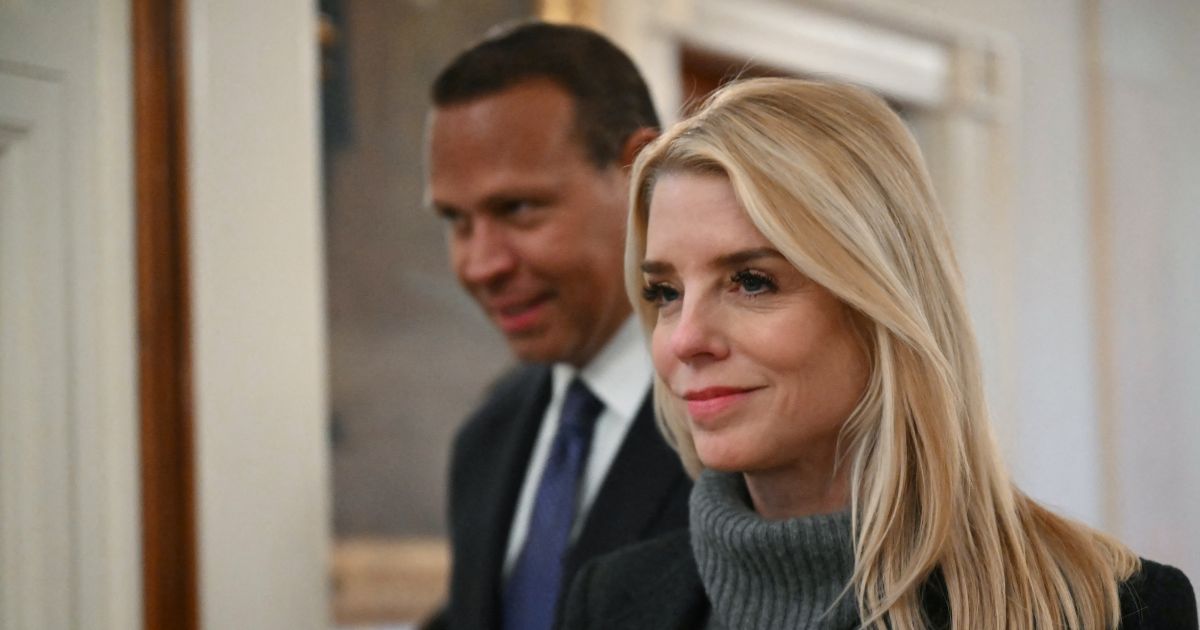
Attorney General Pam Bondi has joined the ranks of Trump administration appointees who are living on military bases due to increased threats.
According to The New York Times, Bondi “quietly relocated” to a base near Washington, D.C.
The report, which relied on sources it did not name, said she faced “threats from drug cartels and critics of her actions in handling the Jeffrey Epstein case.”
The report said that the move came over the past month after threats against her were noted by federal law enforcement.
During that time, Bondi has come under extensive public criticism for the flow of Department of Justice information in the release of material related to Epstein.
The Trump administration’s capture of former Venezuelan President Nicolás Maduro was also a trigger for threats against Bondi, the report said, citing what it called “a senior official with direct knowledge of the situation.”
Bondi’s office made no comment other than to request the location of the base where she lives not be made public.
White House Deputy Chief of Staff Stephen Miller, Secretary of State Marco Rubio, departing Homeland Security Secretary Kristi Noem, War Secretary Pete Hegseth also live on military bases, The New York Times reported.
Army Secretary Daniel Driscoll and Navy Secretary John Phelan also live on bases. Phelan’s D.C. home was damaged last year in a fire.
During the first term of President Donald Trump, former Defense Secretary Jim Mattis and former Secretary of State Mike Pompeo lived in secure military housing.
A report in the Independent said that Bondi moved around the time of the Super Bowl.
At that time, Epstein survivors went public to force a wider and faster release of documents held by the Justice Department.
A report from the Institute for Strategic Dialogue noted that threats against public officials have skyrocketed.
“Violent rhetoric targeting public officials increased 241 percent when comparing October 2021–September 2022 with October 2024–September 2025,” the report said, noting that “Republicans received 33 percent more violent threats.”
“President Trump was disproportionately targeted, incurring the vast majority of threats against Republican leaders,” the report said.
The report said that after the 2024 attempted assassination of Trump, “threatening discourse against Republicans began surging while violent language against Democrats grew at a comparatively slower pace.”
“This divergence persisted through the election and presidential transition and has continued since,” the report noted.
The report further said that “social media platforms host substantial volumes of violent threats against officials that remain accessible despite clear policy violations.”

Advertise with The Western Journal and reach millions of highly engaged readers, while supporting our work. Advertise Today.