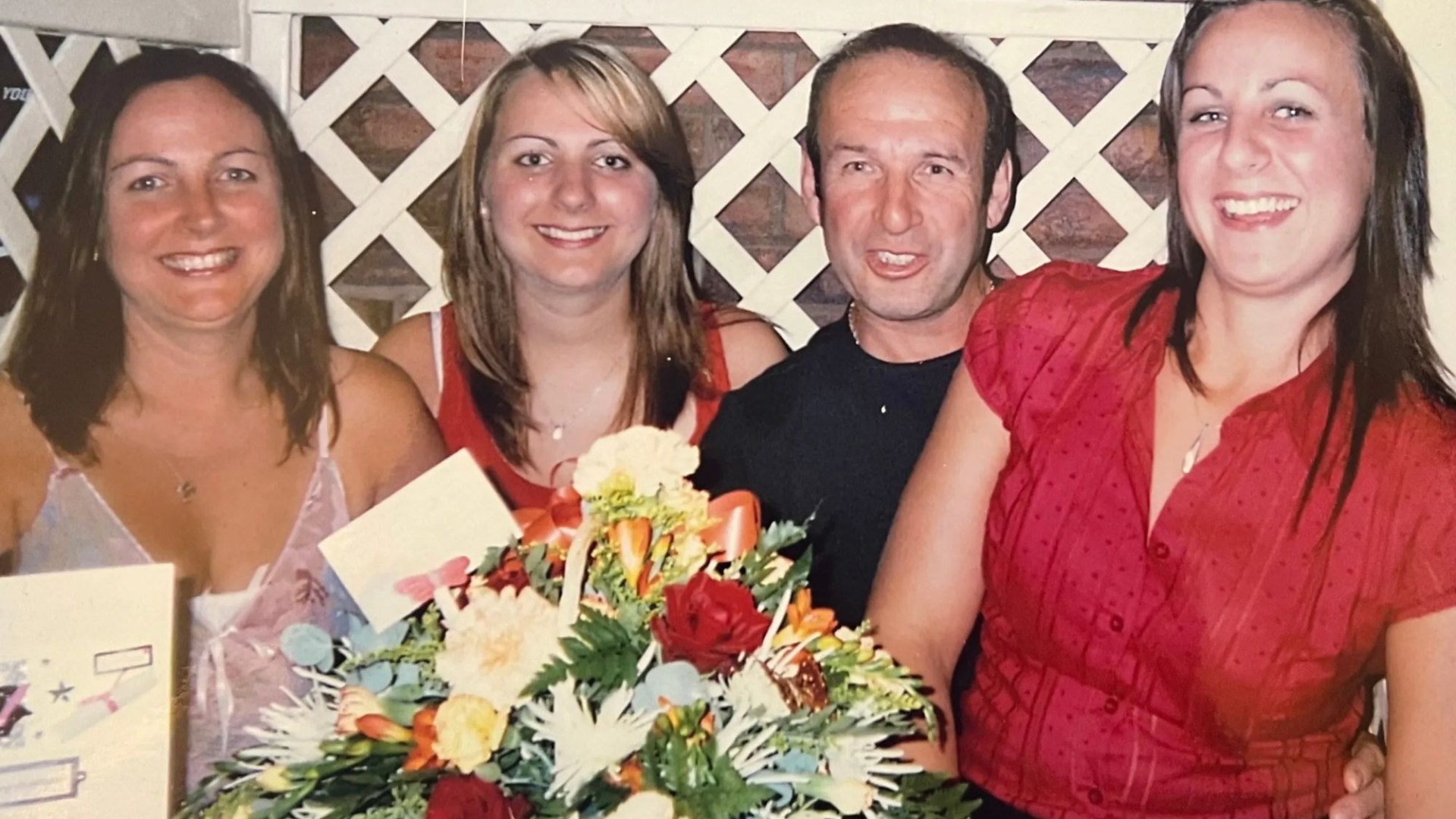
WHEN Susan Smith suddenly began struggling with acid reflux and was constantly thirsty, she was prescribed antacids.
But after her symptoms worsened and she developed “tummy issues” as well as yellowing of her skin, her family knew something was seriously wrong.
An ultrasound scan in October 2011 showed she had pancreatic cancer. Tragically, by February 2012 she was dead.
Yet, for her daughters Rebekah Stubbs, now 44 and Laura Smith, 36, their heartbreak was not over.
Eleven years later in July 2023, their father Richard Smith was diagnosed with the same disease after battling persistent back pain.
In October 2023, just three months after diagnosis, Richard died aged 70.
READ MORE ON PANCREATIC CANCER
“Not only did mum die of it, but then dad did too. You couldn’t write it,” Rebekah, a former primary school teacher, said.
Laura, a nurse, added: “They weren’t smokers and they weren’t drinkers. They probably had a bit of whiskey every so often, but they went to a fitness club and looked after themselves.
“They didn’t have risk factors that you’d think ‘that could be why’.
“They were both health-conscious people, but yet both then developed pancreatic cancer.”
They were “supportive with anything that we wanted to do”, she said.
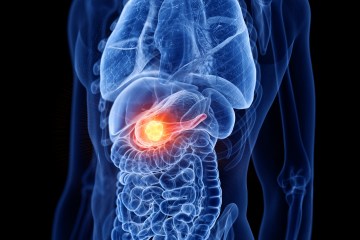
Dubbed the “silent killer” due to its subtle symptoms, pancreatic cancer kills around 100,000 people in the UK every year.
According to the charity Pancreatic Cancer UK, it is the deadliest common cancer and, currently, more than half of people die within three months of diagnosis.
Common symptoms include abdominal and back pain, unexplained weight loss and indigestion, loss of appetite, changes to bowel habits and jaundice.
However these symptoms are often mistaken for other, more common ailments such as IBS.
The charity said 80 per cent of people with pancreatic cancer are not diagnosed until after the disease has spread, meaning life-saving treatment is no longer possible.
There are currently no early detection tests.
Recalling their parents heartbreaking diagnoses, Rebekah and Laura said they noticed a change in their mother around the summer of 2011, when Susan “kept swallowing like she’d got something stuck in the back of her throat” and was “really thirsty” all the time.
She also experienced “acid reflux” and generally felt “not well in herself”.
She was diagnosed with pancreatic cancer after being prescribed antacids which “didn’t seem to help” and suffering “tummy issues”, nausea and yellowing of the skin.
Laura said: “Because mum was a nurse, I remember her looking in the mirror and thinking, ‘I look and I feel as if I’ve got something nasty going on’, (and) she was right.”
“They basically said that she’d got a tumour on the head of her pancreas and it had spread to the bile ducts, which was causing her to be yellow because they were blocked,” she added.
Laura said her mother had surgery to fit a stent in either side of her bile ducts to try to stop the jaundice, then a “couple of rounds of chemotherapy” that made Susan “so poorly and unwell”.
By Christmas, Rebekah said Susan could not keep “anything down” and was struggling to “get on top of the pain medication”, which escalated significantly after she experienced bloating and swelling around her abdomen that she needed to have drained.
Laura added: “It was quite a sudden death. She had been sitting in bed and talking to us and been quite content.
“And then, unfortunately, she had a big seizure and passed away quite unexpectedly.
“Dad had actually gone to have a look around a hospice for mum.
“Then he returned and mum was no longer here. That must have been very difficult to understand what just happened,” she added.
After Susan died in February 2012, aged 55, Rebekah and Laura said they took on the responsibility of caring for their maternal grandmother who had dementia, and who died in February 2022.
Within a year of losing their grandmother, Laura said her father started experiencing back pain on his right side, for which he saw a physiotherapist and tried to “go down the correct route of going to your GP”.
He had blood taken and, despite seeing a physiotherapist, Laura said his back pain was “getting progressively worse”.
After months of inaction from Richard’s doctors, Laura said she told her father that “we need to do something about it”, so she took him to A&E in July 2023 where they waited 12 hours to be seen.
This is when a further blood test and scans confirmed Richard “had something going on with his liver”, which an endoscopic biopsy of his liver would later confirm was pancreatic cancer.
“So dad was then faced with going through everything that his wife did and then knowing what may lie ahead,” Laura said.
He underwent pancreatic enzyme replacement therapy, which helped him digest food, and was due to start palliative chemotherapy.
But by the end of August, Richard was driving his van when he had an accident after what doctors initially believed to be a stroke, which was later revealed to be cancer metastasising in his brain.
After this incident, Rebekah said: “His personality wasn’t even the same. He seemed to lose his mobility.
“He was really weak too. He couldn’t even put his Pin in his mobile phone.”
Laura added that her father’s decline was “so much quicker” than her mother’s because it had spread to his brain, meaning treatment options were “really limited”.
She said it also meant he became “aggressive and challenging”, remarking that “he’d never been like that before”.
In the aftermath of Richard’s death in October 2023, Rebekah said she wanted to do something to raise awareness about pancreatic cancer, so she wrote to Pancreatic Cancer UK to tell them about her family’s story.
Rebekah added: “I suppose it’s part of my grieving process.”
“Misdiagnoses, awareness, quicker pathways (to diagnosis), and knowing what different symptoms to look out for.”
The sisters also said they felt encouraged by Pancreatic Cancer UK’s announcement last year that the charity is funding a world-first new clinical study that could detect pancreatic cancer through a breath test.
Laura said: “Hopefully, that’ll be successful. It’s a quicker route (to diagnosis) than surgery and that’s got to be positive.”
She added: “In terms of our circumstances, I think it’s certainly unusual to have both parents diagnosed with pancreatic cancer.
“They’re not related. They’ve got different genetics.
“It’s hard and really tough that neither one of them survived.”
The terrifying truth about pancreatic cancer
PANCREATIC cancer is the 10th most common in the UK, accounting for three per cent of new cancer cases.
But it is considered one of the most deadly.
Around 10,786 people are diagnosed every year in the UK, and 9,558 lose their lives.
More than half of people die within three months of being diagnosed.
Just 4.3 per cent of patients survive the disease for 10 years or more.
Pancreatic Cancer UK predicts that the number of people dying from it annually will overtake breast cancer by 2027.
Sadly, the disease doesn’t always cause symptoms in its early stages.
As the cancer grows and you do begin to show signs, these may come and go and be unspecific, making it hard to diagnose.
However, you can be on the lookout for:
- Indigestion – a painful, burning feeling in your chest with an unpleasant taste in your mouth
- Tummy or back pain – it may start as general discomfort or tenderness in the tummy area and spread to the back, which get worse lying down and feel better is you sit forward
- Diarrhoea and constipation – see a GP if you have runny poos for more than seven days, especially if you’ve lost weight as well
- Steatorrhoea – pale, oily poo that’s bulky, smells horrible and floats, making it hard to flush
- Losing a lot of weight without meaning to
- Jaundice – yellow skin and eyes, as well as dark pee, pale poo and itchy skin