The skin on your décolletage – like the neck and hands – is notorious for showing signs of ageing, whether that’s pigmentation, fine lines or crepiness.
Of course, there is nothing wrong with getting older, but it’s annoying if the skin on your chest area seems to be ageing at a faster rate than your actual face.
It’s perhaps unsurprising that this happes, because the amount of attention we pay to the décolletage versus our facial skin – coupled with the fact the skin over the chest area is particularly thin – means this part of the body is often rather neglected and vulnerable to visible signs of ageing.
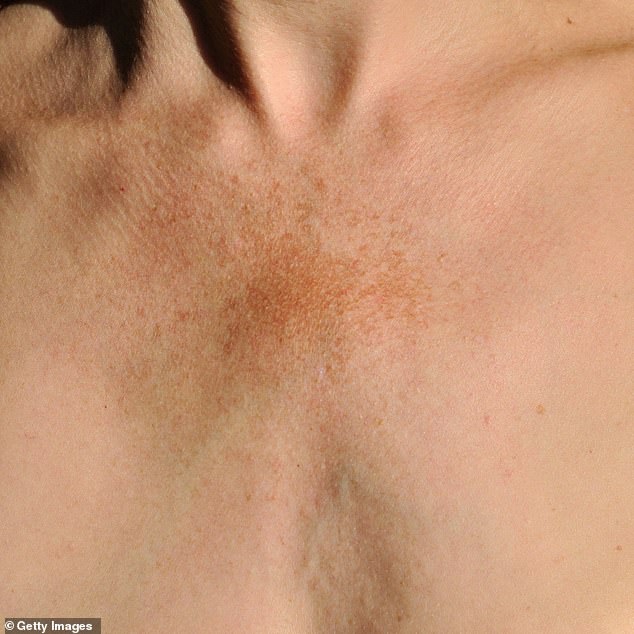
Pigmentation, fine lines or crepiness can particularly impact the décolletage
We spoke to Dr Anjali Mahto, Consultant Dermatologist & Founder of Self London, for the lowdown on looking after your décolletage – and the treatments that could improve its appearance.
What are the most common complaints regarding the décolletage from your patients?
Patients usually first notice a crinkled, crepe-like texture and vertical sleep lines that no longer bounce back. The most common complaint in my clinic is the sudden appearance of mottled brown sun spots and persistent redness that makes the chest look older than the face.
What can you do about crepey skin on the décolletage?
Crepey skin is caused by the progressive loss of collagen and elastin, compounded by the fact that the skin on the chest is naturally very thin and has fewer oil glands to keep it moisturised. You can improve the texture by extending your facial skincare down to your chest, specifically using hydrating ceramides and collagen-stimulating retinoids at night.
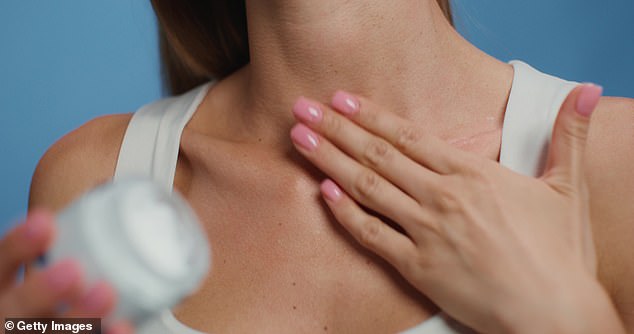
You can improve the texture in this area by extending your facial skincare down to your chest
Can you lessen the appearance of pigmentation or sun spots on the décolletage?
Pigmentation in this area is almost exclusively the result of decades of cumulative UV damage, as the chest is frequently exposed to the sun but rarely protected with sunscreen. You can significantly fade these spots using topical ingredients like vitamin C, or for faster results, in-clinic treatments like BBL (BroadBand Light) are exceptional at targeting that specific damage.
What other treatments actually work on this area? Does LED treatment help?
Injectable skin boosters like Profhilo or polynucleotides are incredibly effective for deeply hydrating and smoothing the chest, while BBL is the gold standard for clearing pigment and redness. I would advise avoiding aggressive deep chemical peels or heavy dermal fillers in this area, as the skin is too delicate and much more prone to scarring than the face. Sofwave is another treatment for the neck that stimulates collagen to firm the area. Regarding LED masks, I don’t recommend them; I’d rather people spend their money on more effective treatments.
How does weight loss affect the décolletage area?
Significant weight loss can have a dramatic impact, as losing the underlying fat volume leaves the skin looking deflated, which immediately exacerbates laxity and sagging. Pregnancy and breastfeeding also heavily influence this area due to rapid breast volume fluctuations and hormonal shifts that severely stretch the delicate skin.
What’s the best way to stop your décolletage from visibly ageing?
The single most effective preventative measure is bringing your broad-spectrum sunscreen all the way down to your chest every single day. Additionally, if you can, it can be helpful to sleep on one’s back rather than your side to prevent those deep, vertical cleavage wrinkles from forming and setting in over time.
I always tell my patients that their skincare routine should never stop at their jawline. Treat your face, neck, and chest as one continuous unit to ensure your skin ages cohesively.