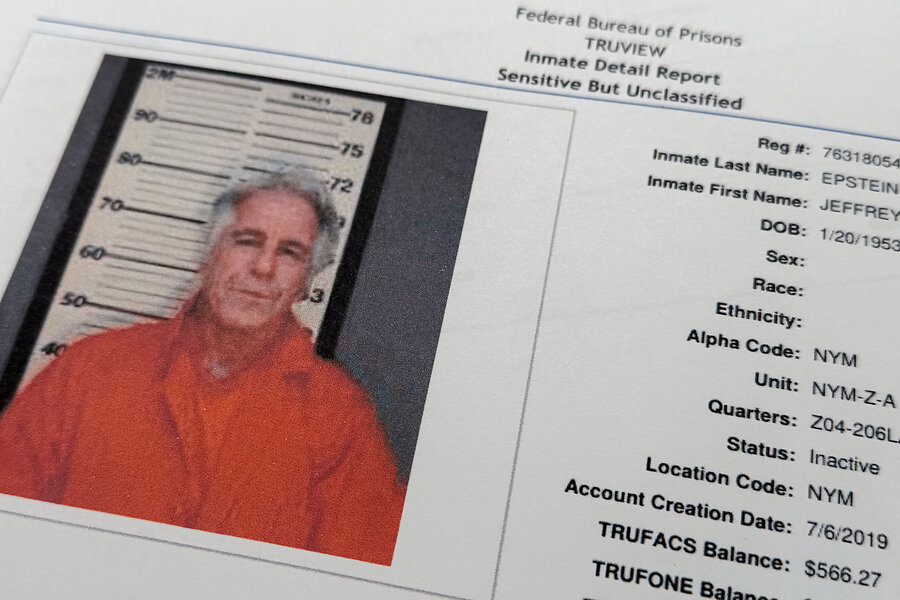
Jeffrey Epstein was a fixture in higher education circles. Professors and university leaders sought him out in hopes of securing donations and, in return, he amassed social capital for his connections to elite schools. Now, the fallout from the release of the Epstein files is having an outsize impact on the world of academia, costing many of Mr. Epstein’s former contacts far more than they bargained for.
The release of 3.5 million documents related to Mr. Epstein by the Justice Department this year has unveiled more details about the deceased financier’s relationships with university researchers, professors, and presidents. In some cases, the files show that high-profile figures in academia maintained ties to Mr. Epstein long after he became a registered sex offender through a plea deal in 2008.
A cascade of consequences has followed. In recent weeks, Nobel laureate Richard Axel stepped down from leading a research institute at Columbia University. Harvard University announced that former President Lawrence Summers, on leave from his teaching role since November, would not return to the classroom. Faculty at Bard College have called for a transition plan for the school president over his Epstein ties.
Why We Wrote This
Prominent academics have resigned or are under investigation as a result of details emerging from the latest Epstein files release. As more information about the late sex offender’s relationship to higher education comes out, several institutions are tightening their fundraising practices.
Surfacing in the Epstein files is not an indication of criminal guilt. Dr. Axel called his affiliation with Mr. Epstein a “serious error in judgement.” Dr. Summers similarly said he was “deeply ashamed.” Leon Botstein, the president of Bard, has called his involvement with Mr. Epstein solely a “fulfillment of my responsibilities as the chief fundraiser of the college.”

A common theme among faculty and administrators caught up in the web of the Epstein scandal revolves around the need for funding. The latest revelations from the files has prompted schools like Harvard and others to rethink how they engage with private donors. Higher education experts say that change is needed across the board, not just at select schools.
“This certainly put the spotlight on the need for stronger donor vetting policies,” says Lynn Pasquerella, president of the American Association of Colleges and Universities, and former president of Mount Holyoke College. “This requires a shift in the culture. It requires faculty and administrators to raise concerns about problematic donors.”
Rethinking the donor model
There is typically a protocol for schools to seek and accept large gifts. Most colleges or universities with offices of research or advancement have clear guidelines around donor relations. One breakdown in the case of several faculty members entangled with Mr. Epstein is that they were securing funding by themselves.
“Moving forward, faculty should be working with the fundraisers on campus, the advancement division on campus, to make sure they’re going through the correct due diligence,” says Maria Vance, a senior director who researches fundraising at educational institutions at the consulting firm EAB.
The source of most funding for academic research at American universities has traditionally been the federal government, with individual donors playing a smaller role. The most recent data from the U.S. National Science Foundation shows that in 2023, 55% of university academic research was funded by the government. Individual donors, nonprofit organizations, and foreign governments together accounted for between 8% and 10%.
Still, for many academic researchers, one big-ticket donation can be the difference between getting a project funded or not. And faculty members who land donations are often celebrated by their schools, says Chris Lubienski, the director of the Center for Evaluation and Education Policy at Indiana University.
“Universities love it when somebody’s entrepreneurial and finds funding,” Dr. Lubienski says. “You get somebody like an Epstein, who’s known to be wealthy and handing out cash, and I’m not surprised that you get some academics that are chasing after his money.”
Mr. Epstein, who died in jail in what was officially ruled a suicide in 2019, made donations – sometimes through his charities – to several universities, including Harvard, the University of Arizona, and the University of British Columbia, as well as reportedly paying tuition for several women. Some academics, including Dr. Botstein at Bard, have said the financier dangled funding offers without following through.

Investigations at Harvard and beyond
According to the Harvard Crimson, Harvard has expanded its internal probe into professors and donors mentioned in the Epstein files. The university started an investigation last November, after an initial batch of Epstein-related documents revealed more details about Dr. Summers.
The widened probe reportedly includes major university donors such as real estate magnates Andrew Farkas and Gerald Chan. Mr. Chan, along with his family, gave Harvard its second-largest donation on record, $350 million for the T.H. Chan School of Public Health. He and Mr. Epstein had explored creating a Boston-based branch of Tsinghua University. Mr. Farkas chairs Harvard’s Hasty Pudding Institute, which received at least $375,000 from Mr. Epstein. The two men exchanged thousands of emails and vacationed together. Mr. Farkas told The New York Times that “at no time have I conducted myself inappropriately.”
Harvard also placed math professor Martin Nowak on paid administrative leave for a second time. Dr. Nowak received $6.5 million from Mr. Epstein to establish the Program for Evolutionary Dynamics, an institute studying evolution that the university shuttered in 2021. A 2020 university report found that the institute maintained an office for Mr. Epstein’s private use, and he was given key card and passcode access to the building.
A spokesman from Harvard referred the Monitor to a report from 2020 that outlined updated guidelines for gifts after Mr. Epstein’s death.
Those stricter policies include ensuring that the development staff from each individual school report to the central development staff. Previously, leaders from development staff at different colleges within Harvard operated independently. And staff members are instructed to screen donors for criminal records and any negative press coverage.
Other schools are taking a range of actions.

MIT created a Gift Acceptance Committee where two faculty members will serve three-year terms to help evaluate all gifts. The school says it has donated $850,000 it received from Mr. Epstein to local nonprofits and has strengthened guidelines for faculty members fundraising outside of traditional means.
In February, Columbia reprimanded two people at the university’s dental school who reportedly helped a former girlfriend of Mr. Epstein bypass admission protocols to earn admittance to the school.
“A student was admitted to the dental school through an irregular process, coinciding with fundraising solicitations by former academic and alumni leadership of the school,” Columbia’s Office of Public Affairs said in a statement. The university said it had cut all ties with Thomas Magnani, a former faculty member, and stripped faculty member Letty Moss-Salentijn of her administrative duties.
Columbia also revealed that it had received $210,000 “from entities related to Epstein” and said the university would make two $105,000 donations to nonprofit organizations in New York supporting survivors of sexual abuse and human trafficking.
At Bard College, the Board of Trustees launched a review of Dr. Botstein in February. The review will include the full scope of Dr. Botstein’s communications with Mr. Epstein, as well as all financial contributions connected to him, according to Madalene Smith-Huemer, a spokeswoman for the communications firm the board has engaged.
The board has also hired the law firm WilmerHale to make recommendations “regarding our policies and practices on donor vetting, fundraising, codes of conduct, and conflicts of interest,” the board said in a statement.