AMERICA was preparing to blitz Iran’s navy last night in response to attacks on shipping in the Gulf’s “Valley of Death”.
Military chiefs urged dock workers and commercial crews to flee ports that Tehran is using to attack oil tankers in the Strait of Hormuz bottleneck.
It came as three cargo ships were hit and the International Energy Agency (IEA) agreed to its “largest ever” release of barrels of oil to tame prices.
The cost of crude has surged since February 28 when the US and Israel attacked Iran, killing its Supreme Leader Ayatollah Ali Khamenei and plunging the Middle East into war.
Ahead of its threatened attack, the US Central Command (Centcom) said that it could not guarantee safety at civilian facilities used by Iran’s military as they had become “legitimate targets under international law”.
Iran said all other countries’ ports across the region would be fair game if the assault came.
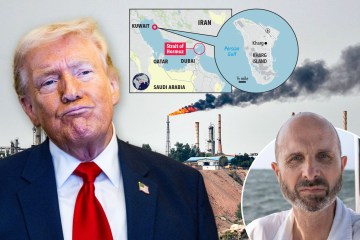
It has warned “not one litre” of oil will pass through the Strait — the world’s busiest oil shipping channel before the conflict began.
It has been dubbed the Valley of Death after seven sailors died in attacks by Iran on 13 vessels since the start of the war.
Iran is thought to have begun small-scale mining of the sea — despite Donald Trump threatening military consequences “at a level never seen before” if it did.
The US has destroyed 16 of its mine-laying fleet but 90 per cent remains intact.
Yesterday, US President Mr Trump repeated his claim that the war was “ahead of schedule”.
He said: “For them it’s a war. For us it’s turned out to be easier than we thought.”
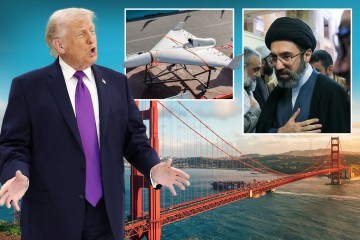
But FBI chiefs revealed an alleged Iranian plot to launch drones on California from a vessel off the US coast.
The three ships blasted by Iran were struck at night off the UAE and Oman.
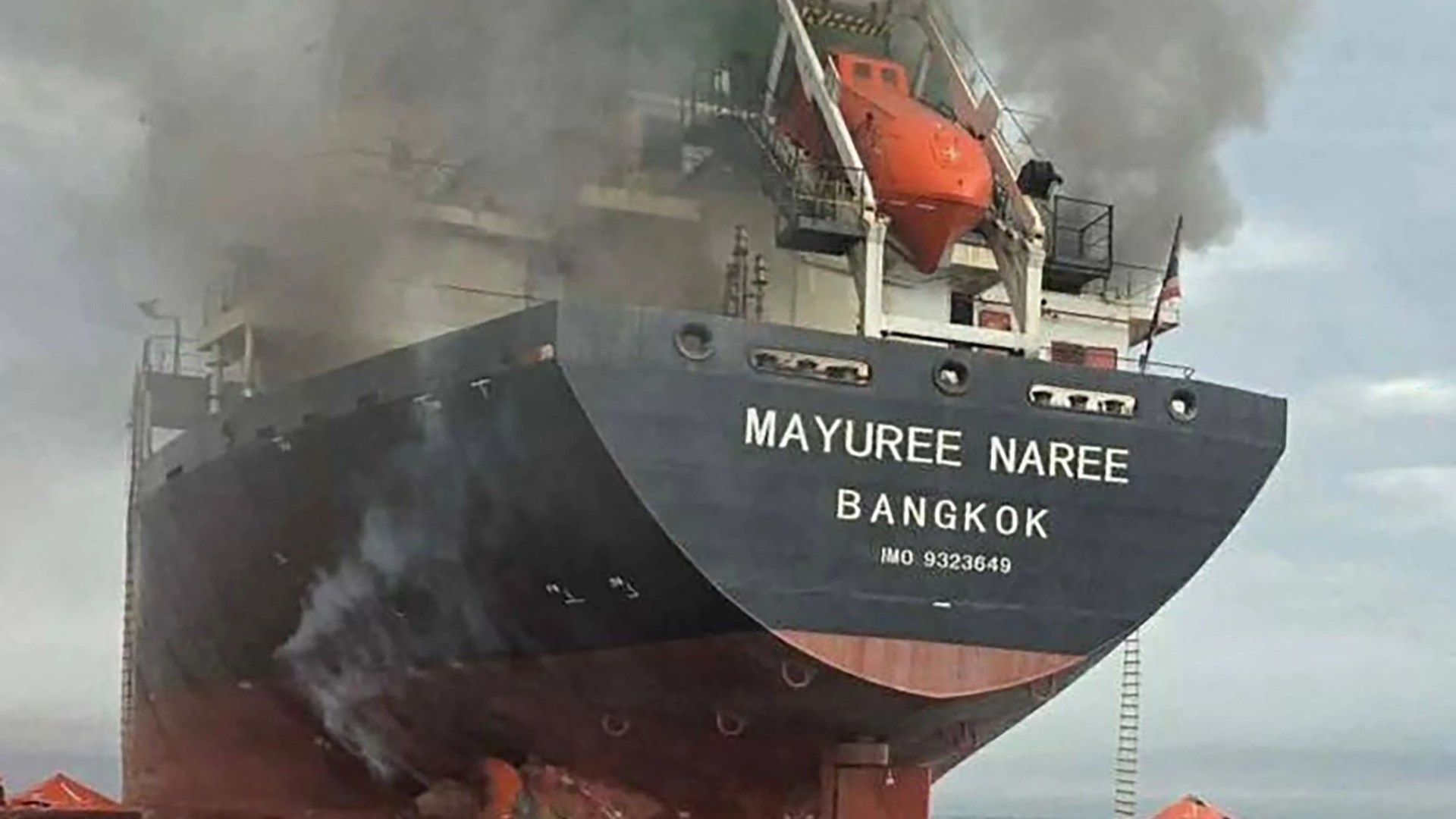
Thai-flagged bulk carrier Mayuree Naree was bound for India from the UAE with 23 crew when it was hit and caught fire.
Twenty of the crew, all Thai, made it ashore but the other three were said to be trapped on board.
A container vessel and a bulk carrier were also struck near the Strait.
The crews of both were unhurt. Oil storage facilities in Oman were also hit.
The attacks saw oil jump to nearly $93 a barrel. Iran warned it could more than double, sparking global economic crisis.
Military spokesman Ebrahim Zolfaqari said: “Get ready for oil to be $200 because the price depends on the regional security you destabilised.”
Christian Bueger, professor of international relations at the University of Copenhagen, warned of a “major energy supply crisis” in Europe if the Strait remains shut.
Traffic has dwindled to almost zero since the conflict began.
Foad Izadi, a professor at the University of Tehran, said the war has cost Iran billions.
He warned: “The Strait of Hormuz is going to be closed for many, many months to come unless this financial side of the story is resolved.”
Saudi Arabia responded to the crisis by almost tripling daily oil flows through its 750-mile East-West pipeline to the Red Sea to seven million barrels, allowing tankers to bypass the Strait.
The IEA’s 32 member countries agreed to release 400million barrels. The world uses 100million a day.
Executive director Fatih Birol said the aim was to “alleviate the immediate impacts of the disruption in markets”.
He added: “The most important thing for a return to stable flows of oil and gas is the resumption of transit through the Strait of Hormuz.”
Sir Keir Starmer, meanwhile, told G7 allies yesterday that sanctions on Russian oil must not be lifted during the energy crisis.
No 10 said the PM told counterparts they must ensure Vladimir Putin “isn’t able to take advantage of the situation in the Middle East to boost his war effort”.
US Centcom Commander Admiral Brad Cooper said one of the central aims of the war was to end Iran’s ability to harass international shipping in the Strait.
He said the US had hit more than 5,500 targets inside the nation since Operation Epic Fury began, including more than 60 ships.
He added America now had “air superiority over vast swaths of Iran”.
Israeli defence minister Israel Katz said the war would go on until it achieved all its objectives.
Turkish President Recep Tayyip Erdogan, whose country has been targeted twice by Iran in five days, warned: “Whoever reaches out to harm Turkey will get burned.”
Millions took shelter in Israel during a three-hour barrage but no one was hurt.
The country continued its blitz of Hezbollah targets in Lebanon with four people killed in a strike on Beirut.
Satellite imagery showed evidence of a dozen F-14 fighter jets destroyed in strikes at an Iranian airbase.
Four people were injured in drone attacks on Dubai airport.
Qatar, Saudi Arabia and Kuwait were also targeted again.
Meanwhile, it was revealed Iran’s new Supreme Leader, Mojtaba Khamenei, 56, suffered a fractured foot and cuts in the attack that killed his father.
But he has not been seen for days and some believe he has since been killed.