A PE teacher has recalled the horrifying moment she was shot when the Dunblane gunman burst through a gymnasium door and opened fire, killing 16 children.
The children aged just five or six and teacher Gwen Mayor were killed by Thomas Hamilton who shot at them inside Dunblane Primary School on March 13, 1996.
The massacre in the small town 30 years ago shocked the nation and prompted a campaign that saw the UK enact some of the world’s strictest firearms legislation.
PE teacher Eileen Harrild, now 73, has spoken in a new BBC documentary about what happened just before her lesson with Ms Mayor’s class was due to begin.
She said: ‘I was aware of the gym door being banged open and a man came in, dressed in combat gear with earmuffs on, and immediately started to shoot.
‘And he targeted the adults first. He shot me first and then he turned his gun on the two other adults in the gym and then started on the children.
‘The shooting was continuous and rapid, and he had intent in his eyes. After about three or four minutes there was silence. Just silence.’
Mrs Harrild was taken to hospital after being shot in both arms, her right hand and left chest – and revealed what she told doctors while waiting to be taken into theatre.
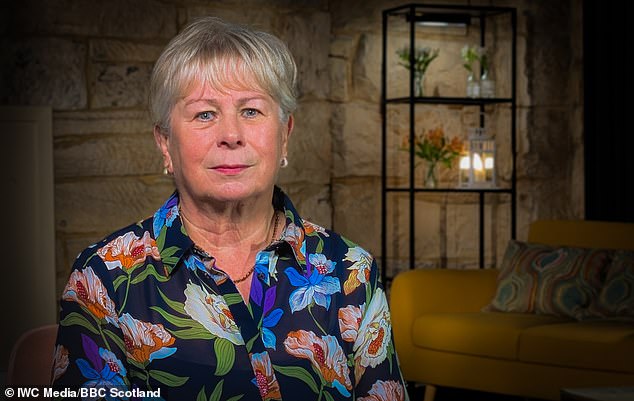
PE teacher Eileen Harrild was injured in the shooting at Dunblane Primary School in March 1996
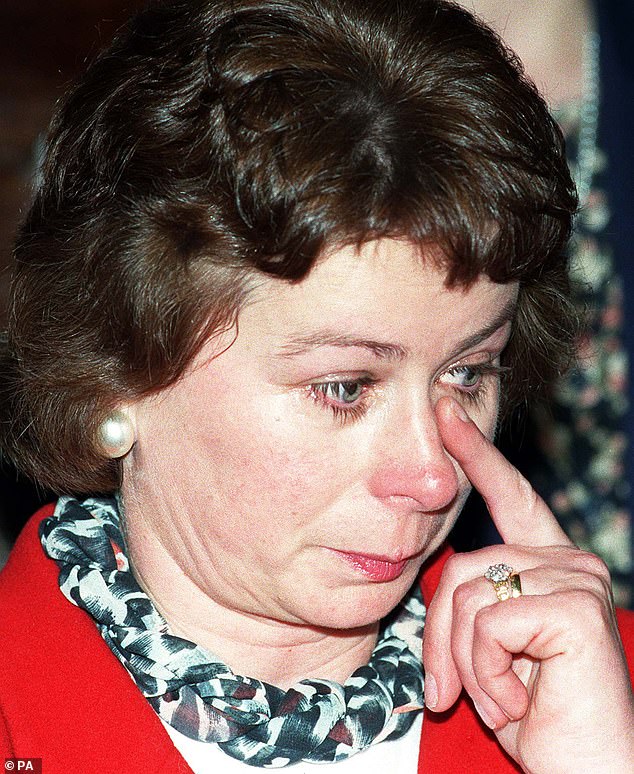
Eileen Harrild wipes away a tear in Westminster in November 1996 while she visited along with grieving Dunblane parents to listen to a critical debate on the Firearms (Amendment) Bill
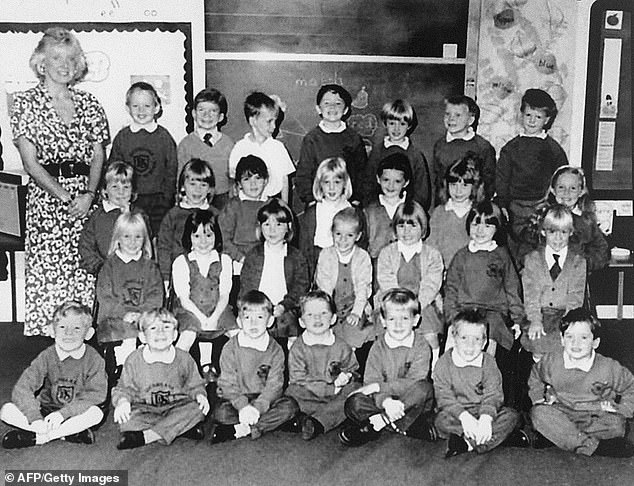
The Primary 1 class at Dunblane Primary School, pictured with their teacher Gwen Mayor, who was killed along with 16 of the children as gunman Thomas Hamilton burst into the gymnasium
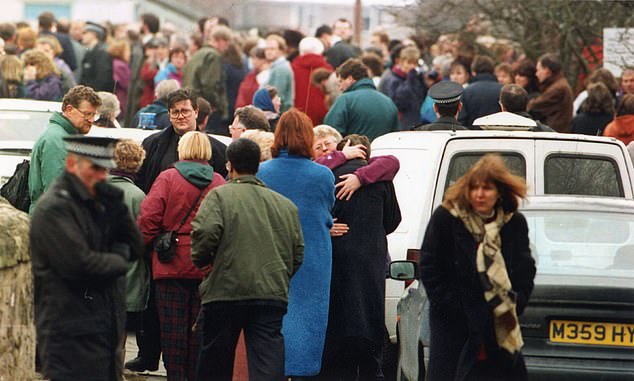
Parents in mourning outside Dunblane Primary School following the massacre in March 1996
She said: ‘I did say: ‘How many children survived?’. I really wanted to know that. That was really important to me. I felt responsible because it was my class and suddenly this had happened. I needed to know how many were going to be surviving it.’
When the shooting happened, Ms Harrild stumbled into an open-plan store area next to the gym, followed by a number of the injured children whom she tried to console.
Former Scout leader Hamilton was 43 when he carried out the planned execution, first cutting the school’s telephone wires before making his way to the gym hall armed with four legally-held handguns and hundreds of rounds of ammunition.
Inside the gym, 28 primary one pupils were preparing for the PE class as he entered and began shooting, killing 16 children and Ms Mayor and injuring 15 others.
Hamilton then put a gun inside his mouth and pulled the trigger, killing himself. Mrs Harrild and assistant Mary Blake were among those who survived the massacre.
Speaking about how Hamilton had owned his guns legally, Mrs Harrild said: ‘When I realised that until he banged that gym door open, with his gun outstretched, everything he had done was legal, he held them in his house, these guns were legal, I was really angry. I felt angry, actually.’
It was later revealed that Hamilton felt persecuted after complaints to police about his behaviour towards the young boys who attended the youth clubs he ran.
Among those who knew Hamilton were tennis coach Judy Murray and her sons Jamie and Andy – who were at the school at the time of the shooting.
The gym was demolished soon after and replaced by a memorial garden. A memorial was also built at Dunblane Cemetery, where many of those killed are buried.
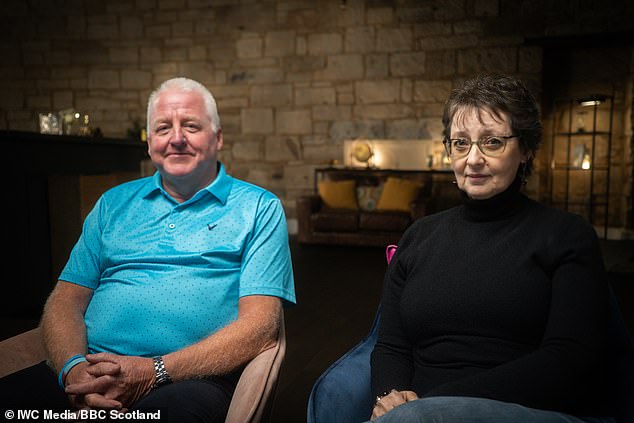
Kenny and Pam Ross, parents of Joanna Ross, one of the young children killed in the shooting
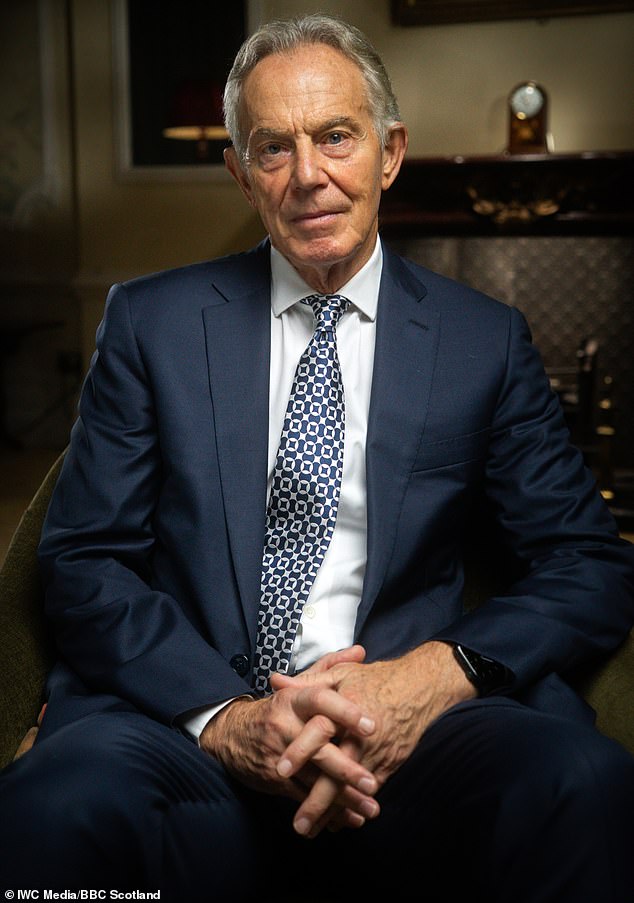
Sir Tony Blair has said meeting with families convinced him that he had to implement a total ban
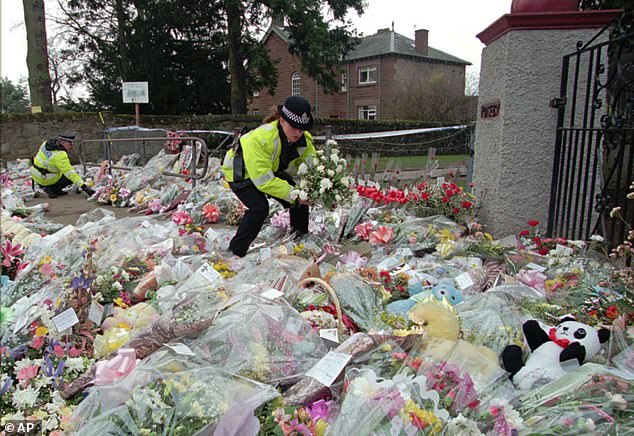
A police officer arranges flowers in rows at a side entrance to Dunblane Primary School in 1996
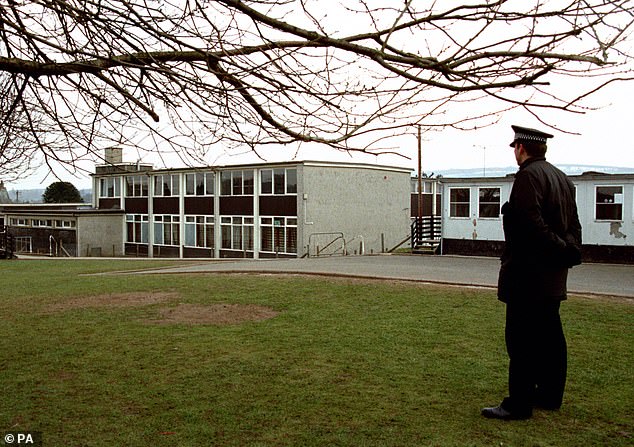
A policeman stands watch over the school where 16 children and their teacher were shot dead
The documentary also hears from a father whose daughter died in the massacre, who tells how he angrily confronted Sir Tony Blair to convince him to back a ban on handguns.
Kenny Ross’s five-year-old girl Joanna was one of the 16 children shot dead.
In the months following the tragedy, parents of the victims met with then Labour leader in a bid to persuade him to outlaw handguns if he was elected prime inister.
Mr Ross, 62, explained how he once lost his temper while discussing the issue and told Sir Tony to imagine his own daughter dead and buried.
In the wake of the massacre a petition calling for a full handgun ban, The Snowdrop Campaign, was founded and supported by many of the grieving parents.
Prime Minister John Major’s then Conservative government implemented a partial gun ban, which did not include .22 calibre single-shot weapons.
Sir Tony has since admitted that the meeting with the families convinced him that he had to implement a total ban.
Mr Ross said: ‘We had the meeting with Tony Blair and he said that if they were elected he would do what he could to go by our wishes.
‘He said, “I will see what we can do” and I was just fed up. I finally said to him, “Have you got any children?” and he said “yes” and I said, “Well, I had a daughter, she’s now six foot under. That is why you have to do something about these gun laws”.
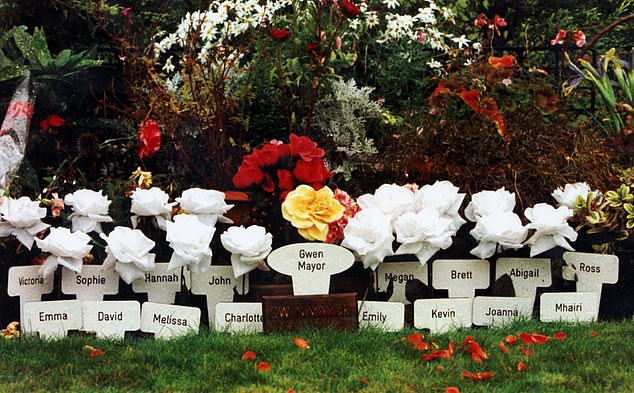
The gym was replaced by a memorial garden, while a memorial was also built at a cemetery
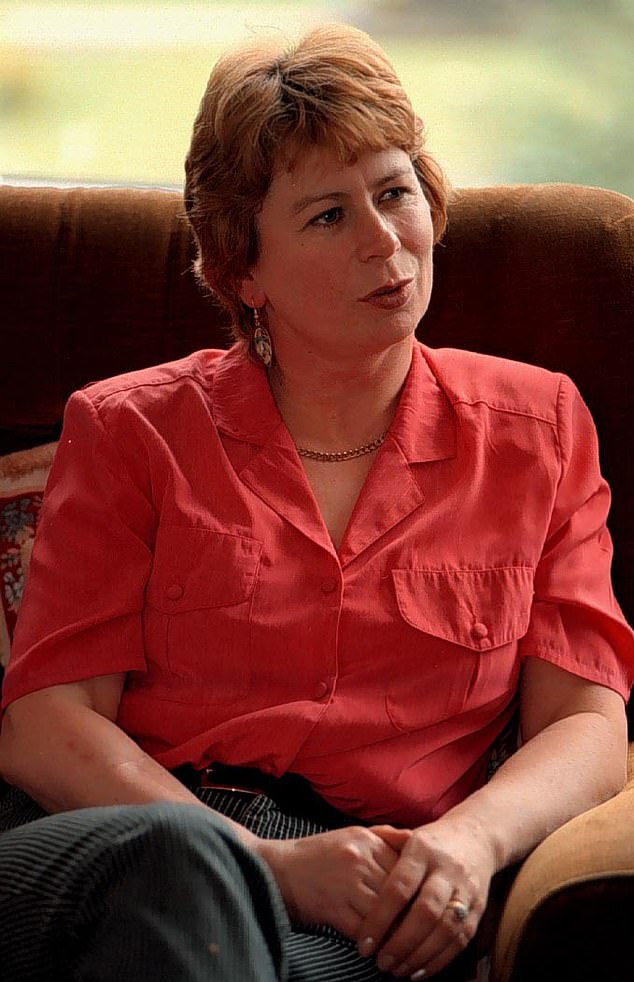
Eileen Harrild is pictured is 1999 as she reflects on the anti-gun campaign after the massacre
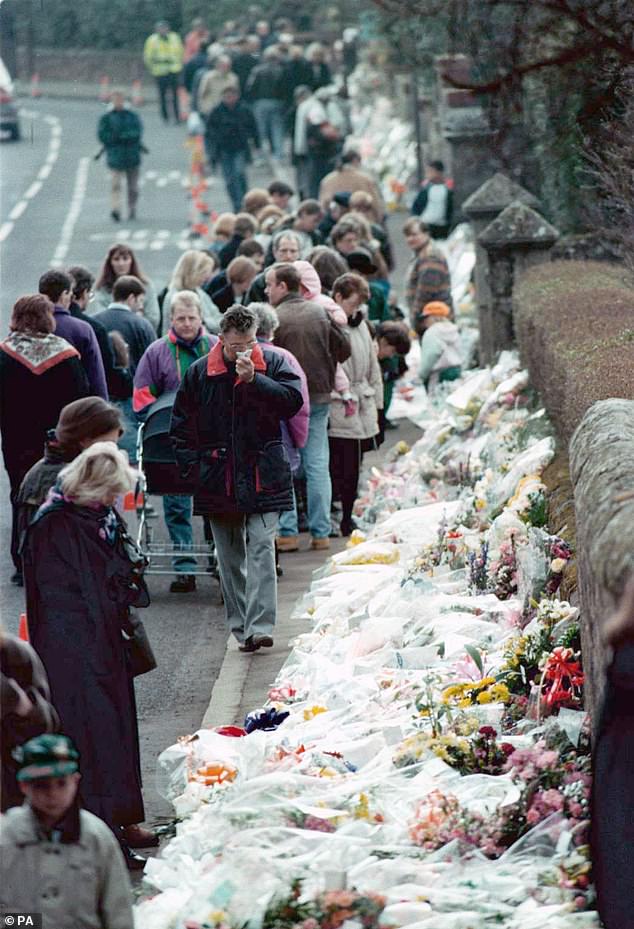
Floral tributes lining the road by Dunblane Primary School three days after the shooting in 1996
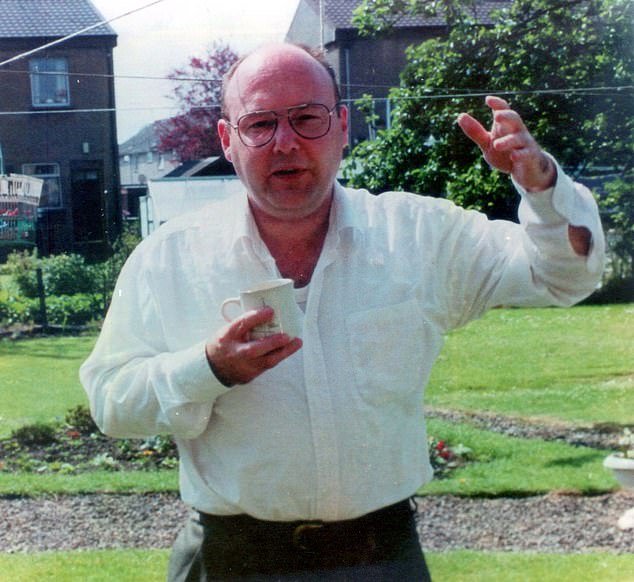
Mass killer Thomas Hamilton, who shot dead 16 schoolchildren and their teacher in Dunblane
‘And then there was total silence. You could have heard a pin drop. I was starting to think “Have I said the right thing? Have I said the wrong thing?”.
‘It was to get his attention as to how serious this is and hopefully it hit home.’
After Sir Tony became Prime Minister in May 1997, one of his first actions was to invite the parents of the Dunblane victims to Downing Street to tell them that he would go ahead with a ban.
Mr Ross added: ‘I asked Tony, “Has it got anything to do with what I said to you?”. He said, “Not entirely” but I kind of hope it did have some effect.’
Recalling his encounter with the families, Sir Tony told the documentary: ‘I remember meeting them and part of the shock for me was that my children were a little bit older but they were still at school.
‘I felt deeply for them but as a political leader you can’t take all your decisions on the basis that there is a campaign to do something. People make demands on government the whole time, you can’t meet all those demands.
‘But this demand in this way wasn’t about money, it wasn’t about priorities. It was just about a terrible, terrible event that the country was determined should lead to a change.’
Speaking about her husband’s exchange with Sir Tony, Mr Ross’s wife, Pam, said: ‘My chin fell and I thought, “I can’t believe he’s just said that”. It just hit home for me what we had lost. I think that it probably affected him (Sir Tony) as a father.
‘We kept up the pressure on politicians and anyone who was prepared to listen to us. When we are not here we want the next generation and the next generation to be as vigilant as they can be so that it doesn’t ever change.’
Mr Ross also paid tribute to his daughter but said that the hardest part for him three decades later is that he can no longer remember what her voice sounded like.
He said: ‘She was just a lively wee girl. She was a daddy’s girl, she definitely was a daddy’s girl. What I miss most is, I can’t remember what she sounds like.
‘This was before the time of videos, mobile phones. We have plenty of photographs but no videos of her and I have forgotten her voice.’
‘Dunblane: How Britain Banned Handguns’ airs on BBC Scotland at 9pm tonight and BBC Two on Thursday at 9pm