A young mother died from sepsis after neglectful NHS medics gave her the wrong antibiotics, a coroner ruled.
Aleisha Rochester, 33, a bank cashier from Croydon, south London, died after a routine operation to remove an abscess from her left armpit in August 2023.
After several attempts to get medical help, she was prescribed antibiotics to deal with her worsening condition but not the type that would treat the bacterial infection.
Staff at St Epsom and St Helier University Hospital failed to follow their NHS trust’s own guidelines on administering antibiotics, assistant coroner Sian Reeves said.
The trust has apologised.
Ms Rochester would have most likely lived had she been given the right antibiotics in time and neglect by medics had contributed to her death, Ms Reeves told an inquest in December last year.
Now her eight-year-old son Xavier is left without a mother. Ms Rochester’s own mother Lorna is now suing the NHS trust.
In a heartbreaking statement, Lorna said: ‘Aleisha was the most loving, caring and compassionate daughter you could wish for.

Aleisha Rochester, 33, died from sepsis in August 2023 after she was given the wrong antibiotics to treat an infection from a routine operation after seeking medical help several times. Her death was due to ‘neglect’ the coroner said

‘Amazing mummy’ Ms Rochester leaves behind her eight year old son Xavier
‘She was strong, independent and ambitious, with a vibrant personality and had ambitions of starting her own business.
‘Aleshia was an amazing mummy with motherhood coming to her naturally.
‘The bond between Aleisha and Xavier was evident in every moment they spent together.
‘There’s still not a day goes by when we don’t think of Aleisha or miss her…
‘There’s a huge void in our family and the hardest thing to try and come to terms with is how she’ll never get to see Xavier grow up and celebrate milestones in life.
‘We’ll make sure Xavier knows how much his mummy loved him and how proud she would be of him.
‘However, I don’t think our family will ever get over the pain of losing Aleisha especially in the way we did…
‘All we can hope for now is that by speaking out, we can help improve care for others and raise awareness of how important it is to spot and treat sepsis correctly.’
It was determined that Ms Rochester had suffered from hidradenitis suppurativa, which causes abscesses on the skin.
Ms Rochester had gone for an operation to remove abscesses from her armpit and groin on August 5, 2023.
Five days later, Ms Rochester fell ill and the wound on her left armpit became infected on August 10, Ms Reeves told the inquest.
She then went to an out-of-hours GP appointment on August 13 who gave her penicillin-based antibiotics, the assistant coroner explained.
But Ms Rochester still thought something was wrong, so that same day went to A&E at Croydon University Hospital. Here she was told to go home after doctors said she had a wound infection and told her to continue the antibiotics, Ms Reeves said.
The next evening, on August 14, a desperate Ms Rochester decided she had to go to A&E again, this time at St Helier hospital. Here they put her on an IV drip with a dose of flucloxacillin – a type of antibiotic, the inquest heard.
She was sent home again and meant to return the next day, Ms Reeves added.
She did so and was seen by a junior doctor, a senior house officer and then a specialist.
The coroner said that the antibiotics prescribed were not in line with St Helier’s antimicrobial guidelines and that the surgical team did not consult the hospital’s microbiology team for advice.
The drugs used did not treat gram-positive organisms, the most likely pathogen causing the infection, she added.
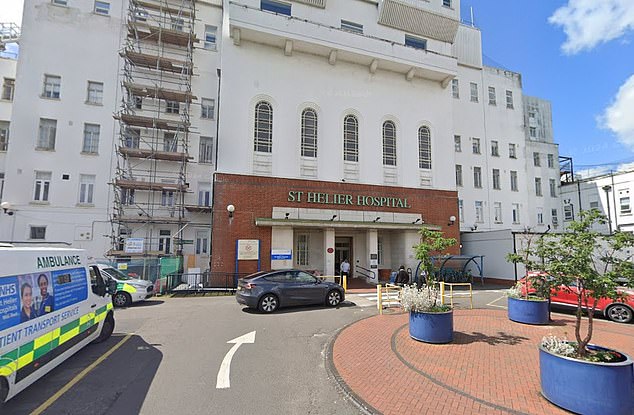
St Helier Hospital’s trust has apologised for Ms Rochester’s death, admitting they ‘failed’ her but are now training staff on how to better spot sepsis
On August 16, Ms Rochester was finally given the correct drug ‘in line with hospital guidelines’ but she deteriorated and was rushed into intensive care on August 17.
She was in septic shock with multiple organ failure and there were signs of infections in her lungs, doctors discovered.
‘She suffered a cardiac arrest in the early hours of the morning on the 19th of August, from which she could not be resuscitated.’ Ms Reeves said.
If she had been given the right antibiotics on August 15, on her return to St Helier’s, she most likely would have survived, the coroner said. It was just a day too late.
‘Her death was contributed to by neglect,’ she said.
Dr Richard Jennings, group chief medical officer for St George’s, Epsom and St Helier University Hospitals, said: ‘We know we failed Ms Rochester by not giving her the correct antibiotics, with tragic consequences – for this we are extremely sorry and offer our deepest apologies and condolences to her family.
‘We sadly can’t put this right for Ms Rochester, but we would like to assure her family that we have learned from Ms Rochester’s death, and we have taken multiple steps to prevent this happening again.
‘We are now giving further training to staff on the prompt recognition of sepsis, and have taken measures to make sure antibiotic prescribing is done correctly.
‘We are also carrying out regular audits to make sure our guidelines are being followed.’