
SLIMMERS taking the weight loss Wegovy may be at highest risk of a debilitating eye condition that leads to permanent vision loss, research shows.
Semaglutide — the powerful ingredient behind Wegovy and Ozempic — has long been hailed a monumental breakthrough in the war on obesity and type 2 diabetes.
But last month, UK health chiefs officially recognised that semaglutide jabs could put users at higher risk of nonarteritic ischemic anterior optic neuropathy (NAION).
The condition, also known as an “eye stroke“, occurs when the vessels supplying blood to the optic nerve become blocked, depriving it of oxygen which results in damage to all or part of the nerve.
Now, British scientists have found the odds of suffering the condition were five times higher in Wegovy users compared to those on Ozempic.
The odds of having ischaemic optic neuropathy (Ion) were also three times higher in men than women, the study suggested.

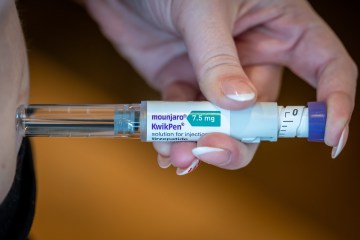
Researchers said the findings, published in the British Journal of Ophthalmology, “highlight a potential dose-dependent safety concern” for semaglutide.
They added: “Overall, Ion risk appears dose and formulation dependent, and highest with Wegovy.
“Ozempic’s earlier approval resulted in more reports than Wegovy, yet Wegovy showed the stronger signal.”
In the study, the researchers from the University of Ottowa in Canada, analysed side-effect alerts submitted to the US Food and Drug Administration (FDA) Adverse Event Reporting System between December 2017 and December 2024.
Of the more than 30 million alerts, 31,774 involved semaglutide.
Some 3,070 were attributed to Wegovy, which launched in 2021, while 20,608 were linked to Ozempic, which was approved by the FDA in 2017.
Despite this, researchers found Wegovy was most strongly associated with Ion, exceeding Ozempic and generic forms of semaglutide.
But, Ion was not reported in association with the semaglutide once-a-day type 2 diabetes tablet Rybelsus, the study found.
Experts said this difference may be down to “the limited absorption and slower uptake of Rybelsus”.
They added that injectables are faster acting than tablets, and differences in route, dose, and indication “may influence prescribing patterns and safety signals.
A Novo Nordisk spokesperson said: “Patient safety is our top priority, and we take any reports about adverse events from the use of our medicines very seriously.
“We work closely with authorities and regulatory bodies from around the world to continuously monitor the safety profile of our products.”
They added that UK and EU patient leaflets for Wegovy, Ozempic and Rybelsus have been updated to include NAION.
However, the company has concluded that data “did not suggest a reasonable possibility of a causal relationship between semaglutide and NAION and Novo Nordisk believes that the benefit-risk profile of semaglutide remains favourable”.
Other studies have previously linked semaglutide jabs with NAION and other optic nerve problems, acknowledging that the risk was low.
US research released last year detailed nine cases of US patients who went blind after taking semaglutide or tirzepatide, the active ingredient behind Mounjaro, another popular weight-loss jab.
At the time, they said while the exact cause was unclear, the rapid drop in blood sugar caused by the drug could damage blood vessels in the eyes.
Last year, Robbie Williams also told The Sun that he quit Mounjaro over fears he was going blind.
He said he had been an early adopter of the drugs and claimed his vision had “been blurry for a while now, and it’s only getting worse”.
“I don’t believe it’s age – I believe it’s the jabs,” he added.
There are currently no treatments for NAION, which affects around one in 10,000 people, and vision often does not improve.
Unlike other strokes caused by a loss of blood supply, there is no weakness, numbness or loss of speech.
People typically suffer sudden vision loss in one eye, without any pain, and patients often notice the issue on waking up.
What is non-arteritic anterior ischemic optic neuropathy (NAION)?
NAION is caused by a loss of blood flow to the optic nerve – the cable that connects the eye to the brain.
It usually results in sudden vision loss in one eye, without any pain, which patients will usually notice when waking up in the morning.
The visual loss typically remains fairly stable, without getting markedly better or worse once it has occurred.
Medics aren’t sure what exactly caused reduced blood flow to the optic nerve – but the condition is more common in people with diabetes, high blood pressure and sleep apnoea.
Smoking may also raise the risk of NAION.
Most patients with NAION have an anatomical variation of the optic nerve, making its contents very tight and crowded.
This anatomy probably contributes to the impaired circulation that causes NAION.
NAION has previously been linked to erectile dysfunction drugs and taking medications to treat high blood pressure before bedtime.
Unfortunately, there are no treatments for NAION that are proven to be effective.
Once NAION has occurred in one eye, it is very rare for it to occur again in the same eye. But there is about a 30 per cent chance that it can occur in the other eye over one’s lifetime.
To try to reduce the risk that NAION occurs in the other eye, a doctor might suggest regular exercise, a healthy diet, and other measures to treat the risk factors of diabetes, high blood pressure, and sleep apnoea.
Source: Brigham and Women’s Hospital