Barely a week ago, in her underwhelming Spring Statement, Rachel Reeves took to the despatch box and claimed that Labour was doing a marvellous job.
They were reducing the cost of living, she said, bringing cheaper mortgages to a grateful nation and diligently repairing the public finances after 14 years of Tory chaos.
‘My plan is the right one,’ she boasted.
Well, as the old cliche has it: events, dear boy, events.
Even if Reeves and the PM Keir Starmer were doing a brilliant job of improving the British economy – a triumph with which few people credit them – the global economy has just been plunged into crisis thanks to Donald Trump’s war in Iran.
Volatile
Oil prices have surged by their highest weekly amount in six years, briefly hitting $119 per barrel before later falling, and surpassing $100 for the first time since Vladimir Putin’s full-scale invasion of Ukraine in February 2022.
Global shares, too, have fallen sharply, with London’s FTSE 100 dropping 2 per cent – though they subsequently recovered.
In this more volatile world, with the vital Strait of Hormuz effectively blockaded by Iran, shipping and insurance costs are exploding, and no one expects them to come down soon.
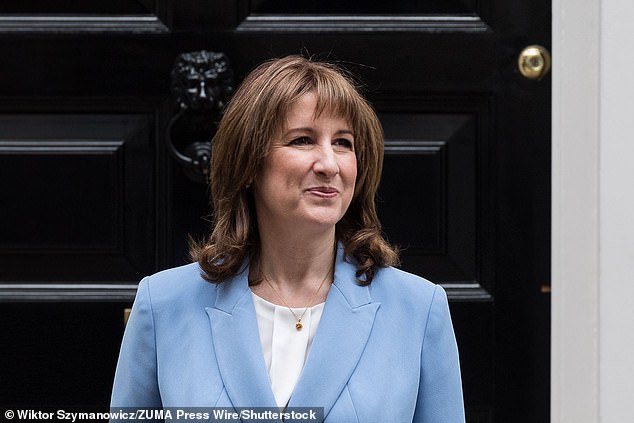
Unluckily for Rachel Reeves, Britain is set to feel some of the worst pain of all as the war in Iran unleashes chaos on the economy
All this is delivering a sharp and stinging shock to the global economy – and, unluckily for Reeves, Britain is set to feel some of the worst pain of all.
Our country is in a rotten fiscal mess. Decades of short-sighted, wrong-headed decisions by our political leaders mean we spend billions we don’t have.
We have run up debts we can’t possibly pay down and import rather than generate far too much of the energy we need, despite enjoying deposits of gas and coal that would be ‘the envy of less happier lands’, in Shakespeare’s words.
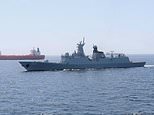
The extent of our weak and impoverished position is grimly symbolised by the fact that the Royal Navy, once the terror of the seas, can barely muster a single ship to defend our military assets – and not even in the distant South Pacific, but the Mediterranean.
It seems to me inevitable that, under this Government and facing these headwinds, we face the prospect of a further calamitous slump in the economy, accompanied once again by rocketing prices.
Inflation in Britain, thanks in large part to Labour’s lavish and unfunded spending commitments in welfare payments and public-sector salaries, has proved far more ‘sticky’ than it has for many of our competitors.
Until last month, I and many other financial commentators had hoped for two or perhaps even three interest rate cuts this year, helping millions pay down their mortgages and easing the cost of other borrowing.
Not any more. Now the markets believe there is at least a 50 per cent chance that the next interest rate move will be up, further crushing the aspiration of young people to get on the housing ladder, blowing consumer confidence out of the water and forcing businesses to postpone or cancel investment.
We’ll all start feeling some of this pain before too long. A lasting surge in the oil price will leave people wincing at the petrol pump: already, the AA and RAC have advised drivers to cut non-essential journeys and to save fuel where possible.
Air fares, too, will spike along with the cost of kerosene.
But that is just the beginning. As we witnessed at the start of Putin’s murderous folly four years ago, high energy prices poison every sinew of the economy, raising the cost of all goods and services, including food – which millions of Britons feel is far too expensive already.
The Chancellor herself admitted as much yesterday, warning in the Commons that the Iran war was ‘likely to put upwards pressure on inflation in the coming months’.

We’ll all start feeling some of this pain before too long. A lasting surge in the oil price will leave people wincing at the petrol pump
As I write, she and Starmer are out with the begging bowl, seeking to persuade the Paris-based International Energy Agency to release stockpiled oil and gas reserves to ease the pressure on global prices.
Even if their mission is successful, it will make only a marginal difference.
Why? For the answer, just look at the ructions in the bond markets, where governments go to borrow.
This week, the British Government’s cost of borrowing over ten years has leapt to 4.79 per cent: the kind of levels that drove Liz Truss from office in October 2022.
The bond markets are not abstract places disconnected from reality. What happens there affects every one of us.
Reckless
More expensive borrowing means in turn that governments have less money to spend on public services and national defence – just when we need the latter most.
Worse still, Britain, unlike during previous crises (the Covid-era largesse of 2020 and 2021 springs to mind), now lacks the financial ‘shock absorbers’ that have made it possible for the Government to bail out consumers and ease the pressures on companies.
Despite Labour hiking taxes by a full £75billion – pummelling business, jobs and enterprise in the process – reckless borrowing means that our national debt is almost the same as our entire GDP.
This stymies growth, makes inflation more likely, causes interest payments to dominate an ever-larger share of spending – and means the Government enjoys far less flexibility in a crisis.
British public debt is not forecast to start falling until the end of this Parliament – and plenty of well-informed people believe even that is unlikely.
To put it simply: the Government can’t raise taxes any higher, can’t borrow more and won’t cut spending because it’s beholden to its idealistic, economically illiterate, Left-wing backbenchers.
They simply do not have the resources to bung money at millions of families to help them pay their bills.
Catastrophe
To be fair to Reeves, much of the developed world finds itself in an economic bind, even if Britain’s position is particularly bad.
Three agonising blows – the Great Financial Crisis, the Covid-19 pandemic and war in the heart of Europe – have seen the balance sheets of the G7 countries groan with ever more extreme levels of debt.
Globally, government debt stood at a scarcely believable $111trillion at the end of last year, with America and Japan among the worst afflicted.
Trump has dismissed the recent spike in the cost of oil as ‘a small price to pay’ to defeat the mullahs’ nuclear ambitions.
So it may prove in the long term: America is self-sufficient in energy and enjoys the fastest growth in the G7, bolstered by astonishing technological advances, especially in AI.
But the potential for a lasting economic catastrophe in the interim seems all too real to me, and a glance at history shows why.
Back in the 1970s, wars in the Middle East brought about double-digit inflation, ruinous interest rates and deep recession.
It would be a vain hope that the world is somehow better prepared now.
The longer the Iran campaign continues, the more likely it is there will be an economic and financial tsunami, in Britain and elsewhere, that smashes living standards and leaves us all poorer for many years to come.