
OUR resident specialist and NHS GP, Dr Zoe Williams, shares her expert advice.
Today, Dr Zoe helps a reader who is doing everything to lose weight but their doctor just says ‘that’s menopause’.
TOMORROW is National No Smoking Day – so it’s the ideal time to think about how better your life would be without it.
Giving up can seem daunting, but the positives far outweigh the negatives.
Within just 20 minutes of your last cigarette, your heart rate drops back to normal.
Within 48 hours, your body is clear of carbon monoxide and your sense of taste and smell begins to return.
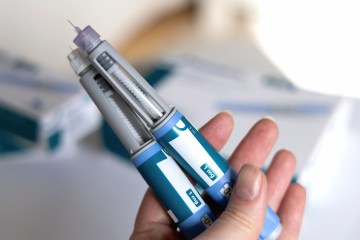

And in the weeks after that, you will feel more energised and less sick, and will have more money.
Many readers are now turning to vapes as a bridge to quitting.
Science says it’s not risk-free, but vaping is much less harmful than tobacco and can be very helpful.
Stopping smoking is the No1 thing you can do for your health, to cut risk of heart disease, stroke and multiple cancers.
Visit the NHS Stop Smoking website or your local Stop Smoking Service to access free quitting tools.
Here’s what readers have asked me this week . . .
Not just the menopause?
Q: I’M doing my best to lose weight.
I walk 10,000 steps a day, eat healthily and go on my exercise bike quite regularly.
At weekends, I go for walks of up to three miles.
But I seem to be putting weight on.
My GP said, ‘It’s because of the menopause’. I take some medication. Can you help?
Many women notice weight changes around the menopause, and it can be incredibly frustrating when you feel you’re doing all the right things but the scales still creep up.
Hormones do play a role, but they’re not the whole story.
As oestrogen levels fall during the menopause, the body tends to store fat differently, often more around the abdomen.
At the same time, we gradually lose muscle mass as we age, which means we burn fewer calories.
The good news is that many of the things you’re already doing – walking regularly, using an exercise bike and staying active – are what we recommend.
Aim for at least 150 minutes of moderate activity per week, which you’re clearly achieving.
One area that can make a difference during midlife is strength or resistance training.
Building and maintaining muscle helps support metabolism, improves bone health and can make weight management easier.
Simple resistance exercises at home, using bodyweight, resistance bands or light weights two to three times a week can help, if you don’t want to go to the gym.
It’s also worth looking at diet in a practical way.
Eating “healthy” foods is important, but portion sizes, snacking habits and hidden calories in drinks or processed foods can creep up without us realising.
Some useful tips include:
- Ensure meals contain adequate protein (eggs, beans, fish, yoghurt, lean meat) to help maintain muscle
- Fill half your plate with vegetables or salad
- Limit ultra-processed foods and sugary drinks
- Watch alcohol intake, which can add significant calories
- Eat slowly and pay attention to hunger cues.
Some medications and an underactive thyroid can occasionally play a role.
If weight gain continues despite your efforts, it would be reasonable to ask your GP for a fuller review.
CAN’T STAND LEG PAINS
Q: WHAT first seemed to be plantar fasciitis does not appear to be that.
My feet are agony and feel flatter than flat, and from the knees down, my legs ache so much.
Physio and insoles haven’t worked. I can’t stand much or walk more than five yards, and need to alternate between a walking stick and a wheelchair.
Doctors can’t understand it. I’ve had pulse checks on my legs, which found nothing untoward.
I also have a dropped foot that stems from a serious lower spine stenosis.
Maybe I need to resign myself to the knowledge that I’m a lost cause.
A: You are absolutely not a lost cause, but I can see why you feel totally defeated.
This sounds more complex than plantar fasciitis alone.
Severe lumbar spinal stenosis can compress the nerves that travel from the lower spine into the legs and feet, which can cause aching, heaviness, burning discomfort and weakness below the knees.
Symptoms often worsen on standing or walking, which is sometimes referred to as neurogenic claudication, a recognised feature of spinal stenosis.
Your dropped foot also suggests significant nerve involvement.
When nerves are irritated or compressed, the pain can feel deep, persistent and resistant to standard physio or simple insoles.
The feeling that the soles are “flatter than flat” may reflect changes in muscle strength and foot mechanics rather than just inflammation of the plantar fascia.
It’s reassuring that circulation is normal – that also helps us determine nerves are likely involved.
Spinal stenosis means there is a physical narrowing of the spinal canal, usually due to age-related changes such as disc bulging, thickened ligaments, or bony overgrowth.
Has the option of surgery been discussed with you?
If surgery isn’t appropriate in your case, there are still options worth discussing, like nerve-pain medication, referral to a pain management service, assessment for an ankle-foot orthosis for foot drop, or review by a spinal specialist.
Even when the underlying condition can’t be cured, management can often be improved.
Please don’t resign yourself to thinking nothing more can be done.
Seeking further support is entirely justified.
TIP
CAN’T get into the habit of drinking water?
Then try using habit stacking – attaching a new habit to one that you already do every day.
Put a glass by your toothbrush, to remind you to drink water first thing, or next to the coffee maker, to drink a glass as the coffee is brewing.
I AM NO LONGER REGULAR AND IT HURTS
Q: MY toilet habits have changed from regular and daily to every two days.
There’s a lot there and it can be firm and painful.
I have to break it up sometimes to make sure it flushes.
I’m 59, obese, diabetic and have high blood pressure – I take all the normal medication associated with that.
The symptoms started recently. I’ve had no tests yet.
A: A change in bowel habit can be unsettling, but what you’re describing points to constipation, which becomes more common with age.
It can be influenced by several factors.
Reduced mobility slows the bowel, diabetes can affect gut movement, and blood pressure or pain medications may make stools firm.
The British Dietetic Association (BDA) recently released its first evidence-based dietary guidance for chronic constipation, and its advice focuses on three key areas – fluid, fibre and routine.
Aim to drink enough so your urine is pale in colour, as dehydration makes stools hard and more difficult to pass.
Gradually increase fibre from foods such as vegetables, fruit, wholegrains, oats, beans and lentils, but build up slowly to avoid bloating.
Two kiwi fruits a day, or a supplement called psyllium husk (which must be taken with lots of water) can help to keep bowels regular.
Movement matters too, even gentle daily activity or chair-based exercise if mobility is limited.
If stools remain hard, a pharmacist or GP may suggest a fibre supplement such as ispaghula husk, or a laxative such as macrogol, which softens the stool rather than forcing the bowel.
Because you’re 59 and this is a recent change, mention it to your GP. If you notice bleeding, unexplained weight loss or persistent abdominal pain, you should have checks for bowel cancer.
Most cases turn out to be constipation, but new changes are always worth a quick review.
Bowel habits can usually be brought back to a far more comfortable pattern.
MAKE MOWER EFFORT…
JUST one workout can boost your brain, shows a study that found a surge of activity in grey matter after exercise.
The NHS recommends adults do at least 2.5 hours of “difficult” exercise per week, but a quarter of us are not active at all.
Workouts reduce aches and pains and the risks of health conditions such as type 2 diabetes, heart disease and cancer.
Research by the University of Iowa found the brain gets a boost immediately after exercising.
People had more electrical signals and better blood flow after 20 minutes on a bike.
The 14 participants in the survey, aged from 17 to 50, did a warm-up then a medium-paced ride on a bike while having their brain activity recorded.
Scans showed raised levels of oxygen and “ripples” of activity in areas of the brain vital for memory and learning.
Study author Professor Michelle Voss said: “We’ve known for years that physical exercise is often good for cognitive functions like memory.
“By directly recording brain activity, our study shows for the first time in humans that even a single bout of exercise can rapidly alter the neural rhythms and brain networks involved in memory and cognitive function.”
The results, published in the journal Brain Communications, confirm what other studies had found in rats or using different tests on people.
BLOOD PILLS RECALLED
A BATCH of ramipril blood pressure medication has been recalled over a possible packaging error.
The precautionary measure was taken after one patient discovered a different medicine in the product pack.
Crescent Pharma Ltd has recalled packs of Ramipril 5mg with the batch number GR164099.
Ramipril is a commonly used ACE inhibitor medicine that lowers blood pressure by relaxing blood vessels to widen the gap blood flows through and ease strain on the heart.
Patients are advised to check the packaging of their medicine for the affected batch number and return the pack to their pharmacist if it contains blister strips labelled “amlodipine”.
This is another type of medicine made by the same company and they may have become mixed up in the warehouse.
Watchdog The Medicines and Healthcare products Regulatory Agency issued the recall but added that the risk to patients is very low.
Deputy director at the agency, Shareen Doak, said: “If you’ve already taken amlodipine, please be reassured that there is a very low risk to your health.
“Both medications are used to treat high blood pressure, however, because your body may not be used to a different type of medicine, your blood pressure may become lower than normal, and you may experience dizziness.”