A new study from Stanford suggests the California Wealth Tax probably won’t raise the $100 billion it promised. In fact, it might end up costing the state as much as $25 billion.
That’s the result from a new study out of Stanford University’s Hoover Institution, which was published earlier this week. In this study, researchers analyzed the reported and unreported departure of billionaires from the state, as well as flaws in the tax proponents’ modeling, to find that the law would reduce revenue to the state’s coffers.
“Over 100,000 simulations with varying discount rates, wealth tax revenues, and lost income tax revenues associated with departures, we find that 71% of scenarios in which the Act is instituted yields a negative [net present value], signaling the Act would generate a net cost to the state of California,” the researchers wrote in a Thursday Substack post. The “average across these draws,” they say, “is –$24.7 billion.”
How does this work? Simply put, the Stanford study estimates the total amount raised by the wealth tax will be much smaller than predicted by the authors, closer to $40 billion for the one-time tax. That is them offset by the loss of income tax every year because billionaires have fled the state.
The Hoover study isn’t all bad news for the tax’s supporters; the researchers “estimate that the Act will collect approximately $40 billion in wealth taxes.” While this might seem like a windfall, it’s anything but, when one considers the lost income and tax revenue of $3.3 billion to $5.8 billion annually, as the researchers do.
So over time the losses more than equal the gains from the tax. The only way to get around this would be to repeat the one-time tax. But that would also drive more people out of the state and the whole process would repeat.
One of the authors of the tax is still claiming that it’s too cleverly written to allow the billionaires to escape.
The proposal relies on California’s legal definition of residency, which means that if they are “domiciled” in California but leave for a transitory or temporary purpose, they may still count as a resident. Simply buying a second property elsewhere wouldn’t count. “Certainly, a lot of billionaires bought some property in Florida and were reported as maybe leave,” Gamage said. “Whether any of them actually left as a matter of California law, I haven’t seen any critical reports that make me think so. I wouldn’t be surprised if … one or two did.… I would be very surprised if it’s a substantial number did.” It’s unclear if any billionaires changed their residency before January 1 in a way that abides by California law, and they’d likely have to prove the change in court.
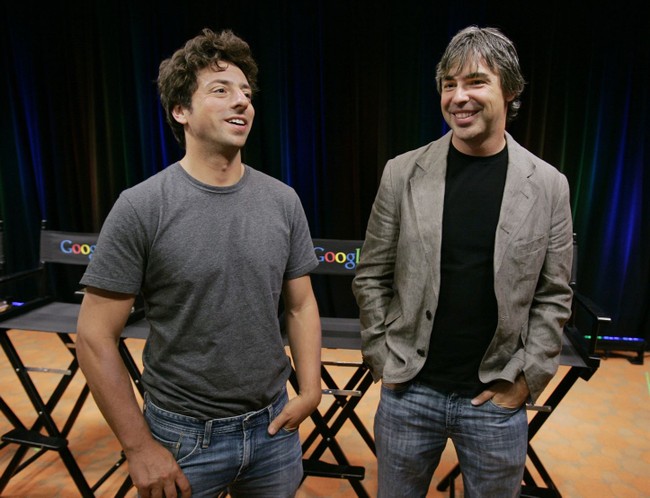
But as I’ve pointed out before, all of this will be arguable in court and billionaires have plenty of money to fight these battles. Also, Gamage keeps arguing that only a few billionaires will actually leave the state, but he fails to mention that that list includes 3 or 4 of the top ten wealthiest people in the state (and the country). In other words, the wealth isn’t equally spread. It only takes two people like Larry Page and Sergey Brin leaving to reduce the amount that can be taxed by about 25%.
This New Republic story gives a clear sense of who is supporting this effort.
When the Los Angeles chapter of 50501, one of the loosely organized groups behind the No Kings marches against President Trump over the past year, heard about a proposed initiative to tax Californian billionaires, its volunteer members quickly signed up to help get the measure on the November ballot. The idea of a wealth tax wasn’t new to many activists, but the timing was right. Hunter Dunn, a 50501 member, said he’s noticed a change in the way his colleagues have talked about taxing the rich in the past few years. Instead of using the slogan that billionaires should pay “their fair share,” people use a more open-ended call: “Make billionaires pay.” That shift might seem subtle, but there’s an important distinction: Only the latter implies punishment.
“[The billionaires] went too far supporting the American gestapo,” Dunn said. “They went too far actively bowing down to Trump and donating him money for … the ballroom, and then there were many, many, many of them directly referenced and associated with [Jeffrey] Epstein and [Ghislaine] Maxwell, child sex traffickers.… They’re not just sitting at a table with an alleged Nazi. They’re sitting at a table with an alleged predator, sex trafficker, and pedophile, as well. And the American people do not want that table to exist anymore.”
This is supported by a mob of angry nuts who want to punish people for success. That’s a dangerous thing to unleash in any society but especially in a place like California where the whole state is dependent on the golden eggs produced by Silicon Valley.
Finally, Megan McArdle makes a good point about this whole effort.
There’s a reason that European welfare states are funded with broad revenue raisers such as the value-added tax (a sort of extra-efficient sales tax), not wealth taxes. If it were possible to do it solely by squeezing the rich, the Nordics would have done it long ago. Instead, Denmark has repealed its wealth tax (though there’s a movement to reinstate it), and Norway’s 1 percent wealth tax, which raises about 0.6 percent of GDP, recently caused an exodus of the super-wealthy when it was slightly increased. So instead, they use taxes that make private consumption more expensive, so people buy fewer consumer goods, leaving more to be spent on public services. Because that’s the only way it can work.
Many would argue that Americans should be willing to do that. Fair enough. But if these Democrats want Americans to agree, they need to actually make that argument. And if you believe the U.S. should make that trade-off, it should worry you that progressives are instead going all in on exotic tax proposals that aim to persuade Americans they can have a lot of new spending without spending a dime.
What the unhinged left is trying to do here won’t work and will probably cost California in the long run. What might work is broad-based taxes that hit everyone, but of course the angry mob shouting about Nazi billionaires won’t be interested in that.
Editor’s Note: Do you enjoy Hot Air’s conservative reporting that takes on the radical left and woke media? Support our work so that we can continue to bring you the truth.
Join Hot Air VIP and use promo code FIGHT to receive 60% off your membership.