Aged six, I had beautiful, long, blonde hair. Sometimes I like to look at photographs from that time – on holiday or in our back garden, I was always smiling for the camera. I can remember how my hair would swing when I moved my head, how it shimmered in the sunshine.
Mum would spend hours lovingly brushing it and, for special occasions, take me to her hairdressers, where they would fuss over me and French plait it.
Yet, by the time I was ten, I had pulled it all out.
I know it sounds odd, but I can’t remember how or why I started. There was no particular trauma which triggered it; pulling my hair out simply became a compulsion that I couldn’t stop. I’d grab one strand of hair, fiddle with it, then pluck it out. It didn’t hurt – it felt nice, like a release, or an itch I had to scratch.
At that age, it didn’t register to me that pulling my hair out was causing any damage. I didn’t care what I looked like, though I did care about all the hair on my bed and the carpet. I became good at concealing it, either burying it in the bottom of the kitchen bin or shoving it down the side of my bed.
Still, sometimes mum would say: ‘Wow, there’s hair everywhere!’ And deep down I must have known that it was wrong: I couldn’t bring myself to tell her that I was pulling it out deliberately. It was my secret.
However, as the months passed and my hair became thinner and patchy, I began to notice that my parents were looking increasingly concerned and worried. In fact, my mum was frantic. She believed my hair was falling out because I had an illness. Which I suppose I did, although not in the way she imagined.
Aged ten, my parents took me to the doctor, who referred me to a specialist and I gave samples of my hair for tests. The specialist must have worked out that I was doing it myself because the next thing I knew mum and dad were asking me if it was true.
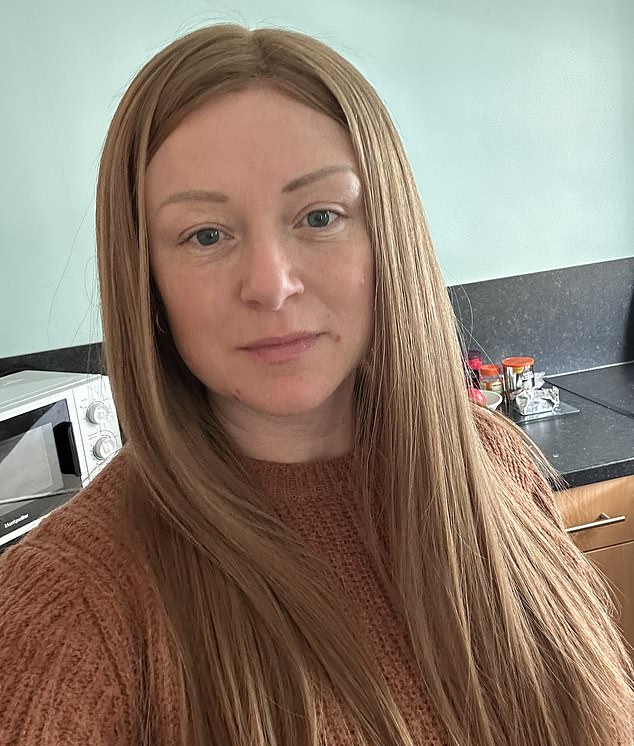
I’d grab one strand of hair, fiddle with it, then pluck it out, writes Laura Darcy. It didn’t hurt – it felt nice, like a release, or an itch I had to scratch
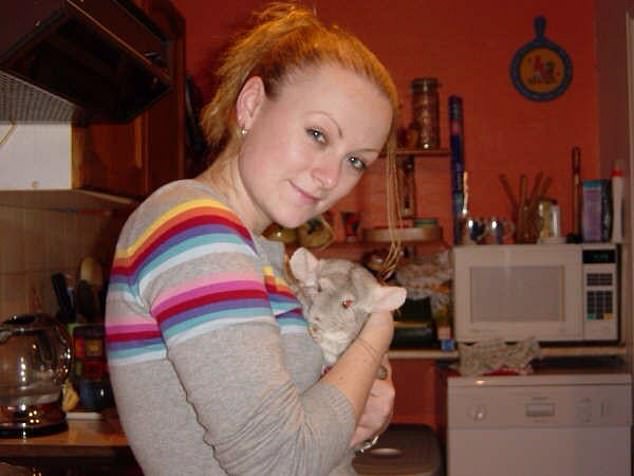
My mum believed my hair was falling out because I had an illness. Which I suppose I did, although not in the way she imagined
I remember feeling terrible, that I’d really let them down. But I had nowhere left to hide, I had to admit it.
Strangely, after I had made my big confession, we didn’t really talk about it. Maybe my parents thought that now it was in the open, I would stop. This was the 1990s, and back then we didn’t tend to have life-changing discussions about mental health issues.
Trichotillomania, as hair pulling is called, had only been officially recognised as a disorder in 1987, so there wasn’t any specific support for me anyway.
By now, I wanted to stop but couldn’t. Partly it was still a stress-reliever, a way of soothing myself, though I’d also do it mindlessly while I was watching TV.
But I was starting to hate it. After bouts of pulling, I’d have visible bald spots and, by time I started secondary school in Watlington, Oxfordshire, I’d pulled every single strand out, leaving me with short, spiky hair. I envied my friends with pretty, long hair. At school, I’d get really defensive if anyone ever talked about it and my friends knew never to ask.
I started to feel despair and hatred towards myself. I even used to wish my arms were broken so I couldn’t do it. I’d try sitting on my hands or wearing gloves and hats, or I would attempt to keep my hands busy by doing cross stitch.
Between the ages of 12 and 16, I managed to reduce the amount of pulling – although I didn’t stop altogether – and my hair grew back ginger and curly. I was just about able to scrape it back into a ponytail.
But at 16, it deteriorated. When I had my first boyfriend, I’d hold it in place with huge amounts of coloured hairspray, which also hid the bald patches. I was always terrified of the rain, in case it made the spray run. I hated double-decker buses, as I feared people on the top deck would look down at me and see how thin my hair was on top.
Trichotillomania occurs more commonly in those with obsessive-compulsive disorder (OCD) and is linked to the same family of conditions as nail biting or skin picking. It isn’t technically considered self-harm and that was never the reason I did it. I didn’t want to hurt myself but, at its worst, my hair pulling caused infections and sores on my head.
After 15 years of suffering, my wake-up call came on New Year’s Day 2006. I was 24 when my 22-year-old brother Michael finally broached the elephant in the room: ‘You know, your hair has worried the whole family for so many years,’ he said. ‘We want to help you do something about it.’ He spoke with such tenderness and kindness, I realised no one had ever spoken to me like that about it. Before, it had always been an embarrassing family secret. But now we talked about it gently and it felt like a real turning point for me.
That month, I saw my GP – I was the first case of trichotillomania he’d seen – who suggested a high dose of Prozac, plus cognitive behavioural therapy (CBT). I was put on a therapy waiting list but, by this point, I was determined to ‘fix myself’ so I started researching other cures, too.
While I waited for the NHS appointment, I found a hypnotherapist online. Based in London’s Harley Street, he was expensive and listed trichotillomania as a speciality. Surely he could help. But after several visits, between February and April 2006, I still had the urge to pull.
Next, I tried some Neuro-linguistic programming therapy (NLP), but again this didn’t help. In January 2007, my NHS sessions for CBT began and the therapist suggested journalling, which helped a little, as did simply talking about it. But still there was no ‘cure’.
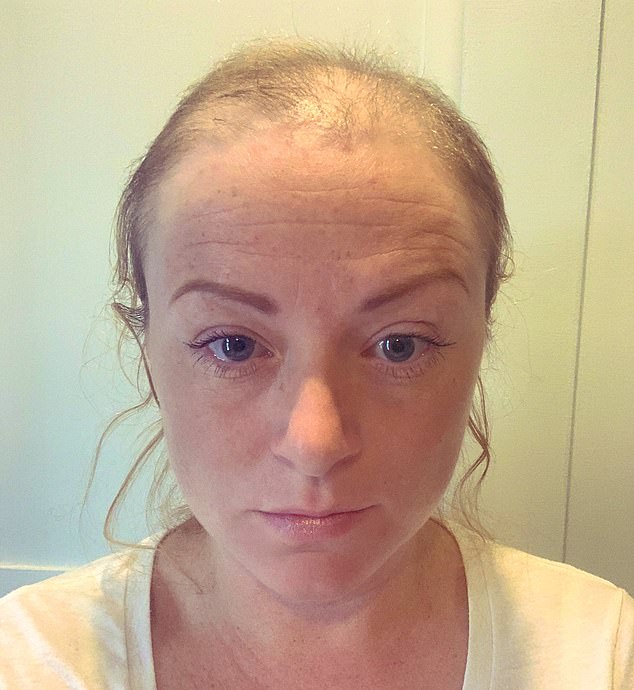
Trichotillomania occurs more commonly in those with obsessive-compulsive disorder and is linked to the same family of conditions as nail biting or skin picking
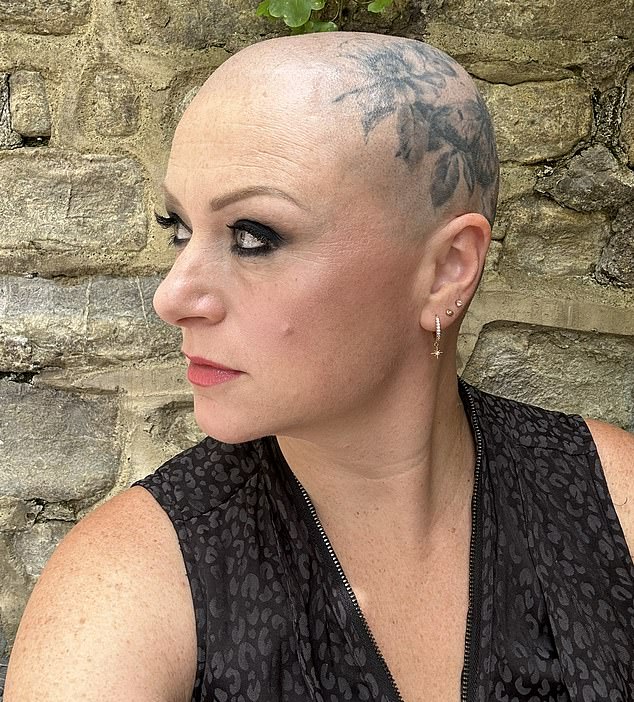
My trichotillomania had always been an embarrassing family secret. But now we talked about it gently and it felt like a real turning point for me
Neither was the drug Modafinil, usually taken for the ‘sleeping disease’ narcolepsy, which I took as part of a research study into its effectiveness for trichotillomania. I also tried an amino acid called N-acetylcysteine, said to help reduce urges. But after 12 weeks on a high dose, there was no improvement.
I also saw a hair specialist about having a transplant. But they said there was no point as I’d just pull the hair out again.
It was really exhausting, and frustrating, trying to ‘fix’ myself for so many years.
At the time, my partner was very supportive and still is now that he’s my husband. But I’ve never been able to get on top of my trichotillomania and I still pull out hair to the extent that, in many places, it doesn’t grow any more. I’ve damaged the follicles so much that the bald patches are permanent. Which is why, aged 25, I turned to hair systems – the fancy phrase for advanced wigs which you don’t take off.
After carrying out research, I found Hair Solved in Manchester, which specialises in exactly my problem. I later transferred to their Bristol salon, not far from my home in Bath.
Weirdly, I was so excited to be going to the hairdressers again. I hadn’t set foot in one since I was a child. At Hair Solved, they were incredibly reassuring; they have private rooms so you don’t feel self-conscious.
Getting a hair system involved having a net placed over my head, which my own hair was then pulled through. Extensions were then added and sewn on to the net, giving volume and complete coverage of any bald patches.
It felt hugely freeing to be in front of a big mirror and look at myself and see other people having the same thing done.
For ten years, living with my hair system was a great solution, although it wasn’t cheap. In the first two years alone, I spent more than £8,000 on it, returning every few weeks to have connections tightened, underlying hair dyed or the whole system taken off, washed and put back on.
Indeed, by 2015, I had spent more than £20,000 on trying to fix my compulsion – first with therapy and then on hair systems. For the first time since I was a little girl, however, I had long hair. I felt normal for the first time. I could wear it down and blend in with no fear of judgment. Mentally, it gave me a break, while my real hair grew beneath the system.
And the compulsion was gone: When I pulled hair out of the system, I obviously couldn’t feel it, so I didn’t have the same sense of satisfaction. So I stopped.
I only have the urge to pull hairs from my head, by the way: No other part of the body feels the same.
Then, nine years after my first hair system, I lost my mum to cancer. To deal with my shock and grief, I started to see a therapist again – and, to my surprise, the hair pulling kept coming up in our sessions. One day, my therapist stopped me in my tracks by suggesting that I still hadn’t dealt with it and that the hair system was hiding, not solving, my condition. I’d never thought of it like that and it played on my mind, until eventually I realised it was true: The hair system had been a cover-up all this time.
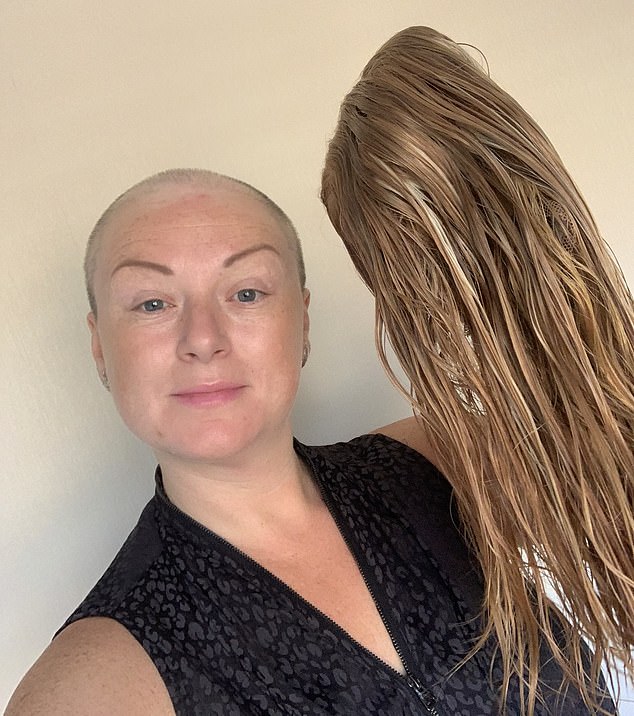
With a hair system, I felt normal for the first time. I could wear it down and blend in with no fear of judgment. Mentally, it gave me a break, while my real hair grew beneath the system
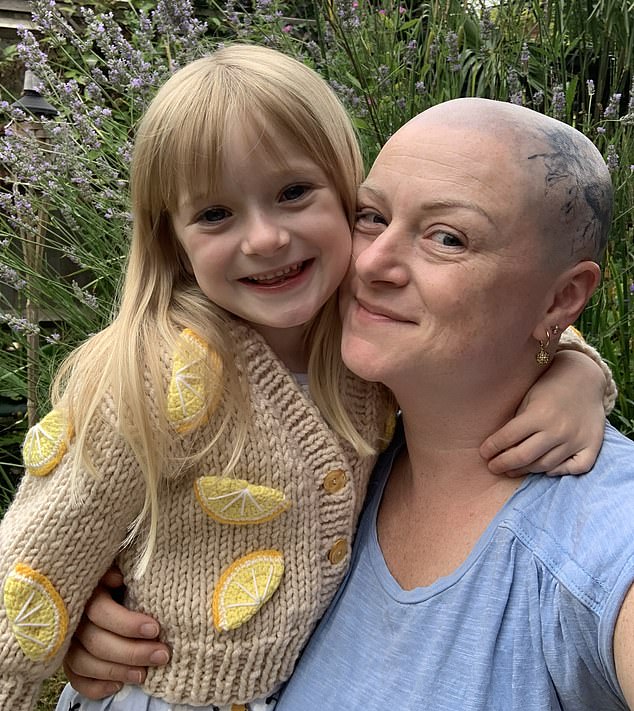
I revealed my shaved head to one person at a time. My dad and my brother were shocked, but supportive. My three-year-old daughter Grace was anxious and tearful. ‘Mummy, what have you done?’
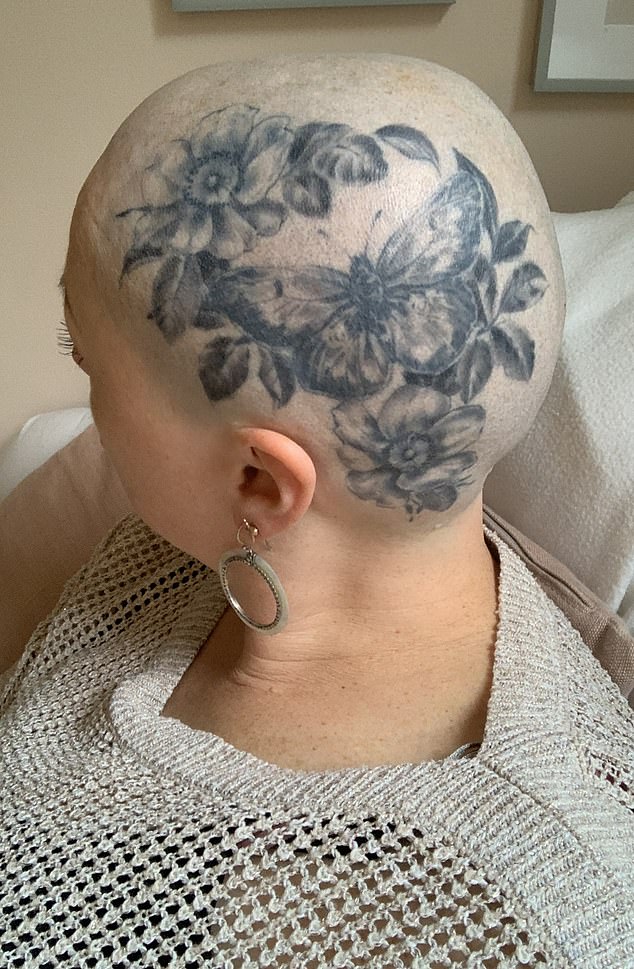
I thought: ‘I can’t grow my hair. I can’t do hairstyles. But I can decorate my head!’
Back then, I was working as a project manager in an office. I wore smart clothes and had my lovely, long hair system, but then during lockdown in August 2020, I decided to remove the system and shave my own remaining hair off.
It was a spur of the moment decision – I got my husband’s clippers and asked him to do it for me – but it was liberating and transformative. Taking my first shower and feeling the water on my head was wonderful. Feeling the sun on my scalp felt like freedom.
I revealed my shaved head to one person at a time. My dad and my brother were shocked, but supportive. My three-year-old daughter Grace was anxious and tearful. ‘Mummy, what have you done?’ she wailed.
Staying strong and reassuring her was vital. My therapist had impressed upon me that I was allowed to do what I needed to do. I was also teaching Grace that it’s OK to be different.
At the same time, I needed to admit – if only to myself – that I was terrified she would develop trichotillomania, too, and lose her own beautiful, long blonde hair, which was just like mine at that age. Finally, I knew exactly how helpless my mum had felt.
Revealing my shaved head on the school run was terrifying. I felt like everyone was judging me. But it also felt exhilarating. Of course the children asked questions and, whenever they did, I told them the truth.
Now, at 44, I’ve embraced my shaved head. I found a tattoo artist in Bristol who performs micro pigmentation on my scalp – tiny permanent dots to fill in the gaps where my hair doesn’t grow properly any more. So it looks like it’s been shaved by choice.
I also got a tattoo on my head, another spontaneous decision. I thought: ‘I can’t grow my hair. I can’t do hairstyles. But I can decorate my head!’ I chose a butterfly to represent Grace and I also have a flower because I love botanical things. I honestly believe it looks quite feminine.
With Grace, I have a fun way to find the positive in my trichotillomania. I’ve bought rainbow- coloured and pink wigs which she loves. Nowadays, I wear hair as part of an outfit, treating it as an accessory, just like a pair of earrings. I never wear a wig at home; I like the way I look with no hair now and it’s so easy.
Hair Solved also recently launched a hair system called a Flexi, which is made from human hair and suitable for women with completely bald heads.
I’m not cured and don’t think I ever will be. Every day I still fight the urge to pick and pull. But I try to see the positives. I never ever have a bad hair day, I don’t spend money at the hairdresser and I never get shampoo in my eyes. If there’s ever a nit scare at Grace’s school, I know I’ll be fine!
More importantly, after decades of worrying what other people thought of me, I’ve finally realised that no one really cares what I look like. I now feel as pretty as I did aged six with long blonde hair. After years of fear about not having hair, now nobody comments –except sometimes to compliment my earrings!
As told to Katie Glass