COCAINE “superhighways”, narco subs and international cartel alliances signal a new kind of organised crime powerful enough to take over states, experts warn.
Vicious Latin American drug gangs are evolving at an unprecedented pace – snatching territory and infiltrating governments to allow massive drug shipments across the Atlantic.
Now, their power and influence is growing – particularly as they join forces with Europe’s criminal networks, experts say.
Just last month, British cops helped seize a record nine-tonne haul of cocaine from a “narco sub” headed for Portugal from Latin America.
Meanwhile, government crackdowns are failing.
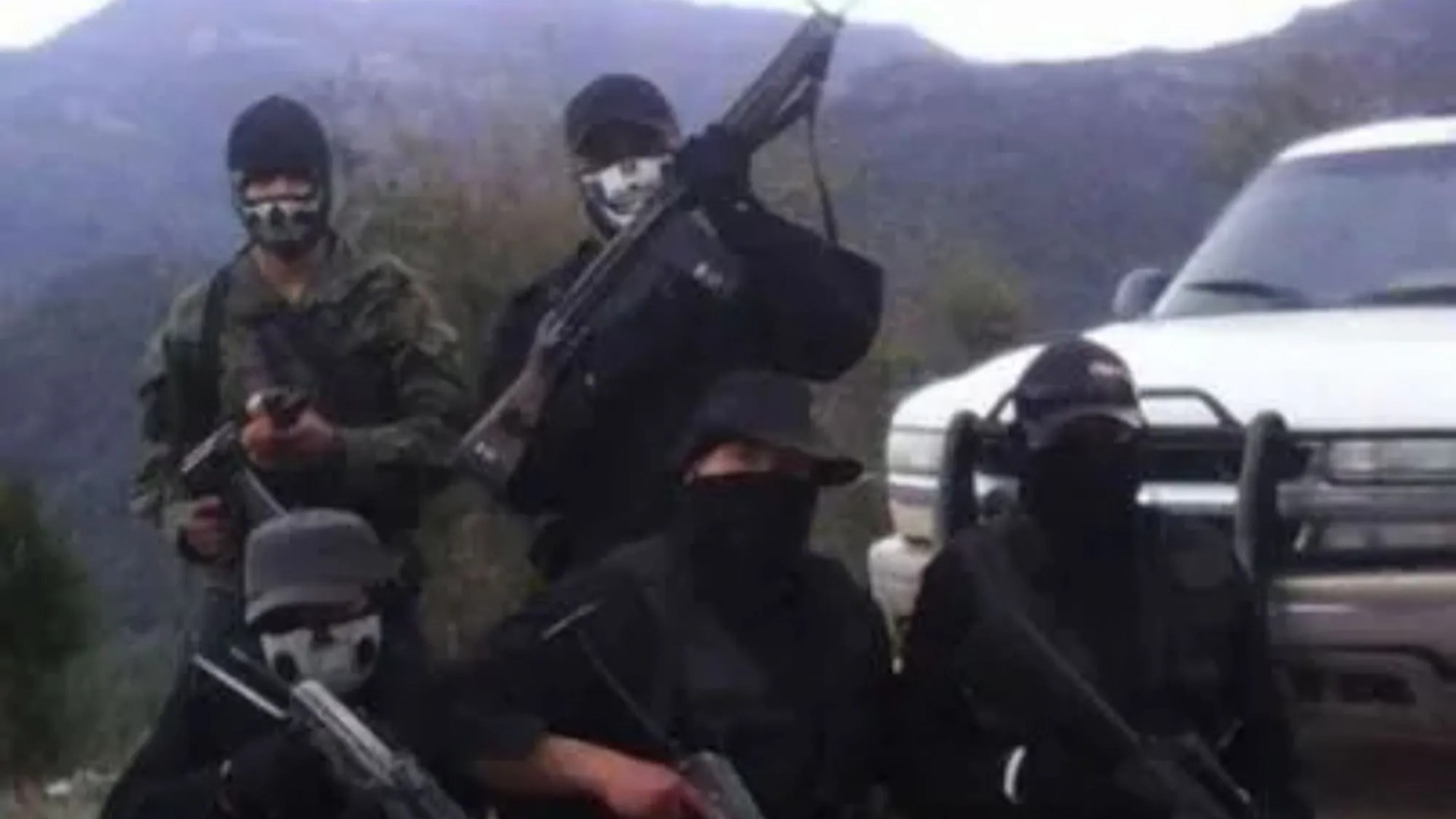
In Mexico, cartels control one third of the country – run by 400 separate mobs who carry high-powered rifles and execute enemies with no mercy.
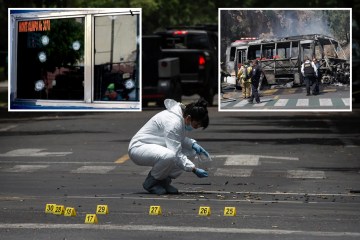
And the recent killing of barbaric narco leader El Mencho sparked a vicious war as his criminal empire hit back.
The reclusive head of the Jalisco New Generation Cartel (CJNG), which were designated a terrorist organisation last year, had an £11.1million bounty on his head in the US.
A fresh-faced successor, the slain kingpin’s stepson, is already primed to take over the gang – showing they are still in power.
Criminal network specialist Rafaella Lipschitz, told The Sun the growing power of these groups creates new challenges that could “overwhelm traditional law enforcement”.
She told The Sun: “As their reach expands, criminals penetrate institutions in each state, especially in weaker states.”
Criminal gangs taking over governments and forcing ordinary citizens to serve their interests is becoming a bigger challenge, she says.
Lipschitz said this is “moving beyond simple corruption” to building new government networks – and effectively running regions themselves.
“This represents a shift from criminals operating against the state to criminals operating through the state,” she said.
“The line between legitimate authority and criminal power becomes blurred.”
In Mexico, cartels enforce their own services on civilians to push out the role of government in certain towns.
Ruthless groups have set up their own extortionate Wi-Fi and tax systems to rake in cash – with residents forced to comply or face execution.
Across Latin America and the Caribbean, drug cartels already wield a huge amount of power.
Cartels also function as employers, grooming poor youngsters into their brutal regimes.
In nearby Venezuela, a sprawling cocaine trafficking network is run by the very top officials – including tyrant Nicolas Maduro before he was apprehended by the US.
Cartel de los Soles, translated as Cartel of The Suns, was a powerful web of Venezuelan military, intelligence and political elites accused of taxing, protecting and moving cocaine using state resources.
And despite Maduro’s capture, many of these officials remain – allowing corruption and state-involvement in illegal dealings to continue.
Ecuador has also been infiltrated by gangs using threats and coercion to infiltrate its police, justice system, and local government.
Meanwhile, hundreds of armed groups have taken control of huge swathes of Haiti, particularly its capital Port-au-Prince.
Now these groups are moving across the Atlantic via “super highways” for cocaine trafficking – connecting South America’s coca-producing nations to Europe’s growing consumer markets.
As these criminal networks expand so will their influence – expanding their empire with new recruits, Lipschitz said.
Just months ago, French cops dismantled a major synthetic drug network with links to Mexico’s Sinaloa cartel.
The operation led to the seizure of more than 200kg of crystal meth and arrests of 16 people across Europe.
Investigators said the ringleaders relied on the support and expertise of Mexican cartel operatives.
In other cases, Mexican cartels have helped set up meth labs in countries like Belgium and the Netherlands.
Massive cocaine shipments passing through European ports such as Rotterdam and Antwerp have also been seized.
And criminals are diversifying their routes and finding new ways to move drug hauls at a rate law enforcement cannot “anticipate or detect”, Lipschitz said.
As they expand into Europe, so will their brutal violence, experts warn.
Organised crime-related violence has intensified, particularly in UK port cities, where control of supply chains and competition is intense.
The EU Drugs Agency has described seaports as the “floodgates” for illegal drugs, with growing concern over drug-related violence.
Last month, British cops helped seize a record nine-tonne haul of cocaine from a “narco sub” in the Atlantic Ocean.
The mammoth seizure, worth around £520million and weighing nearly as much as a school bus, was headed for Portugal from Latin America.
Cathy Haenlin, director of organised crime and policing studies at RUSI told The Sun: “In the UK, there is evidence that organised crime groups have infiltrated or exploited UK ports to move drugs and other illegal commodities into the country.”
In 2017, a gang managed to smuggle £10million worth of cocaine from Rio de Janeiro, Brazil, to the UK through Heathrow airport with the help of bent baggage handlers.
Handlers would transfer the bags on to the domestic reclaim belt for a courier arriving on an international flight to collect. The courier would then be able to pass through lower level security.
Gangs are increasingly operating from within private-sector and government structures.
Criminals have already corrupted Border Force officers, cruise ship workers, hauliers, couriers and airline baggage handlers.
With weakened governments infiltrated by drug gangs, criminal networks can swoop in and expand their operations, Lipschitz said.
Ruptures in state relationships reduce intelligence sharing, creating “blind spots” for criminal groups to cash in on.
Lipschitz said: “Breakdowns in US-UK partnerships due to the US’ unilateral targeting of alleged Venezuelan drug trafficking boats led the UK to stop some intelligence sharing with the US.
“This has left gaps for cartels and criminal networks to exploit, especially given that many of them operate on both sides of the Atlantic.”
Killing of Drug kingpin El Mencho sparks chaos
THE death of feared drug lord “El Mencho” sparked a terrifying response by Mexico’s most vengeful cartel.
Nemesio Rubén Oseguera Cervantes – leader of the Jalisco New Generation Cartel (JNGC) – was killed on Sunday during a military operation in the western state of Jalisco.
The JNGC responded with fire and fury, unleashing chaos that shut down streets and sent tourists fleeing.
The cartel is one of Mexico’s most powerful and fastest-growing criminal organisations.
Several hours of roadblocks on the streets of Guadalajara and Puerto Vallarta saw vehicles set alight as gunmen in tactical gear forced civilians into hiding.
Plumes of smoke rose over two major Mexican cities – Guadalajara and Puerto Vallarta – where severe travel warnings were put in place.
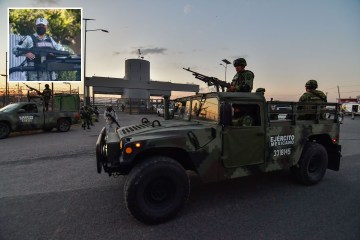
Authorities called in federal reinforcements to contain the violence.
Local media reported cartel assaults in Jalisco, Michoacan, Tamaulipas, Colima, Guanajuato, Aguascalientes and Veracruz following Oseguera’s death.
In February, the Trump administration designated the Jalisco New Generation Cartel as a foreign terrorist organisation.
It has attacked the military, including helicopters, and pioneered the use of explosives launched from drones and the installation of mines.