Britain has just two days’ worth of natural gas in storage, sparking fears of a shortage crisis as the Middle East conflict threatens supplies.
The UK’s gas reserves have dwindled from 18,000 GWh last year to 6,700 GWh, enough for just 1.5 days of demand, according to new data published by National Gas. There is a similar quantity stored as liquefied natural gas (LNG).
Europe is much better prepared to weather fluctuations in supply, with several weeks’ worth of gas stored up.
Traders have been exploiting the UK’s situation by charging it a premium price on gas, knowing it has no choice but to outbid its European competitors.
The UK is now paying the highest wholesale gas price in Europe.
Disruption to the gas market is driven partly by the near-total closure of the Strait of Hormuz, through which around 20 percent of the world’s natural gas and oil flows, and also by the shutdown of production in some places.
Qatar announced at the beginning of the week it had suspended production at Ras Laffan, the world’s largest natural gas facility, after it came under Iranian bombardment.
Natasha Fielding, head of gas pricing at Argus Media, a leading publisher of commodity data, said: ‘The price of gas in the UK has increased by more than almost anywhere in Europe.
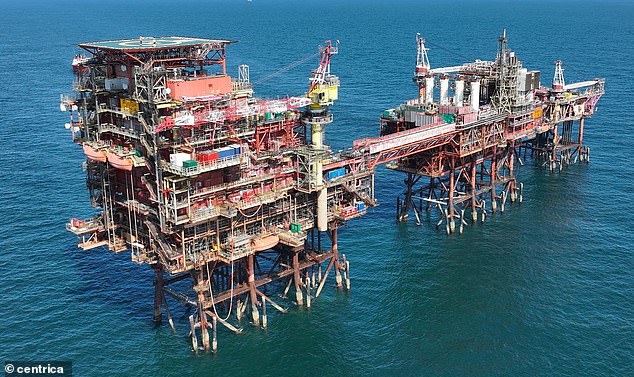
The Rough natural gas storage facility off the coast of Yorkshire, which accounts for around 50 percent of the UK’s capacity
‘The UK gas hub price is now above the Dutch TTF [the main European gas hub] all the way from now until the end of May. Before this week, the UK was priced below the EU.
She said this was partly because the UK’s meagre gas stockpiles leave us ‘more exposed to price spikes’, and added: ‘We can’t rely on withdrawing more from storage, so we have to get that gas from abroad.’
Ms Fielding said traders would be monitoring temperatures in Britain, and that if it gets cold, the UK would be more urgently compelled to outbid other countries for gas.
The UK used to have up to 12 days worth of gas in storage, but the system collapsed after successive government ministers pulled its funding.
National Gas data showed that gas stores were at 18pc of their former capacity on Friday, while LNG stores were just over half full.
A National Gas spokesman said the UK gets most of its gas from Norway and its own North Sea.
They told The Telegraph: ‘The UK benefits from a wide range of gas supply sources. These provide the flexibility needed to balance supply and demand.’
Meanwhile, fears of a significant spike in oil prices are also growing, driven largely by disruption to the flow through the Strait of Hormuz.
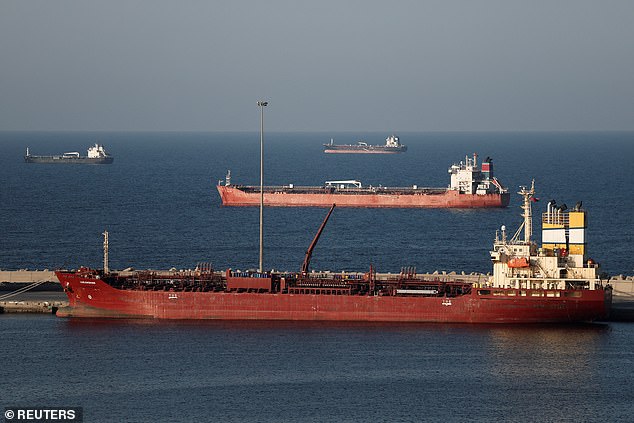
Tankers anchored outside Muscat, Oman, after Iran threatened ships travelling through the Strait of Hormuz
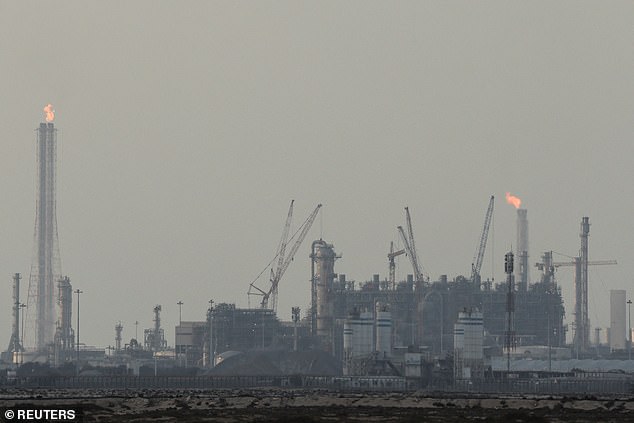
Ras Laffan in Qatar, the world’s largest natural gas facility, suspended operations at the start of the week after coming under attack
Iran’s Revolutionary Guards vowed to ‘set ablaze’ any Western tanker attempting to sail through the strait – and hundreds have since amassed at either end.
Goldman Sachs warned that the current drop in the Middle East’s oil output is 17 times larger than the peak drop in Russia’s output after it invaded Ukraine.
The bank said: ‘We now think that oil prices would likely exceed $100 next week if no signs of solutions emerge by then.
‘We now also think it’s likely that oil prices, especially for refined products, would exceed the 2008 and 2022 peaks, if Strait of Hormuz flows were to remain depressed throughout March.’
Experts have told households in the UK to expect to be ‘hit from multiple sides’ by price rises driven by the Middle East conflict.
Professor Mohamed El-Erian of the University of Pennsylvania told BBC Radio 4’s Today programme: ‘Once again, we see the UK more vulnerable to external shocks than otherwise that in turn is going to translate into higher mortgage rates. So the average person will get hit from multiple sizes, unfortunately.’
‘The average person is going to face higher energy prices, but also higher mortgage rates and slowly but surely, noticeable increases in a broad range of goods and services because of supply chain disruptions.’