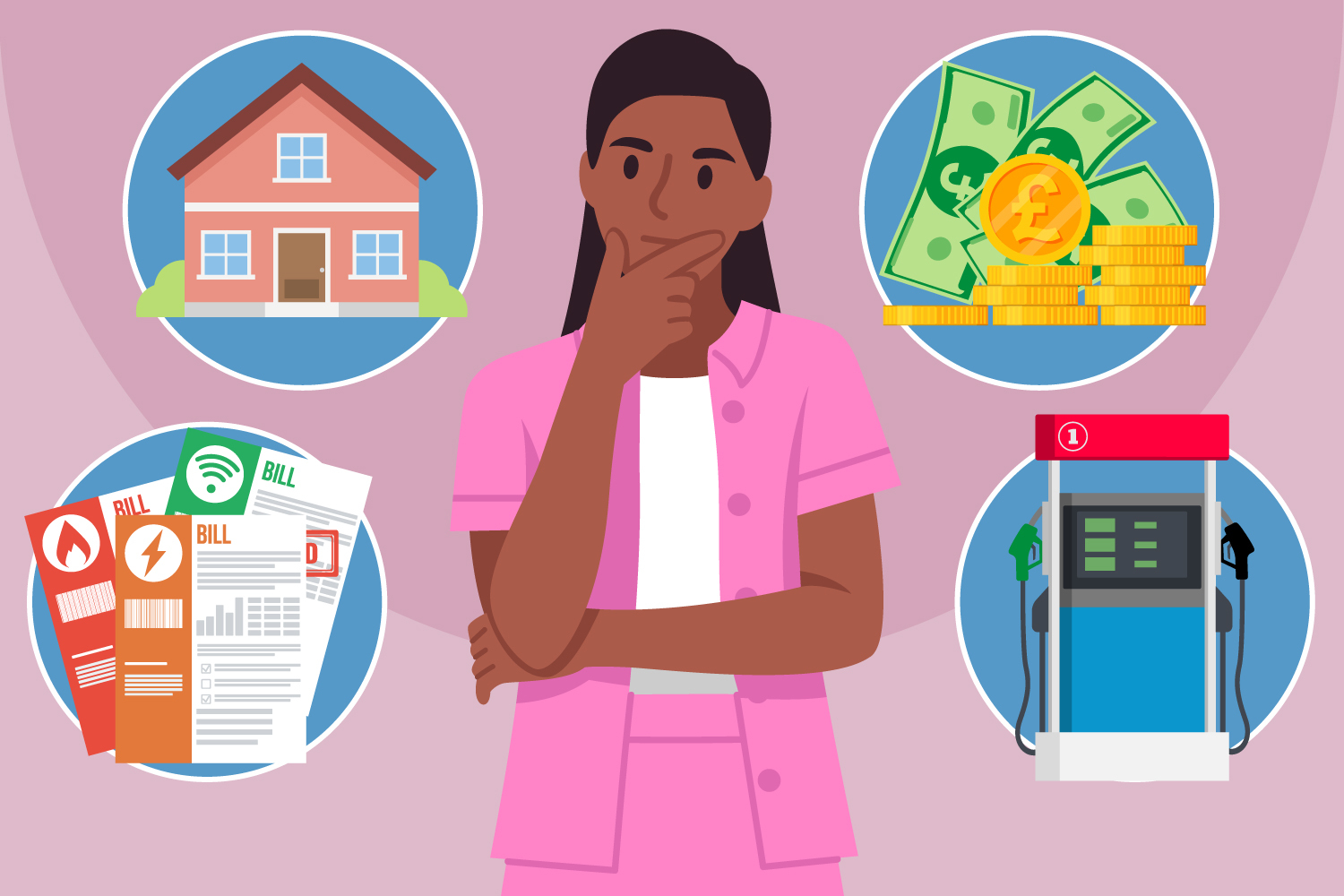
HOUSEHOLDS across the UK will have their wallets hit by the fall-out of the escalating war in the Middle East.
Its impact is already being felt close to home, with stock markets tumbling, prices at the fuel pumps set to rise and hopes of further interest rate cuts fading. Don’t panic – here’s our guide to help you protect your cash.
Analysts have also warned a “war premium” could push up energy bills for UK households, just days after the price cap was cut.
The US and Israel have been carrying out heavy strikes on Iran, while Tehran has launched widespread retaliatory missile and drone attacks.
The future looks uncertain and we’ll have to brace for more instability – but there are steps you can take now to help protect your cash.
Energy bills
Brits could see their energy bills rocket up by £160 a year from July because of soaring oil prices, analysts at Cornwall Insight have warned.
It means the average household would be paying a total of £1,801 a year.
The increase is expected as the Middle East is a massive exporter of seaborne gas, and any lengthy disruption to exports can push prices up.
Only last week, Ofgem had cut its energy price cap (the maximum amount suppliers can charge per unit of energy) which meant the average energy bill had fallen to £1,641 a year.
If you want to protect yourself from the potential of skyrocketing energy prices, it could be worth moving onto a fixed energy deal now.
Fixed deals will keep the unit price of your gas and electricity the same for the length of your contract, rather than going up and down with the energy price cap.
Ben Gallizzi, energy expert at Uswitch.com, said: “You can get certainty on your energy costs by locking in your rates for a year or more with a fixed deal to avoid volatility caused by global events.
“A number of deals have been removed from the market, but there are still two fixed tariffs available that beat the current price cap level.
“One of them offers savings versus the upcoming April price cap, but only by £1.”
You may need to get in quick, as The Sun exclusively revealed earlier this week that British Gas, Ovo and Scottish Power had pulled all of their fixed energy deals from the market.
Mortgages
Things had been looking up for homeowners, with the promise of more interest rate cuts this year on the horizon.
If markets are expecting central banks like the Bank of England to cut their interest rates, it usually means mortgage lenders offer better deals.
That in turn means lower monthly payments for mortgage holders.
But market expectations for the Bank of England to cut rates from 3.75% to 3.5% later this month have plunged from nearly 90% to just 15% now.
That’s because the war in the Middle East has stoked fears of higher inflation.
The Bank of England often has to keep interest rates high or even raise them to prevent inflation from rising further.
As a result, several major lenders have frozen their plans to cut mortgage rates in the wake of the Middle East crisis.
HSBC increased its rates for first-time buyers, home movers, people re-mortgaging and buy-to-let landlords on Friday.
Coventry Building Society is also set to increase mortgage rates on Monday.
Nicholas Mendes, mortgage technical manager at John Charcol, says if you’re buying a home or remortgaging currently you should try to secure a rate as early as you can.
Most lenders will let you lock in a deal several months before completion, so you’ll be protected if the market becomes more volatile.
“Leaving it until the last minute can limit options, whereas starting the process early gives borrowers more time to secure a competitive deal,” he says.
Nick also recommends working with a broker as they will regularly review your deal and potentially move you to a cheaper one if it becomes available.
Fuel
Prices at the petrol pumps soared to the highest level in over a year this week.
Petrol has shot up by 3p to 136p a litre since Saturday, while diesel is up by 5p to a 16-month high of 147p.
The latest price hikes come as Iran said the Strait of Hormuz, a crucial oil export route, is closed to ships from the US, Europe and Israel.
Around a fifth of the world’s oil and liquified natural gas is transported through the strait, and a lengthy blockade could drive up pump prices further.
The RAC’s head of policy Simon Williams says you can cut your fuel costs by keeping track of where the cheapest petrol stations are near you.
You can either use the myRAC app or the Government’s new Fuel Finder tool.
How you can spend less on petrol or diesel
THE RAC’s head of policy Simon Williams has given us these tips for cutting down on the cost of driving…
- Maintain your vehicle – it’s particularly important to check tyre pressure. Under or overinflated tyres can adversely impact fuel economy.
- Know when to accelerate – the higher your speed and the faster you accelerate, the more fuel you use. Excessive speed is by far and away the biggest factor reducing your car’s fuel economy.
- Combine journeys – consider making one round trip rather than several short trips. Once the engine is warm it will operate at its most efficient whereas several cold starts will increase fuel consumption even though the total mileage could be the same.
Groceries
Supermarket prices are yet to feel the impact of the war, but there are plenty of ways the chaos could push up the cost of your weekly shop.
Supply chains are energy intensive so any increase to the cost of power will likely feed through to the cost of groceries.
If the conflict continues, shoppers may find prices are passed onto them at the till.
Added to this, the effective closure of air transport in the region and the Strait of Hormuz, will hit supply chains making it harder and more expensive for goods to reach the UK.
Keep the price of your shop down by switching out your branded items for shops’ own versions. A single tin of Heinz beans now costs around £1.40 in major UK supermarkets. But head to Aldi, and you’ll find Everyday Essentials Baked Beans for just 27p.
Savings
While it creates a headache for borrowers and the Bank of England, the likelihood of inflation going back up as a result of the conflict could be good news for savers.
The reduced chance of an interest rate cut this year means rates offered on savings accounts will remain higher – making your money work harder.
However, bear in mind that high inflation can erode the value of your savings in real terms.
Caitlyn Eastell, personal finance analyst at Moneyfactscompare.co.uk, says you should make sure the interest rate you’re getting on your earnings is well above the level of inflation.
Inflation is currently sitting at 3 per cent.
The top easy access savings account rate is offered by Chase at 4.5 per cent.
“Easy access accounts give savers the flexibility to rate-hop and constantly chase the top deals, meanwhile fixed accounts may be best for those focused on guaranteed returns,” Caitlyn says.
Investing
The markets have had a rough ride this week as traders have reacted to the chaos in the middle east.
But “safe haven” assets like the US dollar usually soar as investors flee risky stocks.
Think twice before you hit the sell button on your investing app in a panic, because it’s never a good idea to sell when the market is all over the place, says Artemis investment manager, Liam O’Donnell.
“History shows stock markets recover quite quickly even with big shocks as they did after the Russian invasion in 2022.”
Data from previous crises shows that markets often overreact at the start of a global event, leading to a rapid loss in values. But then rational thinking resumes and you often see a rebound in prices within a relatively short timeframe.
Dan Coatsworth, head of markets at AJ Bell, said “Anyone who panicked and sold during the 11% slump following President Trump’s “Liberation Day” speech in April 2025 would have missed a recovery that saw the market bounce back in just 30 days.
“It is now trading 23% higher than it was before that crisis even started.”
That means if you had £5,000 invested and got spooked into selling during the Liberation Day dip, you’d have missed out on the £1,150 profit enjoyed by those who are still invested today.