
As Gen Z settles into the workplace, often without leaving their childhood homes, the lifelong consequences of learning about the world through a screen for nine hours each day are finally being taken seriously.
Ministers have launched a consultation on whether children should be barred from social media altogether, alongside proposals for curfews, screen time limits and the removal of addictive features such as infinite scroll and autoplay. Pilot schemes will test how families cope without the digital drip of content. After Australia moved to curb children’s access, Britain is, belatedly, following suit.
Greta Thunberg was the first Gen Z influencer to breach the adult world of politics. When this fretful doom-monger the United Nations, “You have stolen my future,” she was right to be angry. But the culprits were not coal plants in China or SUVs in suburban driveways. They were the techbros who promised to “move fast and break things” and the class of out of touch politicians who failed to stop them. They are men like Facebook’s founding president Sean Parker who, in 2017, memorably admitted that the engineers had built a “social validation feedback loop” that they knew they were “exploiting a vulnerability in human psychology.” “And we did it anyway” to keep the cash coming in.
Freya India documents what happened to the generation at the digital frontier in her devastating new book Girls. Today’s twenty-somethings do not remember the before times: when if you fancied someone you just got drunk and snogged them, secure in the knowledge there would be no photographic evidence; when friends did not sift through one another’s social media feeds sniffing out ideological non-compliance; when people had personalities, not diagnoses. She recalls a childhood scarred by a constant pressure to share — a “growing sense that if you didn’t post something it hadn’t happened.”
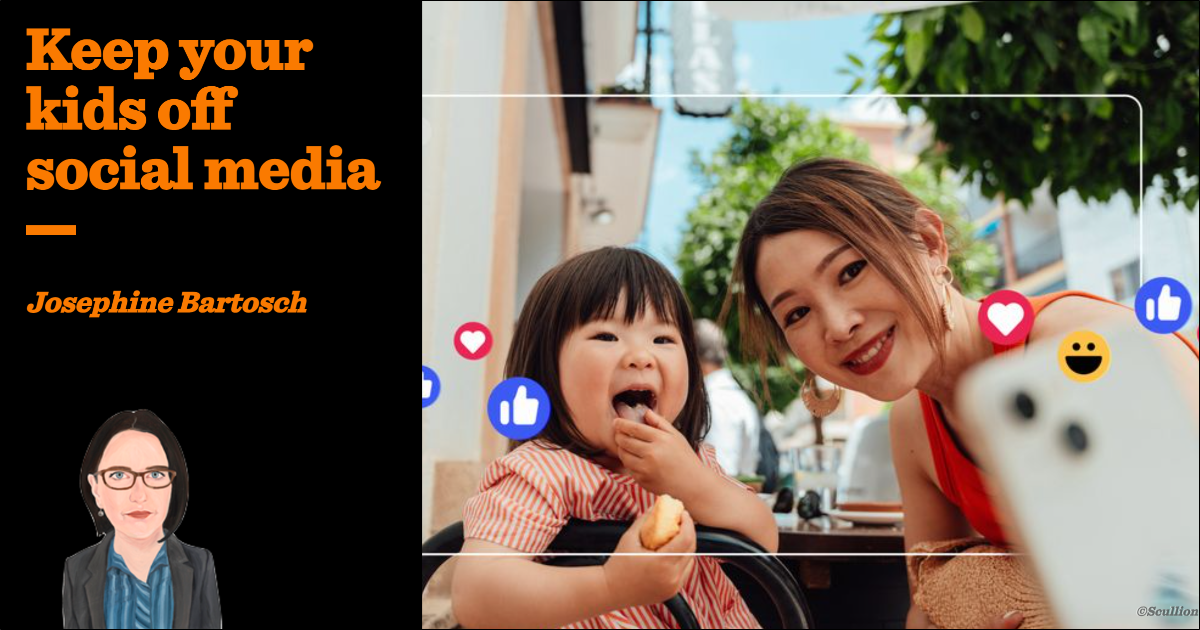
But some of Gen Z did not choose this exposure for themselves. By 2010, 92 per cent of American children had an online presence by the time they were two. Their childhoods were already documented and broadcast by parents, their right to digital anonymity was taken away before they were even aware of it. Indeed, Thunberg’s course was powered by online crowds but it was charted by her parents. Now, with the USP of youth and influence fading, Thunberg has embarked on a voyage through the omnicause; arguably it’s the only route left to her.
If Thunberg was an accidental avatar of the age, others are more deliberate. Joseph Ryan Hughes and his husband Nathan Wayne Hughes paid for their two babies, born to a surrogate mother, and promptly turned them into content. What would once have been private family albums are now Instagram reels and TikTok loops, curated for strangers. As with the thousands of similar family vloggers, how this might impact these kids as they grow seems not to have been considered.
As India documents, there have even been cases where influencer parents have abused their children and forced them to perform. Yet at a more mundane level, the demands of the algorithm, the need to keep viewers watching, leads to everything from “trans” coming out stories to filmed breakdowns.
Now every child is a potential performer, with all the neuroses and insecurities
That the government is finally paying attention to the harms of social media marks a turning point. For years, the online spaces where children and teenagers congregate were treated as neutral — mere platforms upon which culture unfolded. They are now recognised for what they are: engineered environments designed to capture attention and amplify distortion, places where abnormal modes of interaction do not simply appear but are actively rewarded.
We all know how the story of the child star will almost always involve a spell in rehab before a tour of daytime TV shows and finally a pile of biographies in the remainder bin. Now every child is a potential performer, with all the neuroses and insecurities that come from living under the watchful eye of the smartphone.
But if we would not pass round photographs of our children to strangers in the pub, we should think twice before broadcasting them online. Privacy is not a luxury, it is a basic developmental need. Just as those under sixteen should be kept off social media, adults should exercise restraint in posting their offspring. Childhood is more than content.