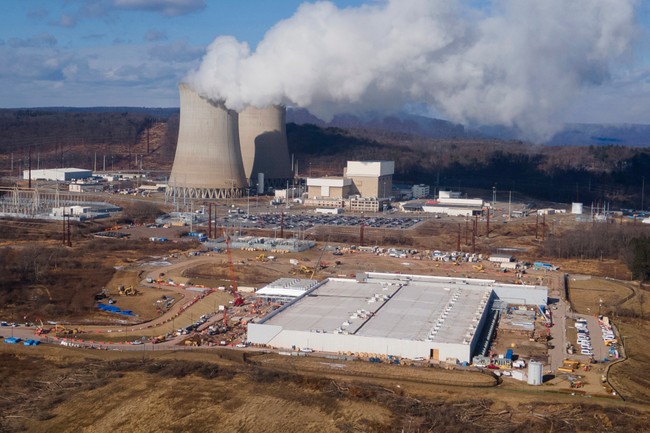
The effort to produce small, modular nuclear reactors took a step forward this week. TerraPower, which is the company created by Bill Gates to build these new reactors just received its first federal permit to start construction on its reactor which will be build in Kemmerer, Wyoming.
The Nuclear Regulatory Commission, the federal body that oversees reactor safety, unanimously voted to grant a construction permit to TerraPower, a start-up founded by Mr. Gates. TerraPower is one of several companies trying to build a new wave of smaller, advanced reactors meant to be easier to build than the large reactors of old.
The permit, which comes after years of consultations and regulatory reviews, means that TerraPower can begin pouring concrete and building the nuclear components of its proposed nuclear plant in Kemmerer, Wyo. The plant, which still faces plenty of logistical hurdles, is currently expected to come online in 2031 near an old coal-burning power plant that is slated to retire a few years later.
“Today is a historic day for the United States nuclear industry,” Chris Levesque, TerraPower’s chief executive, said in a statement. “This is the first commercial-scale, advanced nuclear plant to receive this permit.”
In theory these new reactors could be made much cheaper than the full scale reactors from decades ago. That’s necessary if they are going to compete with the cost of gas or solar, which are pretty cheap.
The real problem with nuclear is the cost of construction. And the cost of construction is, partly, driven by the design which uses the nuclear reaction to heat water and then uses the steam to turn a turbine that generates electricity.
Today, every American nuclear plant uses light-water reactor technology, in which water is pumped into a reactor core and heated by atomic fission, producing steam to create electricity. Because the water is highly pressurized, these plants need heavy piping and thick containment shields to protect against accidents.
TerraPower’s reactor, by contrast, uses liquid sodium instead of water, allowing it to operate at lower pressures. In theory, that reduces the need for costly shielding. In an emergency, the plant can be cooled with air vents rather than complicated pump systems. The reactor is just 345 megawatts, one-third the size of Vogtle’s reactors, making for a smaller investment.
The first TerraPower reactor in Wyoming is still going to cost an estimated $4 billion, but the idea is that each subsequent reactor will refine the design and decrease the cost. But there is a problem, one which no one recognized as a problem a few years ago when the design for the TerraPower reactor was still on the drawing board.
The new reactor uses a different type of nuclear fuel called high-assay, low-enriched uranium (HALEU). That fuel is currently only being made in sufficient quantity by one company in the world and that company is in Russia.
…(HALEU)…is only made in commercial quantities by a company called Techsnabexport, which is a subsidiary of another company called Rosatom, which is owned by the Russian state.
This has been presenting a problem ever since 2022 when Russia invaded mainland Ukraine. At that point, “it became very clear, for a whole set of reasons — moral reasons as well as commercial reasons — that using Russian fuel is no longer an option for us,” TerraPower spokesman Jeff Navin told WyoFile…
“HALEU is not currently available from domestic suppliers, and gaps in supply could delay the deployment of advanced reactors,” the HALEU Availability Program website says. Filling the gap will involve “downblending”—or converting highly concentrated weapons-grade uranium into relatively low-concentration HALEU. This literally means dismantling warheads, melting the uranium, and rejiggering the concentration of the crucial fissile isotope.
There is a company in the US working on producing HALEU, but only one and they are not going to be able to produce nearly enough of it in the next few years to meet the demand of this one TerraPower reactor. So we’ll have to see if the reactor is viable enough to encourage others to get into producing this fuel but as with anything involving nuclear material it probably won’t happen very quickly.
Editor’s Note: Do you enjoy Hot Air’s conservative reporting that takes on the radical left and woke media? Support our work so that we can continue to bring you the truth.
Join Hot Air VIP and use promo code FIGHT to receive 60% off your membership.