Rachel Reeves must stop doubling down on bad economic ideas and try something new
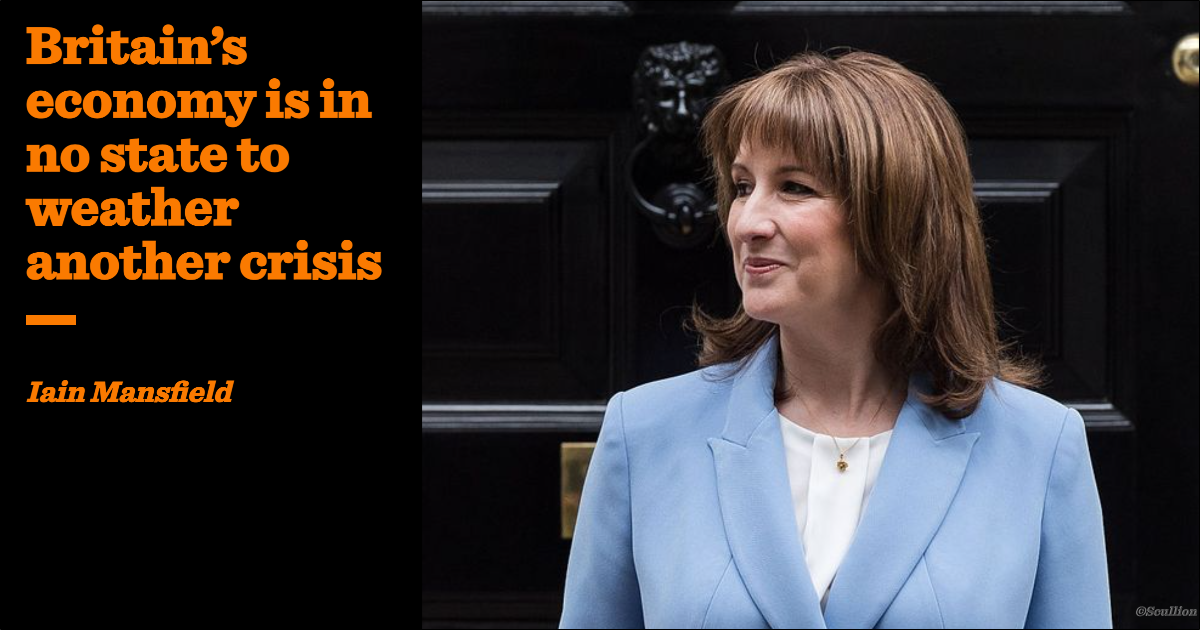
The Chancellor put a brave face on it, but her pugnacious Spring Statement was delivered against a backdrop of statistics that disappointed more than they inspired — with debt “stable” at around 95 per cent of GDP, growth downgraded, and almost a million young people not in work or education. Whilst it was not all bad news for Reeves — tax rises have delivered her a £2 billion increase in her fiscal headroom — there was little that promises relief to long-suffering households.
The reality is that even these lacklustre tidings may already have been overtaken by events. The OBR has a longstanding pattern of overestimating growth and underestimating borrowing; its projections for unemployment seem similarly over-optimistic. This is before one takes into account the war that has erupted in the Middle East, which is already driving up energy prices and interest rates.
Nothing in the Spring Statement alters the fact that Britain’s economy is in no state to weather another crisis. High debt and twitchy bond markets severely limit the ability of Government to bring out the “big bazookas” with which it met the 2008 Financial Crisis and the COVID pandemic. Business and consumers already face some of the highest energy costs in the world – a further prolonged spike, such as we saw after Russia’s invasion of Ukraine, could push Britain to the brink.
Many of these wounds are self-inflicted. High energy prices are the result of throttling our domestic oil and gas industry, repeated delays on nuclear investment and a reckless pursuit of Net Zero to unrealistic timescales. Successive Chancellors have pushed the fiscal envelope to the limit. And since 2024, the triple whammy of increases to Employer National Insurance Contributions, above-inflation rises to the minimum wage and a plethora of new employment red-tape from the Employment Rights Act have sent business costs soaring.
These take place against a broader economic backdrop that has seen repeated favouritism towards the public sector at the expense of the private — reversing the necessary rebalancing that took place between 2010 and 2016. Since the pandemic, employment in the public sector has increased to 6.2 million — and over the last year, annual earnings growth was 7.2 per cent for the public sector and 3.4 per cent for the private sector. When combined with the public sector’s sluggish productivity growth, this is depressing the growth potential of Britain’s economy — and making us systematically poorer.
Over the last twelve months, Policy Exchange has published a series of papers setting out specific, implementable measures to curb public spending and restore the balance between the public and private sectors, including how to restore benefit spending to pre-pandemic levels; reforming public sector pensions; and curbing the sky-rocketing increase in SEND spending. In Beyond Our Means, we went further, setting out a comprehensive plan that would see public sector spending falling to 40 per cent of GDP and beyond by scrapping the triple-lock, slashing international aid and “green” subsidies, and further curbs on working-age welfare and housing benefit.
As a first step, rather than continuing to grow the numbers, and wages, of those in the public sector, the Chancellor must end the self-inflicted wounds that are holding back the British economy.
At a time of crisis, we must consider economic resilience as a critical element of national security
Plans to reform SEND should be accelerated and welfare reform put back on the table. We should restart drilling in the North Sea to reduce our dependence on imported oil and gas. And above all, we should let business breathe again by reversing the job-killing increase to Employer’s National Insurance and freezing the national minimum wage, to stop pricing people out of the labour market.
At a time of crisis, we must consider economic resilience as a critical element of national security. Years of self-indulgent decisions on pensions, welfare and over-regulation are costing us dear — and have left our economy unduly vulnerable to new shocks. Rather than offering us more of the same, the Chancellor needs instead to give the economy the medicine it so badly requires.