As the sun set on Monday evening in Dubai, after more than 48 hours of unprovoked missile and drone attacks from Iran, I enjoyed dinner at Gigi on the Beach.
Despite the war, I felt completely safe. By contrast, when I’m out in Sadiq Khan‘s London, I’m constantly on edge – wary of taking my phone out in public, alert for muggers who want to rip the watch off my arm.
There’s more chance of getting stabbed on a London street than of being injured in an Iranian attack in the United Arab Emirates (UAE). The atmosphere here is confident and calm. As I dined in a restaurant at the sea’s edge, people were strolling past, chatting.
TV news coverage in Britain, with pictures of smoke rising over Dubai airport or explosions damaging the Palm Jumeirah hotel and Burj Al Arab tower, might suggest this city is suffering some kind of barrage.
Yet life here continues normally. Businesses are operating. Families feel safe. The city remains orderly and secure.
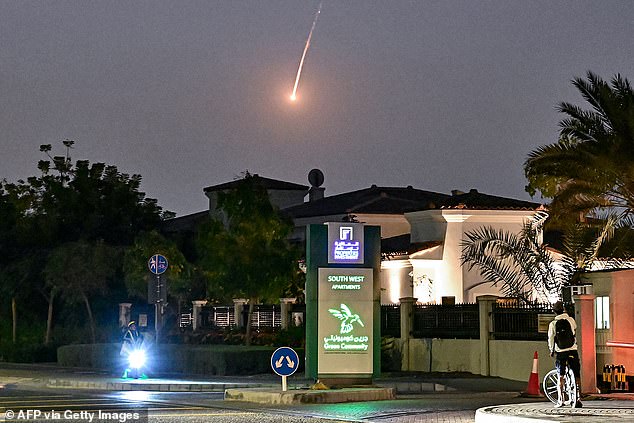
A cyclist watches as Dubai comes under sustained attack. The ‘Iron Dome’ air defences pick off most attacks long before they can put lives in danger
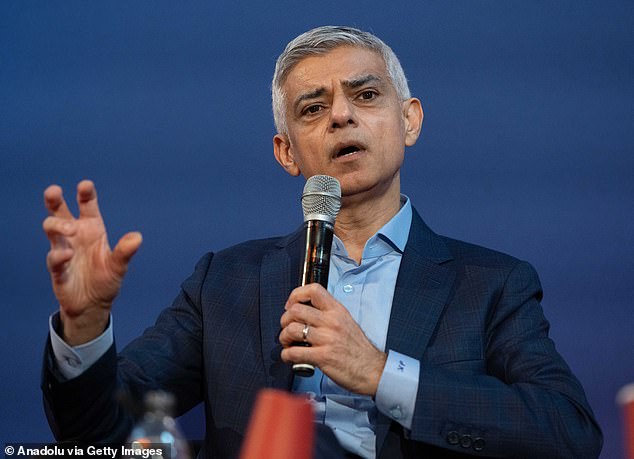
‘When I’m out in Sadiq Khan’s London, I’m constantly on edge – wary of taking my phone out in public, alert for muggers who want to rip the watch off my arm,’ writes Nick Candy
It’s true that the UAE has faced the highest volume of missiles and drones than any other countries in the region (aside from Iran), coming under heavier assault from drones and missiles than even Israel.
But the crucial thing is that almost none of them are getting through. This small Gulf state has proven itself to be exceptionally well prepared, with the ‘Iron Dome’ air defences across the Middle East capable of picking off the attacks long before they can put lives in danger.
I had no idea that Dubai and the whole of this region was protected by an Iron Dome. But the government here is constantly thinking about ways to keep all its residents safe. And for the 240,000 British expats here, that is literally a lifesaver.
On Saturday, when the attacks began, the initial reaction was one of disbelief. The UAE, like other Gulf states, had refused to grant permission to the US to use its air bases or other military infrastructure. There seemed to be no reason for Iran to lash out.
But it quickly became clear that Westerners in Dubai, and the infrastructure that benefits them, such as the airports and hotels, were Tehran’s chief target. For the first few hours, we heard explosions, and the sky was screaming with jets.

Nick Candy says UAE government is showing real leadership in response to Iran’s attacks
As it became clear that this was the sound of air defences in action, the uncertainty ebbed away. The UAE government had a plan and was carrying it out.
That is what effective leadership looks like in moments of anxiety, when headlines threaten to outrun reality.
By contrast, the initial response from the UK was hesitant and, for a period, largely absent. The British in Dubai wanted reassurance and meaningful communication from Westminster. Instead, there was silence. No one knew what our own government was thinking.
Keir Starmer has now begun to address the situation, with mixed messages veering between support for the US and then condemnation. Real leadership is about acting early, setting the tone and giving citizens confidence when it is needed most. That was painfully lacking.
The Lib Dem leader Ed Davey’s remarks in the Commons on Monday were downright disgraceful, dismissing Britons in the UAE as ‘tax exiles’ and ‘washed-up old footballers’.
It’s shocking that our politicians can be so contemptuous of the safety of a large British population. They need to take an urgent lesson from the UAE government, which is proving it is possible to take security seriously without fuelling fear. The priorities have been clear: protect people, maintain stability and project calm.
It’s still unclear what Starmer intends to do about helping British holidaymakers get home from the Gulf states. I doubt he knows yet himself. But in Dubai, the Department of Culture and Tourism is already taking positive action – telling people not to worry about the cost of prolonging their stay, for example, and offering to pay for food and accommodation.
On Monday evening, the UAE’s President Mohammed bin Zayed Al Nahyan and Sheikh Hamdan, the Crown Prince of Dubai, took a walk round the city’s Dubai Mall – famously the biggest and best in the world – before having dinner there.
That gesture put me in mind of how the Royal Family remained in London during the Blitz, and the palpable effect their presence had on public confidence.
The dithering of the UK government saddens me but it doesn’t shock me. The real surprise is that Iran would be stupid enough to launch hostilities against the Gulf states and Saudi Arabia.
Senior officials in three Arab countries have confirmed to me privately that the attacks will not go unpunished. When retaliation comes, we can expect it to be co-ordinated. Crucial infrastructure including oil refineries has been targeted. That confirms what all the world could see, that Iran’s behaviour is demented and wildly self-destructive.
But my great worry is that the UK is not capable of anything like the same level of self-defence. Britain does not have an Iron Dome. We have allowed our armed forces to dwindle. And we are devoid of leadership.
Nick Candy is founder and CEO of Candy Capital