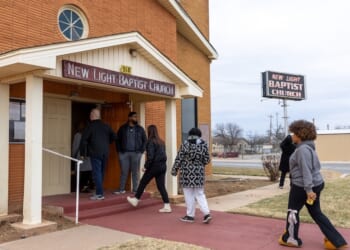
There are 4,000 miles and two continents separating Manchester from Pakistan. But last week that great distance shrank to nothing in the polling booths of Gorton and Denton.
Nigel Farage yesterday claimed in The Mail on Sunday that Reform UK had been robbed of by-election victory by ‘foreign-born voters’.
It was, he suggested, ‘the most glaring example yet of what happens if we’re not careful about the impact of mass immigration and the legitimacy of those who can vote in our elections’.
They are strong words. I am not a supporter of any single party, but I can say this: I escaped the country of my birth, Pakistan, because I could not tolerate living under Sharia-compliant laws that treat women as second class citizens.
I am terrified by the Greens’ naked courtship of the Muslim vote and the creeping sectarianism this engenders.
Their winning candidate, Hannah Spencer, wore a red-and-black keffiyeh to pose in front of an Islamic centre, while her leader Zack Polanski sat down with Muslim elders in a mosque, and the party released pamphlets and videos in Urdu.
How truly engaged in British politics can voters be if they speak poor English? And what place do mosques have in election campaigning?
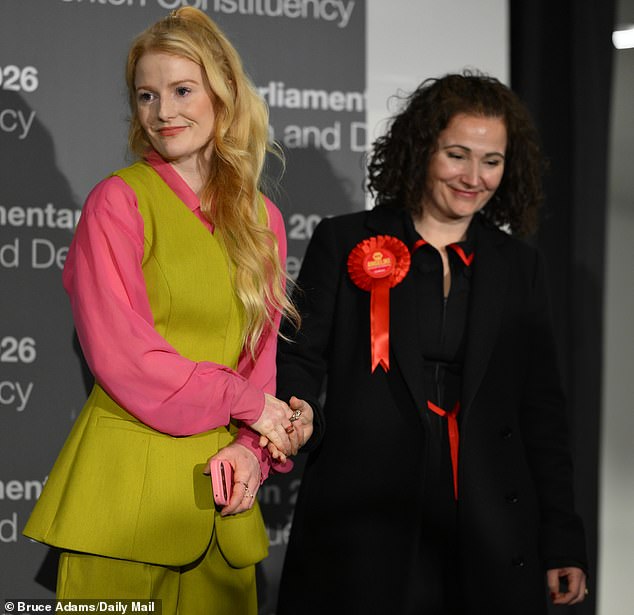
Hannah Spencer with Labour’s Gorton and Denton candidate Angeliki Stogia, who came third in the by-election
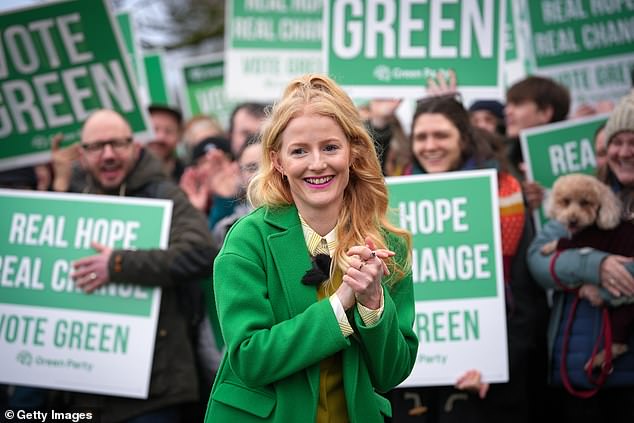
I am terrified by the Greens’ naked courtship of the Muslim vote and the creeping sectarianism this engenders, writes Khadija Khan
None, if we are to learn anything from the mullahs of Iran and their despotic theocracy.
I would say the same of Judaism or Christianity. It’s one thing for an MP to host weekly surgeries in a church hall, it’s another if they courted the priest and their acolytes in the hope that they’d marshal the entire congregation to vote for their party.
This type of block voting on religious grounds is anathema to British values of open democracy and individual liberty. As is being coerced to vote a particular way by a relative – a practice known as ‘family voting’, which also reared its ugly head in Manchester last week.
Official election observer group Democracy Volunteers says it witnessed the highest level of family voting in its ten-year history – 32 cases seen in 15 out of the 22 polling stations monitored.
Given that many in the constituency have roots in Pakistan, I can believe it.
Election days in my home country were curious events. Having not uttered a word about politics, my mother, aunts and grandmothers would nonetheless dutifully troop down to the polling station to cast their vote. Where had this sudden interest come from?
In traditional Pakistani households, politics is the concern of men. A woman wouldn’t dare challenge their husband’s wisdom on the subject, and were he to tell them which party to vote for, they’d
comply. He might even go into the voting booth with them to make sure they marked ‘x’ against the right candidate.
Block voting by families distorts politics. It is not a true reflection of individual feeling or intent.
The practice also subjugates women, facilitating a culture in which a woman isn’t allowed a political opinion, which drives a coach and horses through another British value I hold dear: freedom of expression.
The Pakistani authorities have outlawed family voting, as did our own government last year. But, clearly, it still exists.
I fled to the West in my late 20s, first to Germany and then Britain, to escape this patriarchal bigotry, so to hear that it has followed me here is deeply troubling.
How long will it be before the Greens’ pandering to the Muslim vote leads it down a morally repugnant rabbit hole where, for example, they begin to champion the hijab?
It certainly seems as though Polanski’s support for the women of Iran is weaker than during the ‘Be Our Voice’ protests there last year.
At the time, he hailed the courage of the protesters. Yet now he is condemning the US and Israeli air strikes – aimed at removing the autocrats – as ‘an illegal, unprovoked and brutal attack’.
What, I wonder, has caused him to change his mind?
Religion has no place in politics, and the more politicians blur the distinction, the more they debase the precious common values that keep us safe from the evil chaos of sectarianism.
Khadija Khan is politics and culture editor at A Further Inquiry magazine, and is also co-host of A Further Inquiry Podcast.