They came like shadows, melting from the sullen weight of the jungle and out onto the beach. Ghosts in the flesh that you could have dismissed as apparitions had it not been for the clouds of millions of green-and-white butterflies reacting as they came.
Dark, wild-haired warriors with bows and arrows. They were crouched low, arrows ready.
There was something ancient in how they moved, like cavemen. The origin of our species that never left the green womb, the children that time forgot, now stepped out into the light a thousand years late. Their eyes as dark as night, sorrow-shaped and full of the horror of profound unknowing.
They were coming straight for us.
This was July 2024, and I was visiting a remote village in southeastern Peru as part of an ongoing effort to safeguard a vulnerable area where the river and rainforest are under threat, when members of the Mashco Piro, one of the world’s last uncontacted tribes, emerged from the forest across the river.
With us was an Indigenous anthropologist named Rommel, who speaks closely related Amazonian languages and has spent years learning how to communicate safely with isolated peoples.
What followed was an extraordinary encounter between two worlds that almost never meet.
At first it was just four or five of them, off in the distance. But soon there were others coming from the trees. All of them were armed.
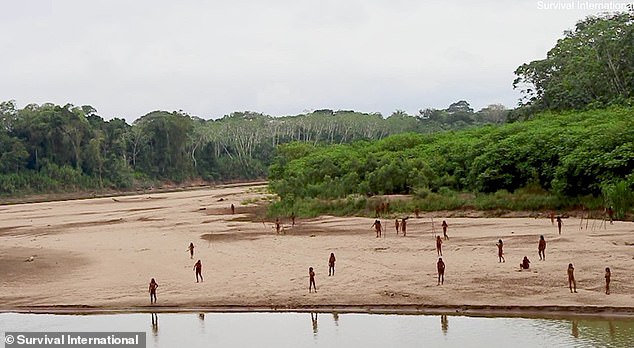
They came like shadows, melting from the sullen weight of the jungle and out onto the beach
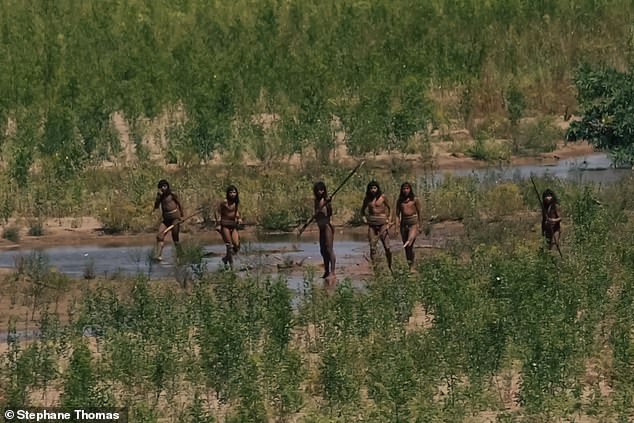
At first it was just four or five of them, off in the distance. But soon there were others coming from the trees. All of them were armed
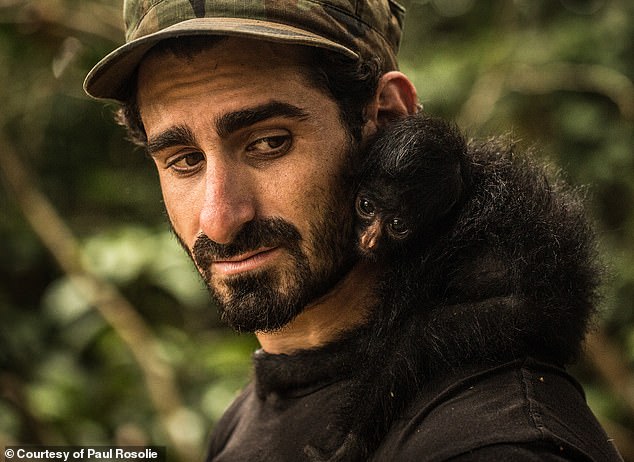
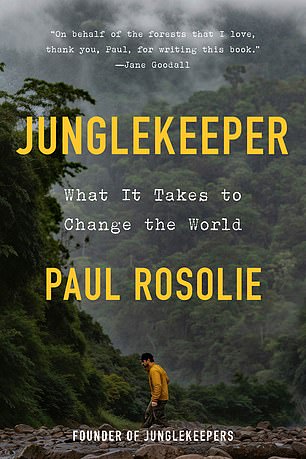
Paul Rosolie – the Brooklyn-born conservationist and the founder of Junglekeepers, which works with Indigenous communities and the government to protect ancestral lands from illegal logging, mining, and narco-trafficking
I was scared.
The Mashco Piro were barefoot and naked from head to toe, save for the rope they wore around their waists to tie their penises up. I could see their faces and the fear, their wild hair and the yellow-and-red war paint on their foreheads.
The moment of contact was approaching.
Rommel was already at the edge of the water. Hobbitlike, wise and calm. His eyes squinted, his hands by his side. ‘HO! Nomolé!’ Which means ‘brother’ but is commonly used as a hopeful ‘Don’t shoot!’
The tribe spoke. ‘Nomolé!’
The air was thick with the smell of wet earth and iron. I was acutely aware that only a small stretch of river divided our two sapien tribes.
All of the tribesmen were armed with massive bows with wide, bamboo-tipped arrows that could cut a man in half.
Rommel spoke with passion, projecting his voice across the river, begging the Mashco men to lay down their arms. Timidly, they listened, and when they had laid their weapons on the sand, they clapped their open hands, showing us their palms – empty.
Rommel nodded, and took a step into the river.
The leader of the Mashco also took a few steps forward, entering the river to his knees.
No one made a sound.
All eyes were on Rommel. Beside him a few of the other men were preparing a canoe filled with gifts of plantains and rope and sugarcane.
Once the canoe was full, Rommel waded, waist-deep in the water, guiding the boat with the offerings, keeping it strategically between himself and the tribe should he need a shield.
Then, when he had gotten as close as he dared, he pushed the boat forward so it drifted toward the tribe.
The water began to churn as they rushed forward. A dozen naked men stormed onto the boat like starving animals, each man clutching at plantains.
When all the cargo had been removed he spoke to them so softly we could not hear him. They were motioning to him. They wanted his clothes.
He took off his shirt and threw it to them.
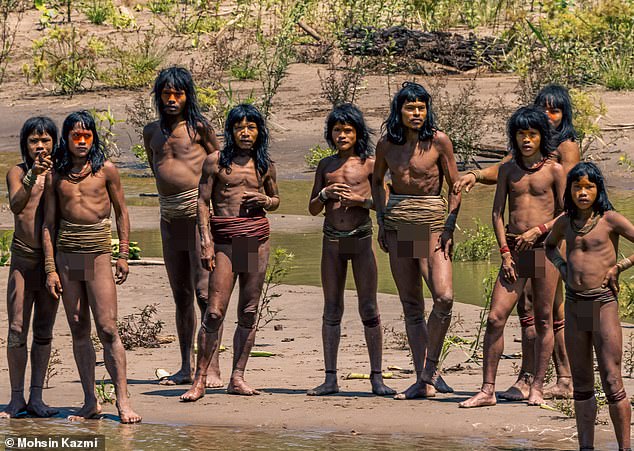
Face to face with the Mashco Piro – this particular clan had never made deliberate peaceful contact before
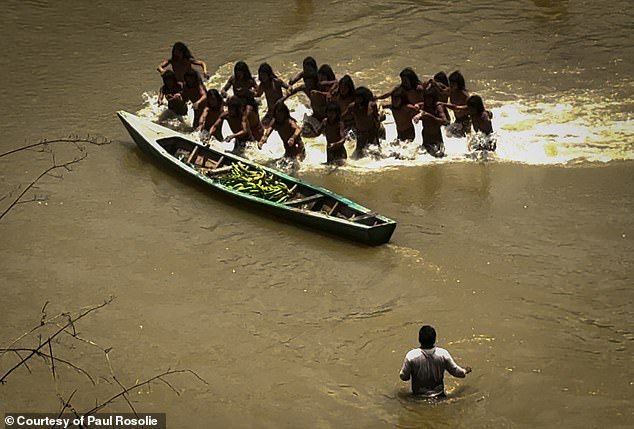
The moment the boat full of plantains was pushed into the river and the tribe rushed forward – Rommel, the interpreter, is in the foreground
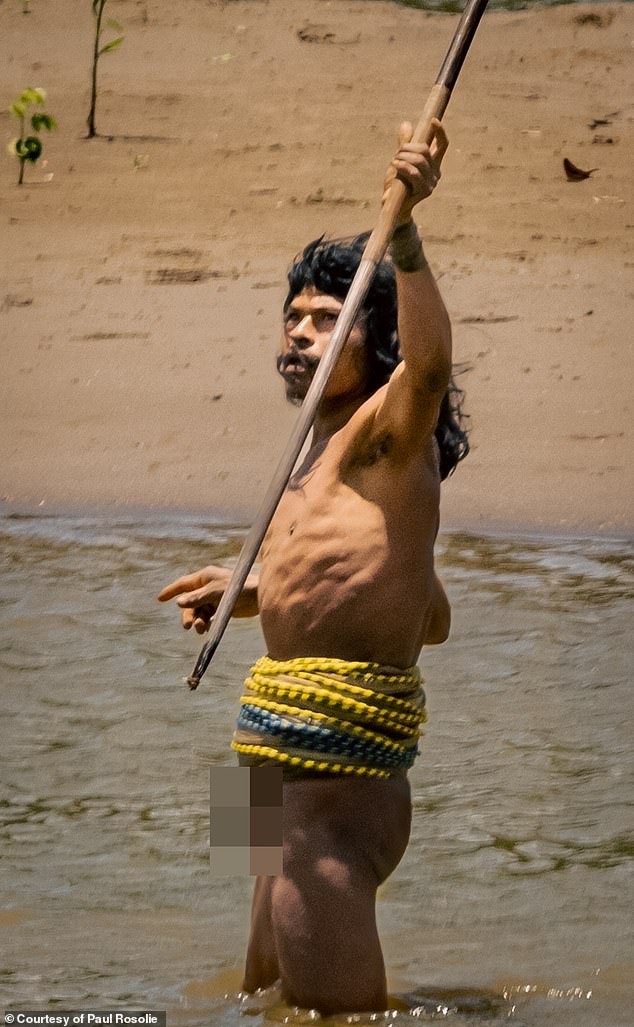
One Mashco warrior loosed an arrow and watched it sail to other side of the river – when it stuck in the ground, he smiled and turned his back
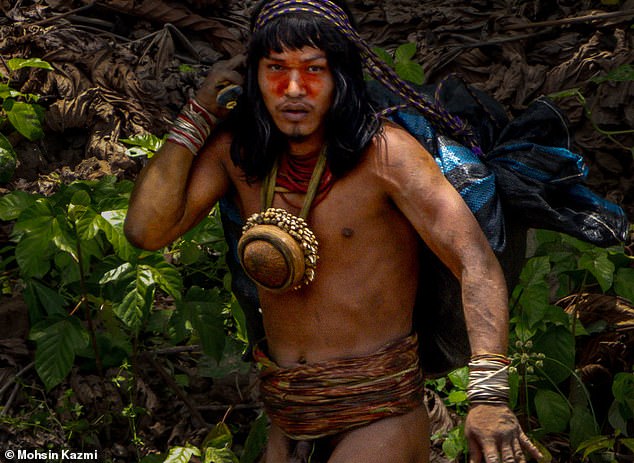
Two of the Mashco men wore this mysterious necklace – it appears to be made of clay and is decorated with animal teeth
One of the Mashco grabbed it out of the air and kept it for himself. Another came forward now, motioning to Rommel’s shorts.
These too he removed and threw over. Then he turned and came back to our side of the river.
We stood in solemn silence, confronted with the historic proportions of what we were seeing. First contact: the intersection of centuries, a group of well-meaning local Indigenous people exchanging the most basic gifts of food and rope with a people wholly untethered from the machinations of the modern world.
For over three hours the people of Puerto Nuevo village and the Mashco Piro exchanged words and gestures and gifts.
In the last hour that the tribe was present, things calmed down. Rommel told them: ‘We have nothing left to give, so go now and be happy.’
One of the Mashco warriors strode out onto the beach, lifted his longbow from the sand, and fit an arrow to the string.
He walked proudly, and obviously, to the edge of the water, pulled back the string, and shot an arrow. It wasn’t at anyone in particular. It wasn’t a threat. Judging from his calm shoulders and narrowed eyes, it seemed like a playful bit of insolence.
Rommel turned to me.
‘How can I explain our world to them? Some call them Stone Age people but they’re wrong. These are pre–Stone Age people. There are no stones here, so they never learned to shape stone. They don’t have any concept of mining metal. Or building boats. Other tribes make clay pots, but not them. They drink water from the stream but have never seen it freeze or boil – they don’t even know it can.’
The last we saw of the tribe was like some mesmeric vision from another century – as though a wrinkle in time had momentarily folded us into a fleeting spectral aperture from another epoch entirely.
A few dozen naked warriors moved off along the beach. Bows and arrows in their hands, bare feet on the sand, plantains lashed to their muscular backs.
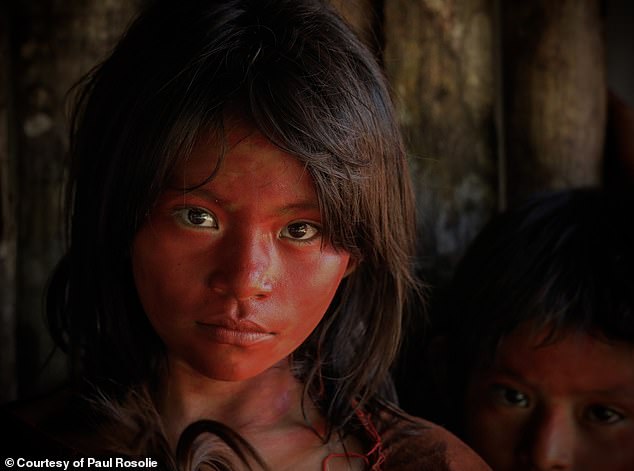
A native girl who lives far out in the Amazonian jungle – Rosolie says people like her are the future of the area
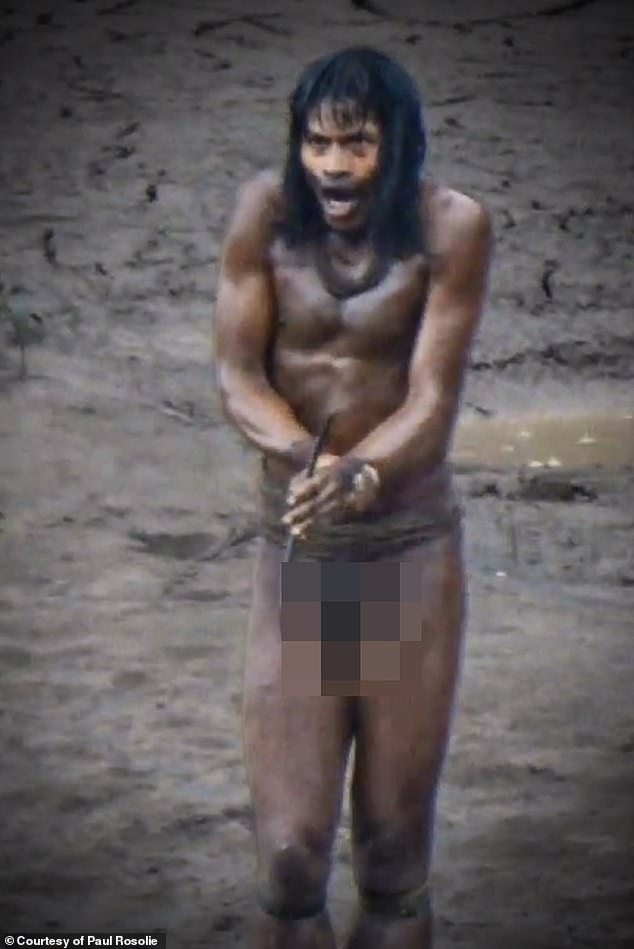
A Mashco Piro man shouting in the rain, trying to communicate with the villagers across the river
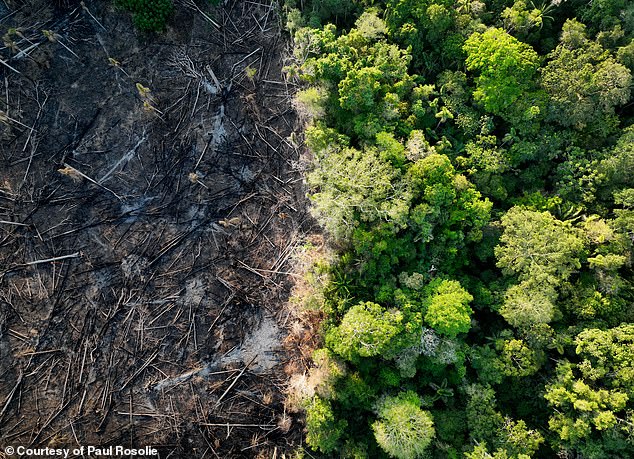
A drone shot shows the difference between ancient primary forest protected by Junglekeepers and the forest that is being destroyed
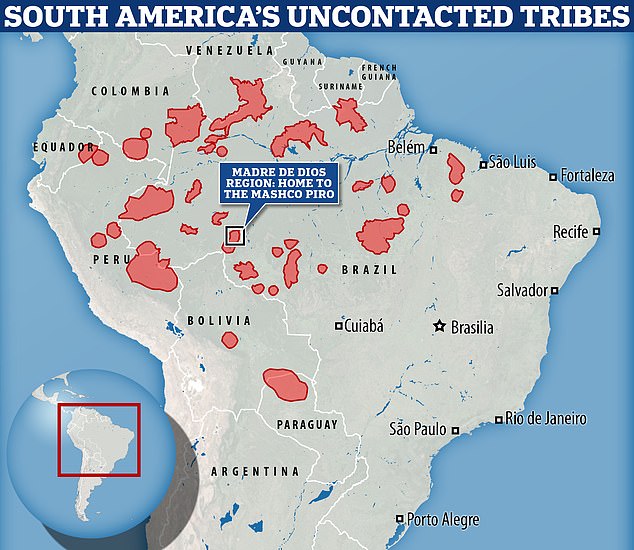
The naked human form. An anachronistic vision of our own species, vanishing into the periphery of credible understanding.
One by one they dissolved into the distance, swallowed by the green womb of the great jungle beyond.
More than a year later, I’m still processing what we experienced that day.
We were left with far more questions than answers. What is clear is the Mashco Piro do not want contact with the outside world. And they do not want their forest destroyed.
Just days after this encounter, several men from the village went fishing upstream. The Mashco Piro launched an orchestrated ambush, attacking the boat from both sides of the river.
Over a hundred of them running across the beach. Others were poised like snipers, hidden high in the jungle at the river’s bend. Arrows filled the air.
As he was piloting his friends away from the danger, one of the villagers was hit by an arrow in the back just beside the spine. It traveled through his body from just over his scapula to just behind his belly button, collapsing his right lung.
He fell as another friend took over driving at full speed.
The tribe was charging behind them, running through the jungle and across the beaches, loosing arrows, in full war paint, red-and-yellow faces, howling, chasing, ready to kill.
The injured villager narrowly survived after being airlifted to emergency medical care.
The Mashco Piro are curious. But they are also afraid. Their future depends on the jungle remaining intact.
And it’s not just their future that is at risk.
After nearly 20 years in Amazonia, I can tell you that the stakes have never been higher. We’ve lost nearly 20 percent of the basin’s original area, and scientists are now warning that we may be approaching a tipping point.
If too much more of Amazonia is cut, it could trigger a kind of basin-wide drying that would be catastrophic on a global scale, and from which there is no going back.
This is the endgame. The next year or two will tell.
Excerpt adapted from JUNGLEKEEPER: What It Takes To Save The World. Copyright © 2026 by Paul Rosolie. Excerpted by permission of Convergent Books, an imprint of Random House, a division of Penguin Random House, LLC. No part of this excerpt may be reproduced or reprinted without permission in writing from the publisher.