I’m shuffling along a dark, subterranean corridor behind families, prams, screaming toddlers, everyone grazing on fast food and taking selfies. We’ve filed past sharks, seahorses and a shoal of really big fish in a very small tank, circling. Past many, many posters about conserving marine life, coral, the rainforest! A virtual Ben Fogle is wittering on a screen. There are boxes asking us to donate coins to conservation when we’ve already shelled out £152 for a family of four and a booklet (under twos go free).
I’m in the bowels of Sea Life London Aquarium, inside County Hall on the capital’s South Bank. It’s a super-curated, sanitised version of marine wildlife. I’ve been snorkelling in Thailand and Africa, where nothing can beat an inquisitive, pyjama-clad clownfish staring into your soul, curious, before nibbling you gently with rubbery lips. This Sea Life experience is like exploring a Disney cartoon.
And then I turn the final corner and am confronted with something very real. A scene you would have thought went out of fashion 25 years ago, when the last elephants were evacuated from London Zoo.
I’m in front of a brightly lit glass box with what appears to be Styrofoam snow around its edges, a sad rubber ring with hose pipes suspended from a ceiling that has, laughably, been amateurishly painted with blue sky and a couple of clouds. There is a small pool of water.
Around it are 15 penguins, each about the size of a corgi. Beady eyes, proud chests, dressed like waiters. Some lie flat on their bellies, paddle-shaped wings parked. One is swimming, only to be frightened by a small child banging on the glass. There are no hidey holes I can see for them to escape the relentless human gaze (even the captive tarantula I’d passed earlier had chosen to retire to his boudoir), nothing for these sea birds to do until the next feeding time of dead fish. No fresh air, no fun, no freedom.
I’m shocked. It’s central London in the year 2026!
When I say, ‘Don’t you think the penguins look depressed, shouldn’t they be free in the wild?’ to the parents gathered with their continually masticating offspring, they look at me as if I’m speaking Ancient Greek.
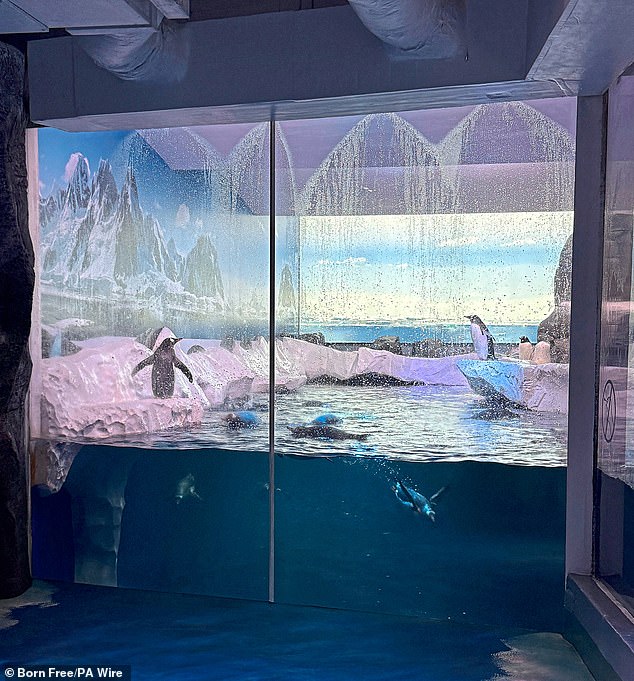
Why are these penguins imprisoned in a London dungeon?
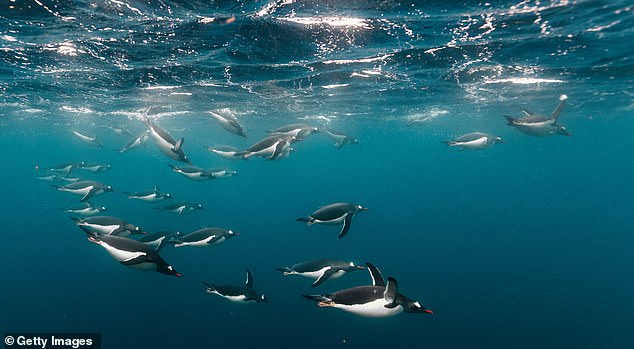
Penguins are the fastest swimming birds in the world
The thought has never occurred to them, so I wonder what their children will take away from the experience: that animals are here to entertain us? Have they not seen March Of The Penguins and sobbed? Why don’t they visit The Paddington Bear Experience next door instead? In fact, I find Sea Life’s virtual polar bear and orca experience – convincing facsimiles crashing from icy waves – far more thrilling than a prone, almost lifeless penguin forced to live out its days in a jam jar, children gawping and giggling but learning zero about empathy.
The penguins here are Gentoo: not endangered, so there is no excuse for captivity. The fettered 15 have been here, not allowed respite (even pit ponies had summer holidays) since 2011. Most came from Edinburgh Zoo; two are geriatric, some were born here. All wear tags, which reminds me of battery hens.
Dr Carys Bennett, who has a PhD in earth sciences and works with PETA, which has long campaigned for an end to exploiting animals for entertainment, tells me that in the wild these sensitive penguins’ lives would be very different. Penguins are adapted to extreme conditions in the Southern Ocean and Antarctica, with icy temperatures and dynamic weather. They care for their young and are sociable, complex animals with a unique biology and behaviours that have evolved to suit their freezing environment. Gentoo penguins swim for miles, diving up to depths of 200 metres, as often as 450 times a day, to forage for food. They can remain submerged for up to seven minutes and swim over 20mph, making them the fastest swimming birds in the world.
To achieve these speeds, Gentoos – who have paddle-shaped wings that taper at the end, like the wings on a Boeing 747 – use ‘feathering’, tilting the bottom of their wings forward or back. This changes the angle relative to the water, reducing the amount of resistance, letting them zoom, gracefully, faster, like so many mini Mark Spitzes.
At Sea Life London the penguin exhibit has no natural daylight or fresh air, and the tiny pool is just two metres deep – a far cry from the ocean. The water temperature, how it’s cleaned, the expertise of the ‘keepers’ (awful, outdated word) are things that Sea Life refuses to disclose. The complexity of the marine environment – tides, water currents, interactions with other animals – cannot be replicated in a London building. These incredible sea birds deserve better.
Rodrigo Tapia, an ornithologist, birding guide and Antarctic ambassador, based in the southern oceans, is aghast when he hears of their plight. ‘Penguins are a family of birds wonderfully adapted to life at sea. They appeared on Earth around 60 million years ago during the Palaeocene epoch [they narrowly avoided dinosaurs], and evolved in a direction that made them flightless, but at the same time the most accomplished divers in the avian world.
‘They are sea birds whose life cycles revolve around the ocean, where they travel enormous distances looking for food. They are carnivores, and their prey ranges from fish to squid and krill.
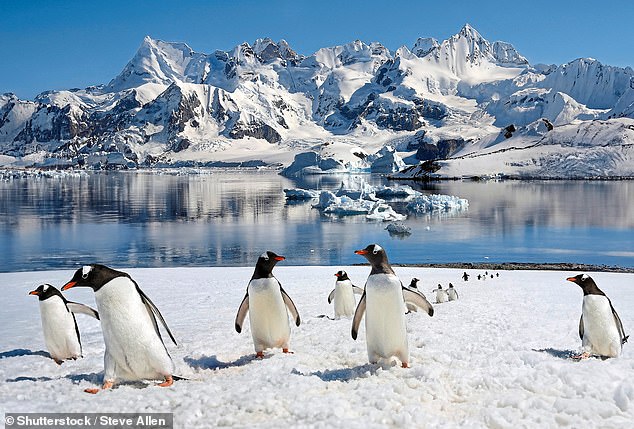
The Gentoo penguins’ natural environment in Antarctica cannot be replicated in a London building
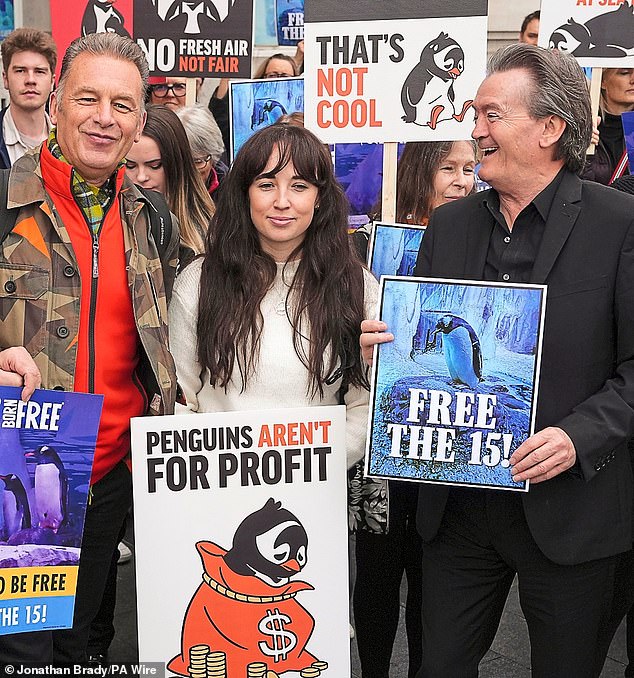
Chris Packham, zoologist Megan McCubbin and Feargal Sharkey join a protest last year
‘The Gentoos raise two chicks a year and can live to 20 years old in the wild. They thrive in the vast expanses of the open ocean: keeping them in confined spaces is not only cruel, but detrimental to their health, as they need constant exercising of their pectoral muscles, which move their wings, and a diet that is very hard to reproduce in captivity.’
Dr Bennett attended a meeting with Sea Life’s parent company, Merlin Entertainments, in December, along with members of Freedom For Animals and the Born Free Foundation, two charities that have staged protests outside the premises with celebrity supporters including pop star turned environmentalist Feargal Sharkey and green energy entrepreneur Dale Vince.
The meeting discussed the ethical problems of penguin exhibits, how to improve the birds’ welfare by changing the current exhibit, and the longer-term option of relocating the penguins to a sanctuary. Agreed outcomes include a suspension of penguin breeding (now any eggs laid are removed and replaced with dummies), employing new methods based on research of Gentoos in the wild to improve the captive penguins’ lives, and the consideration of long-term relocation.
When I speak to Laura Walton, from Freedom For Animals, she tells me heartbreakingly: ‘We started our campaign in 2024 having noticed poor Tripadvisor reviews. There is currently no sanctuary for Gentoos, as they are not endangered: we want Merlin to use its money to set one up.’
I approach Sea Life three times for a timeline for change, and ask whether they indeed have taken on board any of the enrichments suggested: their response is to forward a press release with those meaningless phrases ‘complexity of the issue’ (seems cut and dried to me) and ‘possible next steps’. I also ask for the percentage of its profits donated to conservation, a request again ignored.
I then email Fiona Eastwood, CEO of Merlin Entertainments, with a simple question: what will she do to improve the penguins’ lives, and when? I give her 24 hours to respond. The next day, a corporate PR, Jack Sellers, WhatsApps me: ‘We weren’t providing written response last week because we have a stakeholder engagement process ongoing […] We should get a coffee!’

Merlin Entertainments CEO Fiona Eastwood
When I follow up, I get: ‘Will chase, bare [sic] with.’ I’m then sent over the meaningless corporate statement I’ve already guffawed over many times.
Sea Life has another branch, in Birmingham, which also houses Gentoo penguins indoors, and confines penguins at sites in Weymouth in Dorset, and in Sydney and Mooloolaba, Queensland. It does not imprison orcas or whales in captivity, thank goodness, and Merlin Entertainments, a multimillion-pound company, has funded the building of the Sea Life Trust’s Beluga Whale Sanctuary in Iceland, housing two Belugas rescued from a Chinese marine park.
But they must acknowledge that an ‘underground bunker’, as naturalist Chris Packham describes it, is no place for a wild animal. As Dr Bennett adds: ‘The penguins lack choice, control – their needs cannot be met.’
A petition to release them reached 106,912 signatures 11 years ago, surpassing the number required for the issue to be debated in Parliament. Has anything changed? No. All we can do now is to sign the new petition below and ask parents to vote with their feet. Don’t teach your children to gawp and stare, to be cruel and disrespectful. These beautiful sea birds need the sun on their backs, ice beneath their toes, privacy, dignity, space to play and, most importantly, compassion.
Sign the petition here: thepetitionsite.com/takeaction/671/208/524/
or email Fiona Eastwood at comments@merlinentertainments.biz