The Gorton & Denton constituency at the heart of the by-election battle encapsulates many concerns about the wider divides in Britain.
Social and demographic data lay bare how the seat is sharply split on ethnicity, religion and deprivation lines.
It was comfortably secured by Labour in 2024, as Keir Starmer enjoyed his huge landslide nationally.
But the government’s plunging popularity has left the dynamics of the local area very much under the microscope.
The stunning victory for the Greens – overturning a 13,000 majority to win by 4,400 votes – demonstrates the problems for Labour as they try to maintain an electoral coalition amid increasing polarisation.
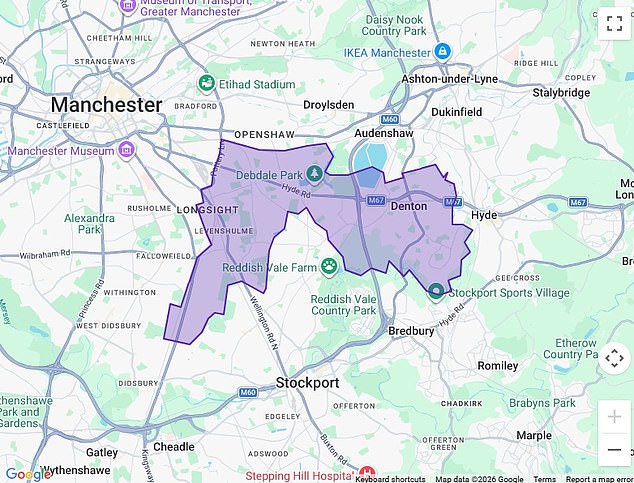
The Gorton & Denton constituency at the heart of the by-election battle encapsulates many concerns about the wider divides in Britain
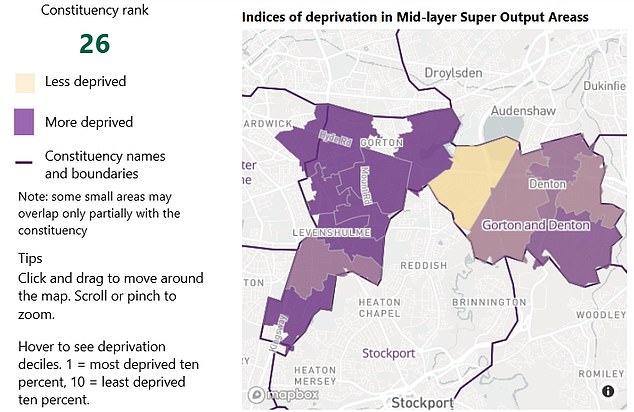
The constituency has lagged significantly behind Manchester in terms of improvements in The constituency, south east of the city centre, has lagged significantly behind the rest of Manchester in terms of improvements in wealth.wealth
The constituency, south east of the city centre, has lagged significantly behind the rest of Manchester in terms of improvements in wealth.
A recent profile by political scientist Professor Rob Ford pointed to the stark differences between the west and east sides.
In the west, the four wards closest to the centre of Manchester have significant Muslim populations, at 40 per cent.
Some 42 per cent are either a university graduate or a current university student.
Even though the Greens have not historically performed well in the seat, these are some of the kinds of voters being most intensively targeted by Zack Polanski’s party.
The Greens openly played on the strength of feeling about the Gaza war, accusing Labour of betraying Palestinians.
The apparent effectiveness of that tactic will particularly alarm Labour MPs, as many of their urban seats have significant Muslim populations.
Nigel Farage has complained about ‘sectarian’ voting patterns in the by-election, suggesting they amounted to ‘cheating’.
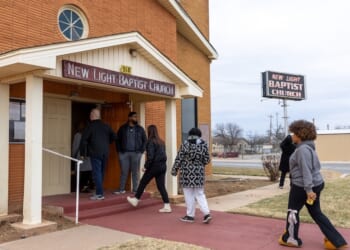
Independent observers flagged concerns about so-called ‘family voting’, where people are escorted to polling booths in a sign of inappropriate influence. That practice is illegal.
Meanwhile, deeper into the suburbs to the east the picture is dramatically different.
The three wards in that area are on average 83 per cent white, 86 per cent UK born, and 30 per cent in routine or semi-routine jobs, according to Prof Ford.
Those are the sorts of areas that would appear fertile ground for Reform, which has campaigned hard on immigration and identity issues.
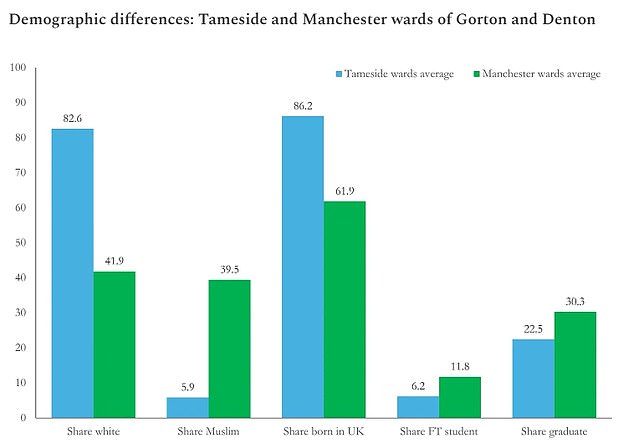
Social and demographic data lays bare how the seat is sharply split on ethnicity, religion and deprivation lines.
However, the two ‘wings’ of the constituency are not evenly matched.
At council elections in 2024 the four wards closest to Manchester had 55,000 registered electors in them.
By contrast there were only 26,000 in the three Eastern wards – leaving Reform needing a perfect split of the vote between Labour and the Greens to emerge victorious.
In the event, Reform’s Matt Goodwin was able to push Labour down into third place – but was still well behind the Greens.
The party’s strategists will now have to consider how to counter tactical voting in such seats, with growing evidence that left-wingers are willing to support whoever can block Reform.