This article is taken from the February 2026 issue of The Critic. To get the full magazine why not subscribe? Get five issues for just £25.
Sir John Vanbrugh was one of the great buccaneers of the 18th century, an era that specialised in producing them. He was by turns a herald, a wine merchant, a playwright, a soldier, a courtier and a diplomat. A traveller, he was one of relatively few men of his generation to go to India, and he spent a year in France, where he was mainly confined to the Bastille on the charge of espionage. Yet he was also an architect, and it is for this that he is best remembered.
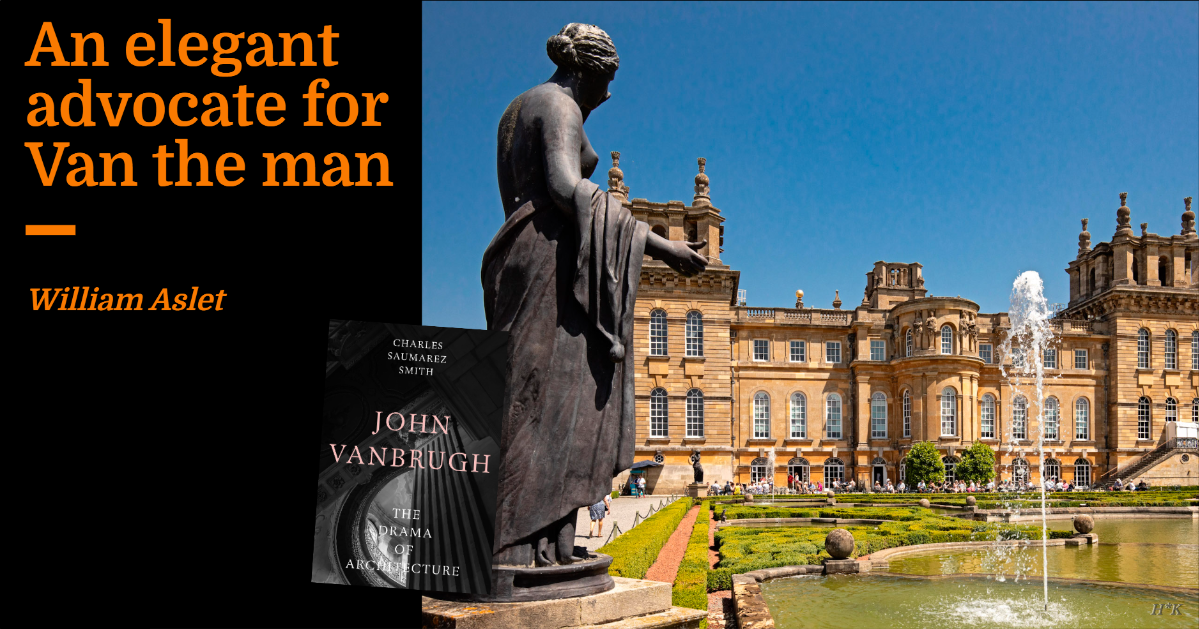
Vanbrugh’s magnum opus, Blenheim Palace, is one of the most popular tourist attractions in Britain outside London. The country’s sole non-royal palace, it is the only one that is truly worthy of the title. Given by Queen Anne as a reward to John Churchill, 1st Duke of Marlborough, for his triumph over Louis XIV’s armies at the Battle of Blenheim, from which it takes its name, its oversized scale and lavish interiors impress in a way that Britain’s more modest royal residences generally don’t. It was for this reason that it was chosen to host a dinner for Donald Trump in 2018 on his first presidential visit to Britain.
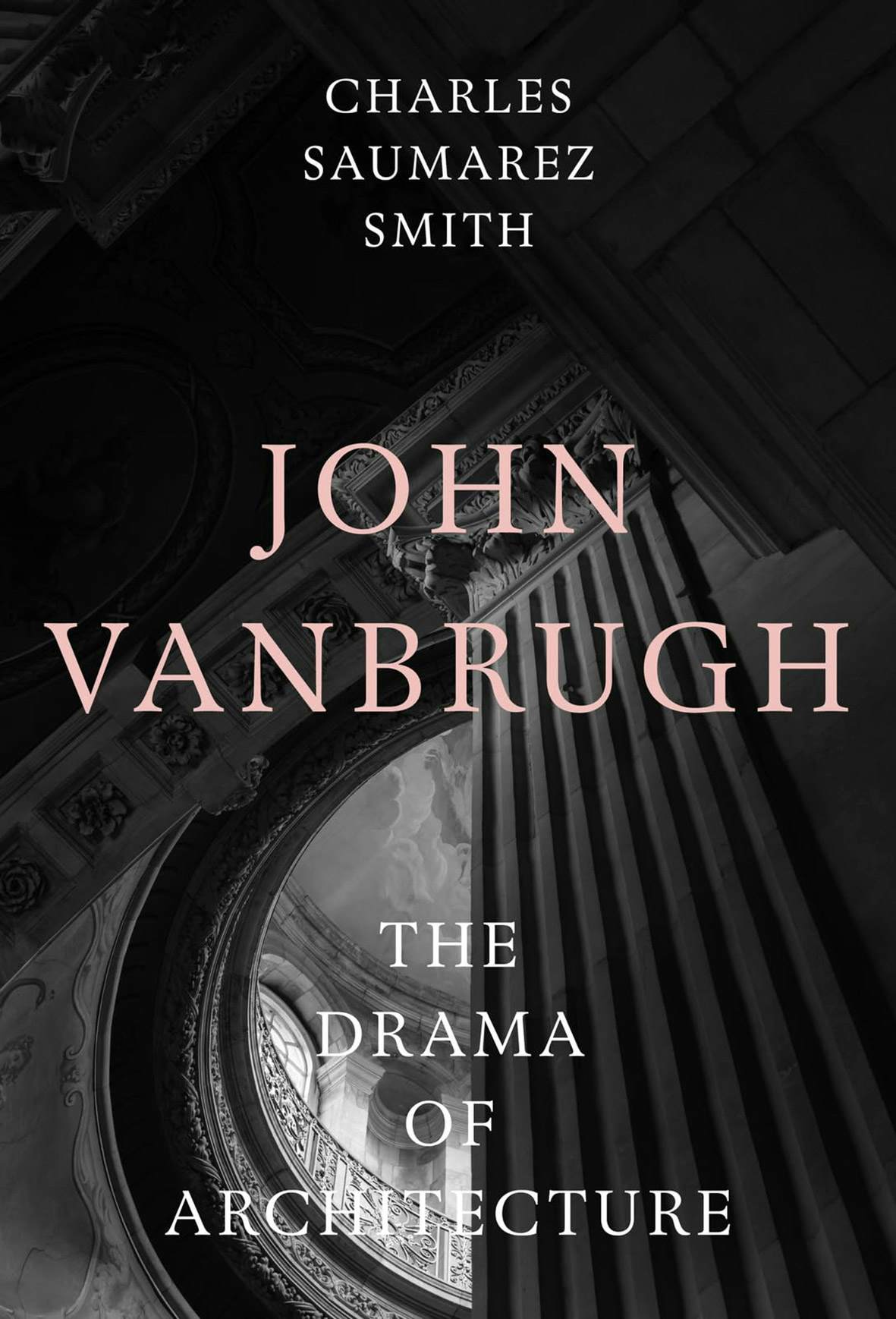
Written to coincide with Vanbrugh’s tercentenary, Charles Saumarez Smith’s pithy new biography attempts to capture the many-sided personality of the author of ribald Restoration comedies such as The Provok’d Wife and creator of sublime architectural masterpieces, with Blenheim, Castle Howard, Grimsthorpe Castle and Seaton Delaval Hall foremost amongst them. Subtitled “The Drama of Architecture”, the book draws a parallel, not for the first time, between the bold, seemingly rhetorical scale of Vanbrugh’s buildings and the taste for spectacle prevalent in the Baroque theatre.
Unlike some, Saumarez Smith does not stretch the parallel too far, pointing to the real-world architectural opportunities that the social life of the theatre created. It was at the theatre, for instance, that Vanbrugh first met the Duke of Marlborough, and this may well also have been true — as he cautiously posits — of his first encounter with Charles Howard, third Earl of Carlisle, for whom he built the majestic Castle Howard (astonishingly, in view of its scale and ambition, his first architectural commission).
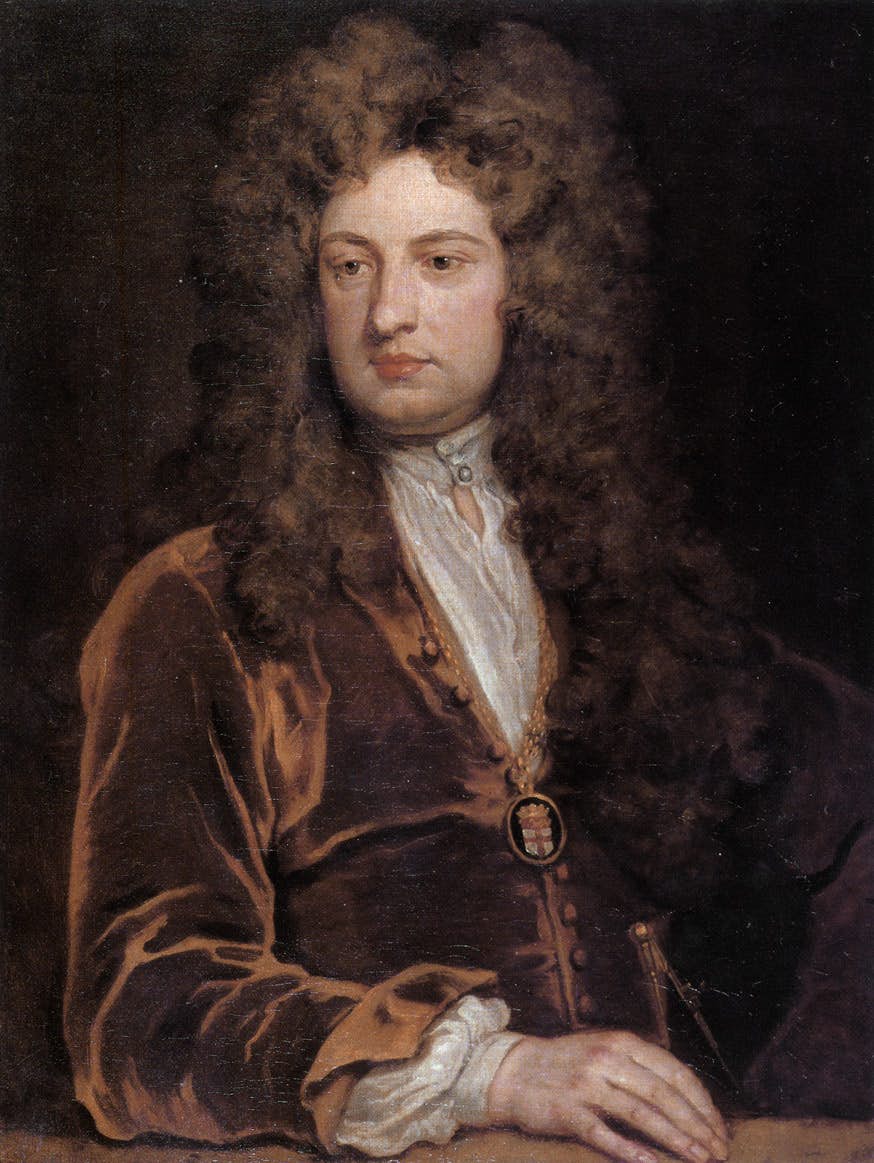
Drawing on an enviable range of source material — Vanbrugh was a prodigious and entertaining writer of letters — Saumarez Smith conjures a likeness in these pages which very much complements the figure we see in surviving portraits, the most compelling of which was painted by his friend and fellow Kit-Cat Club member, Sir Geoffrey Kneller. Confident, passionate, proud of his social status (he was knighted by George I, to whom he had paid court in Hanover) and not a little arrogant, Vanbrugh’s personality was by turns flawed and deeply sympathetic.
His social confidence helped win him commissions and allowed him to deal with his clients almost as equals, something his colleague and contemporary Nicholas Hawksmoor was unable to do. But it could lead to disaster when he did not see eye-to-eye with a patron. When the thrifty and practical Sarah, Duchess of Marlborough, took over from her husband as Vanbrugh’s patron at Blenheim, their falling out was legendary. A vituperative correspondence ensued, followed by a series of lawsuits.
In the end, Vanbrugh was banned from the grounds of the house for the rest of his life by “that B.B.B.B. Old B. the Dutchess of Marlb[oroug]h” (one can well guess at what the B’s may have stood for). He was never able to see the finished building — except perhaps from afar when he visited neighbouring Woodstock in 1725.
Having written his PhD on Castle Howard, which he later worked up into an authoritative monograph, Saumarez Smith’s scholarly knowledge of Vanbrugh’s career is uncommonly deep. Far from being a dry academic study, however, this elegantly written book is an approachable and readable introduction to the life of its subject with a focus, inevitable in view of the author, on his work as an architect.
Although not a popular history — knowledge of some architectural terminology is assumed — the book does well to capture the character of Vanbrugh’s work and of the Zeitgeist in which he lived (one of robust appetites, which the adjective “Vanbruggian” seems to sum up perfectly), whilst steering clear of rash assertions and claims unsupported by evidence.
This is not a book without scholarly ambitions. Saumarez Smith at times seeks to provide a gentle corrective to the work of Kerry Downes, whose mid-20th century biographies of Vanbrugh and Hawksmoor have done much to shape critical conceptions of these two architects. Unlike Downes, who cast Vanbrugh as Hawksmoor’s junior partner in their collaborations at Blenheim and Castle Howard, Saumarez Smith argues that Vanbrugh’s ideas for both projects had mostly been formed before Hawksmoor was involved. He points out that by the time what he terms the “double act” at Castle Howard began, Vanbrugh had been at work on his designs for some eighteen months.
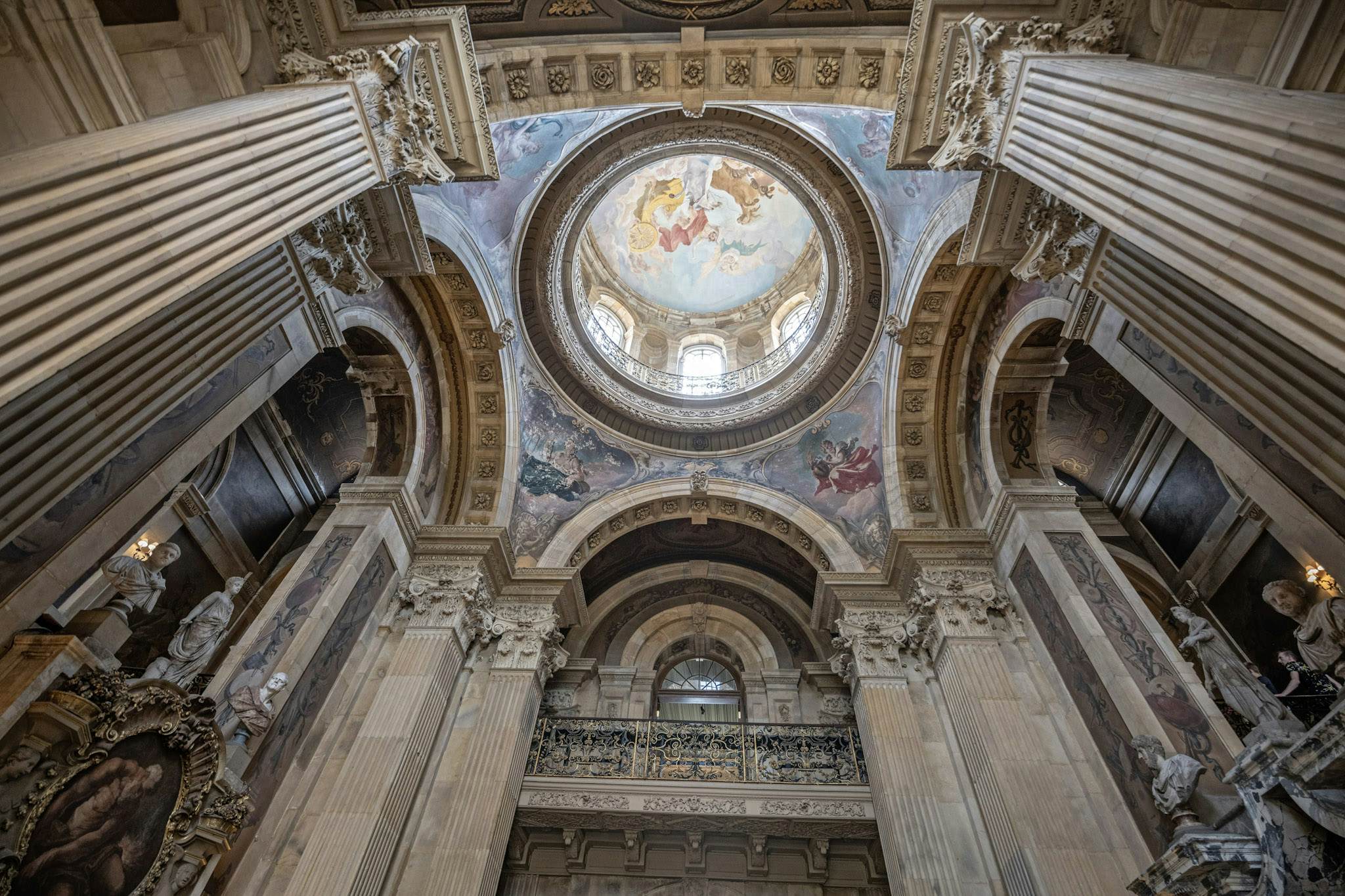
He also gives a new view of Vanbrugh’s work as a draughtsman, suggesting that he was more skilled in this regard than others — dismissive of fondness for picturesque details such as smoking chimney pots — have given him credit for. The “freely imaginative way” in which he used drawing to develop his architectural ideas was, Saumarez Smith suggests, the product of a lifelong habit of thought, one that makes his transition from playwright to architect in his mid-thirties less sudden than first appears.
Vanbrugh’s reputation has sometimes suffered from fluctuating critical fortunes. Even in his own day, his talent was far from universally admired. Jonathan Swift, dismissive of how “Van’s Genius, without Thought or Lecture / Is hugely turn’d to Architecture” compared the house he built himself in Whitehall to a goose pie. The generation of architects that followed him, which revered both proportion and precedents taken from the ancient world, viewed the unclassical freedom of his approach to architectural form with something resembling horror.
For the post-modern architects of the second half of the 20th century, however, these traits made him into something of a demigod. Today, Vanbrugh’s star is again perhaps on the wane. But if there are those who think that Hawksmoor’s moodiness is better suited to our times than Vanbrugh’s charm and bonhomie, Saumarez Smith’s persuasive advocacy for him will give them good cause to think again.