This article is taken from the February 2026 issue of The Critic. To get the full magazine why not subscribe? Get five issues for just £25.
What is Italian food actually supposed to taste like? Italy’s cuisine has stormed the world, but, like the nation itself, it often feels more of an invention than a reality.
After diligent lobbying from the Meloni government, UNESCO may have awarded the status of intangible cultural heritage to “Italian Cooking”, but, as any food bore will tell you, there’s really no such thing.
Like most European countries, Italy’s food traditions have developed from a myriad of ancient cultural influences — Classical Greece, North Africa, France, even Scandinavia — shaped in turn by local geographies and ingredients.
The culinary mores of Messina bear little resemblance to those of Milan or Merano, not that this prevents Thomistic debates about the “correct” versions of traditional recipes.
Francesco Lollobrigida, the minister of agriculture, recently got huffy about what the Italian press named “the carbonara of discord”, a sauce on sale in the supermarket of the European parliament which contained (the horror) pancetta instead of the canonical guanciale.
It’s all such bollocks. If such a thing as canonical ingredients exist for a dish invented in the 1940s to accommodate the palates (and rations), of American GIs in Rome, it ought properly to be made with powdered egg.
Italian food in Italy can be spectacular; frequently, it’s monotonous and underwhelming, provincial, arrogant and lacking in innovation. Strap me across a bistecca fiorentina and hurl me on the coals, but generally Italian style cooking is better beyond the Boot.
Angela Hartnett’s mayfair flagship Murano is a case in point: elevated food created from refined components in original combinations. If only the same could be said for its quartet of siblings, Café Murano, whose latest branch is authentically disappointing.
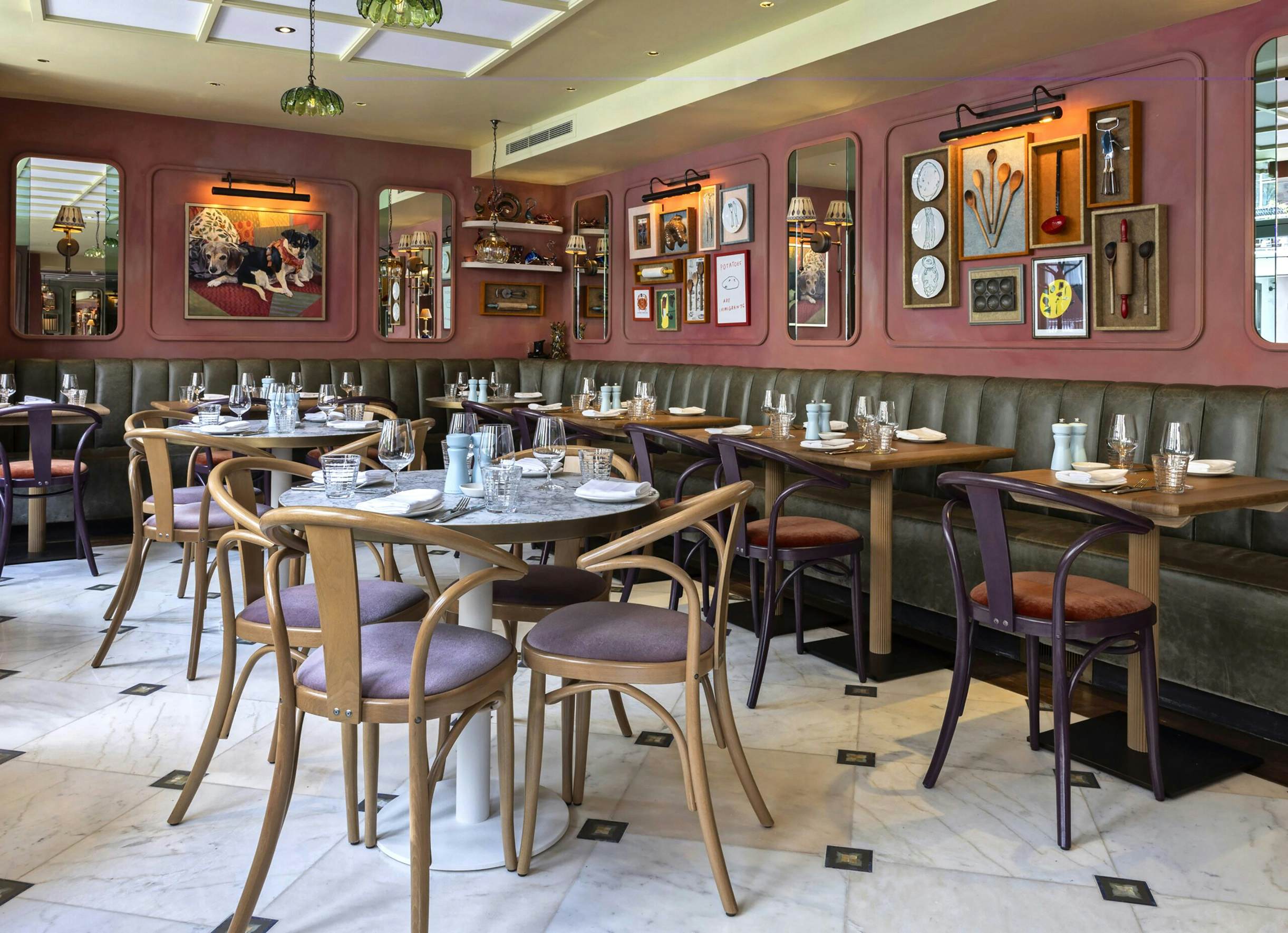
It feels unsporting to be mean about Hartnett, a genius chef, a trailblazer for women in professional kitchens and all-round good egg, but Café Murano tastes like franchise, which would be an excuse if it were a franchise. The Marylebone branch looks like an airport macaron concession, all clashing pastels and tweely-framed kitchen utensils, but I’ve had better pasta at Gatwick.
Rigatoni with spicy fennel sausage and parmesan was a meagre twiddle of salty goo; pumpkin tortellini managed to be both flabby and dry. A beef carpaccio with pickled artichokes and aged parmesan tasted like carpaccio, but then carpaccio (another 20th century tourist creation) isn’t terribly interesting.
Baked cod with borlotti beans and salsa verde was an embarrassment of a dish, the sauce like a desperate hostess at a flagging party trying to spark chemistry between two blandly disparate guests.
Café Murano is pitched as a laid-back counterpart to Murano proper, but the staff looked highly agitated when I requested ketchup for my classic chicken milanese. They gallantly produced some but couldn’t quite keep the angst off their faces. Perhaps they were worried about being ticked off for not being “genuine”, but everyone in Milan eats their breaded fried chicken cutlets with ketchup; it’s the only way to make the classic limp beigeness palatable.
(Also, having bitched about the nonsense of Italian authenticity, I’m going to contradict myself by asking why serve focaccia with olive oil? The whole dipping bread in oil thing was transported from the hovels of peasants who didn’t have anything else to eat and rebranded to flog cold-press virgin to Americans. If you must do it, please don’t use focaccia, which is basically made from olive oil held together with flour.)
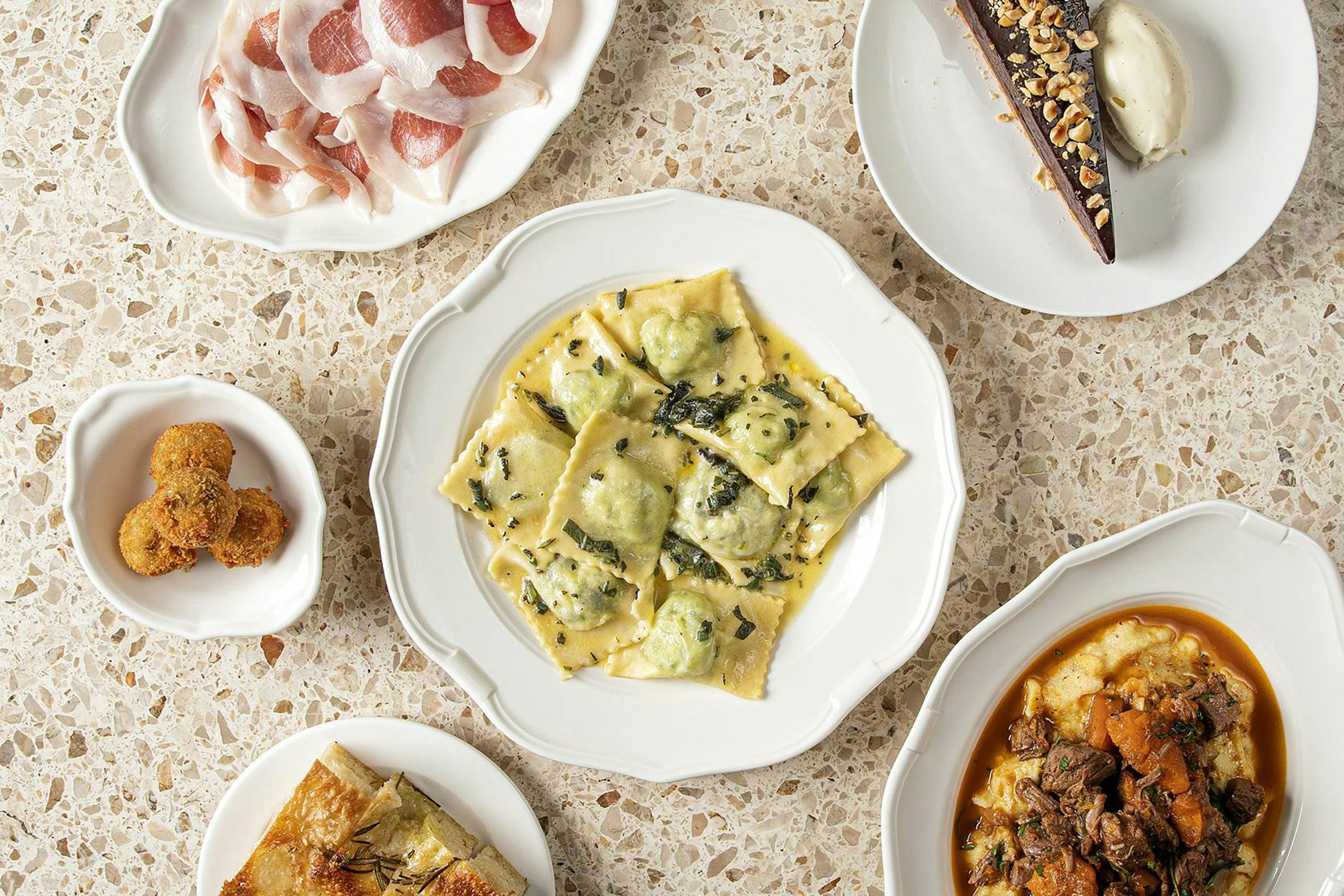
A side of hispi cabbage with pistachio romesco was less of a nod to novelty than a spasm, but not quite as pointless as the scratchy, over-caffeinated tiramisu, which limped back to the kitchen almost untouched.
Since it was December, the kitchen brigade may have been having a go on the refreshments. Certainly, the wine list performs much better than the menu, in a thoughtful tour of the peninsula, with a good selection by the carafe. A glass of delicate, floral Lombardy Lugana was a crisp beginning and I was curious to revisit the unusual amphora-aged Cesanese from Lazio, whose verdant structure is provided by the air which permeates the clay casks, giving it richness without the heaviness of oak. We settled on a less heftily priced Sardinian Cannonau at £44, another surprising wine whose elusive salinity could have taught the rigatoni something.
Hartnett has Italian chops — descended from the Welsh-Italian community and author of a book on three generations of Italian cooking, she’s too splendid a chef to be sending out such subpar food with her name on it.
Or maybe we need to get over the idea that Italian food is automatically brilliant. The Italians themselves are no longer much of an advert for it: Italian children are the most overweight in Europe. With obesity in the population predicted to double by 2030, they might want to get back on that Mediterranean diet. Insofar as it’s meh, Café Murano is as genuine an Italian as one can find in London, but Hartnett’s food is usually far superior to a myth which is long past its sell-by date.
Café Murano, London, W1U 7NQ