This article is taken from the February 2026 issue of The Critic. To get the full magazine why not subscribe? Get five issues for just £25.
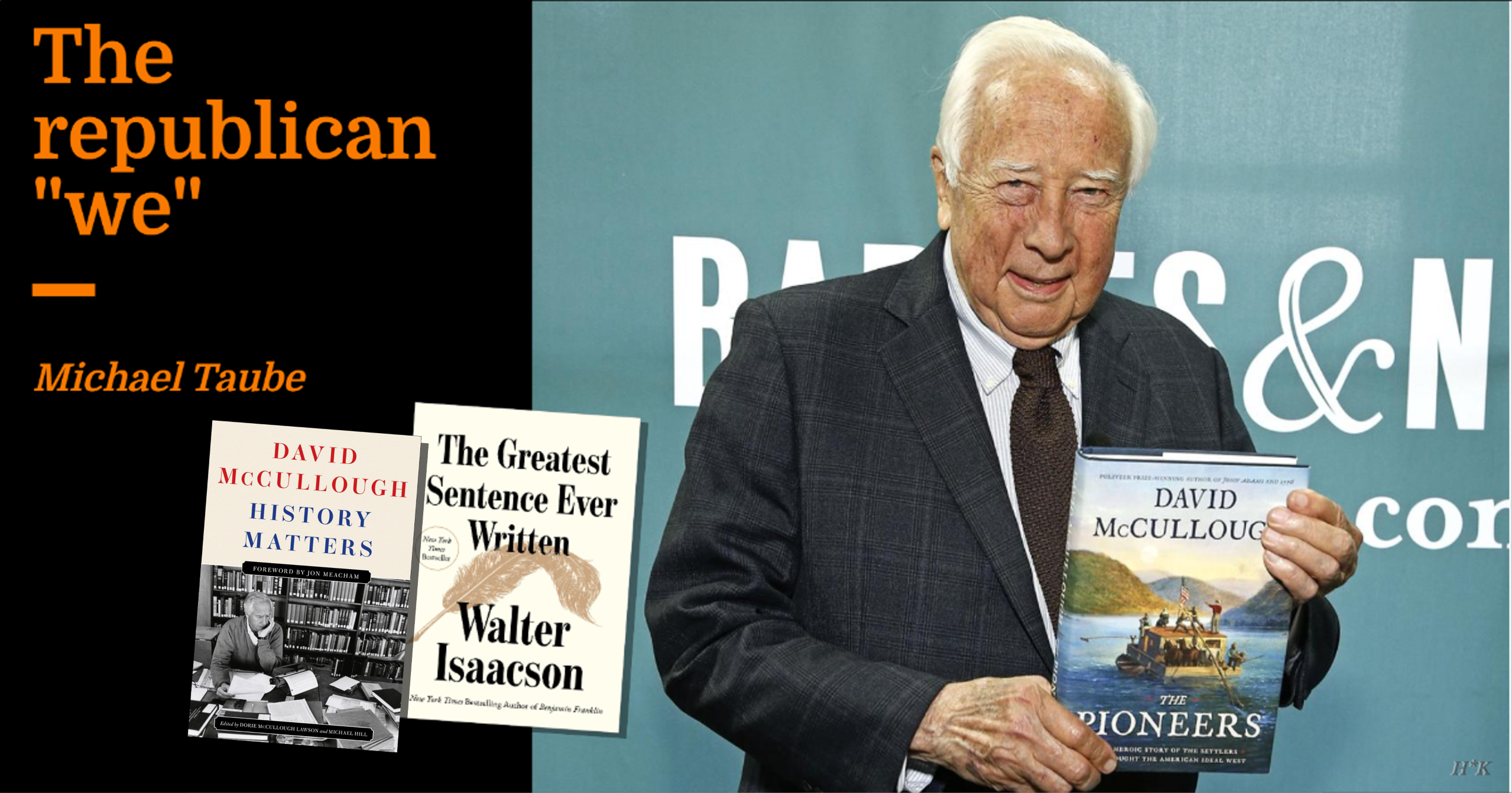
The United States of America celebrates its 250th birthday this year. This political experiment started with rag-tag revolutionaries who dreamt of escaping British colonisation, and evolved into a great republic which became one of the world’s most powerful nations. The fascinating history of the American experience is broached in two volumes by a pair of prominent historians and brilliant storytellers.
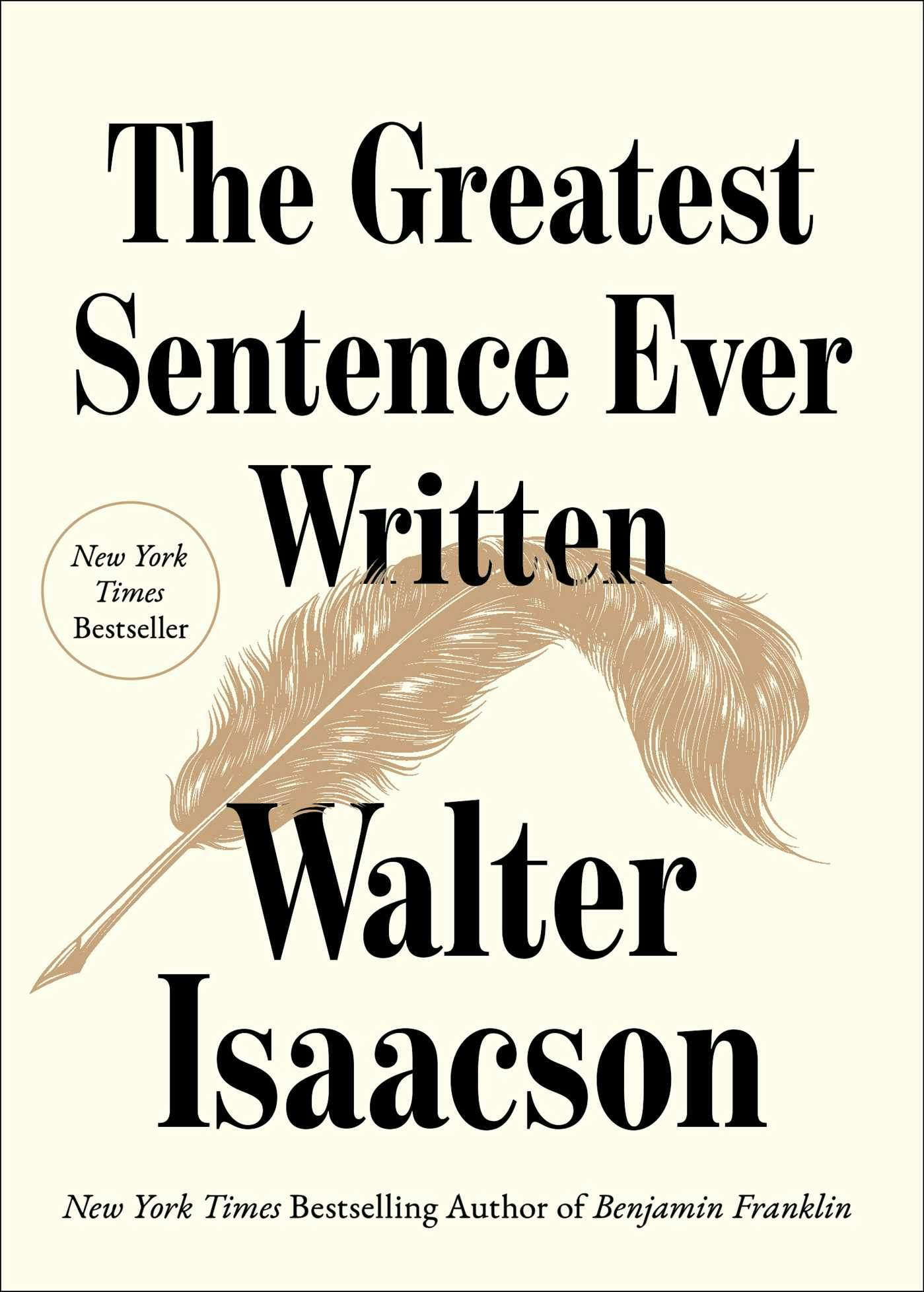
Walter Isaacson, professor of American History and Values at Tulane University, has released a short, illuminating book, The Greatest Sentence Ever Written, focused specifically on the second line in the Declaration of Independence:
“We hold these truths to be self-evident, that all men are created equal, that they are endowed by their Creator with certain unalienable Rights, that amongst these are Life, Liberty and the pursuit of Happiness.”
Describing this as the “greatest sentence ever crafted by human hand”, Isaacson sets out to prove why.
He starts with the first word, “We”, which encapsulates “We the people” and “is as profound as it is simple”. American governance is based “not on the divine right of kings or the power imposed by emperors and conquerors”, in his view, but rather upon a “compact, a social contract, that we the people have entered into”. The Founding Fathers were heavily influenced by John Locke’s analysis of social contract theory from the basis of natural liberty and civil society. Thomas Jefferson also drew on Jean-Jacques Rousseau, who defined “we as the general will of the people”. That’s one weighty two-letter word!
There’s also Benjamin Franklin’s contribution of self-evident truths, which replaced Jefferson’s “sacred and undeniable” in the Declaration. This originated from “[David] Hume’s Fork” between two types of truths: one is synthetic, which involves “statements whose truth is contingent on empirical evidence and observations”. The other is analytic, where the truth is ‘self-evident’, as in “all bachelors are unmarried”.
Franklin accepted Hume’s second definition, even though Isaacson points out that self-evident truths are “not entirely correct” but are “in fact, quite controversial, even revolutionary”.
What about life, liberty and the pursuit of happiness? That also comes from Locke’s version of contract theory, where there is an “intention in every one the better to preserve himself, his liberty and property”. Property is a “cornerstone” of Lockean justice and “by owning the fruits of their labor, people preserve their liberty and individual rights”. Jefferson incorporated the pursuit of happiness to suggest “it is your right — and your opportunity — to seek fulfillment, meaning, and wellbeing however you personally see fit”. Wise words, indeed.
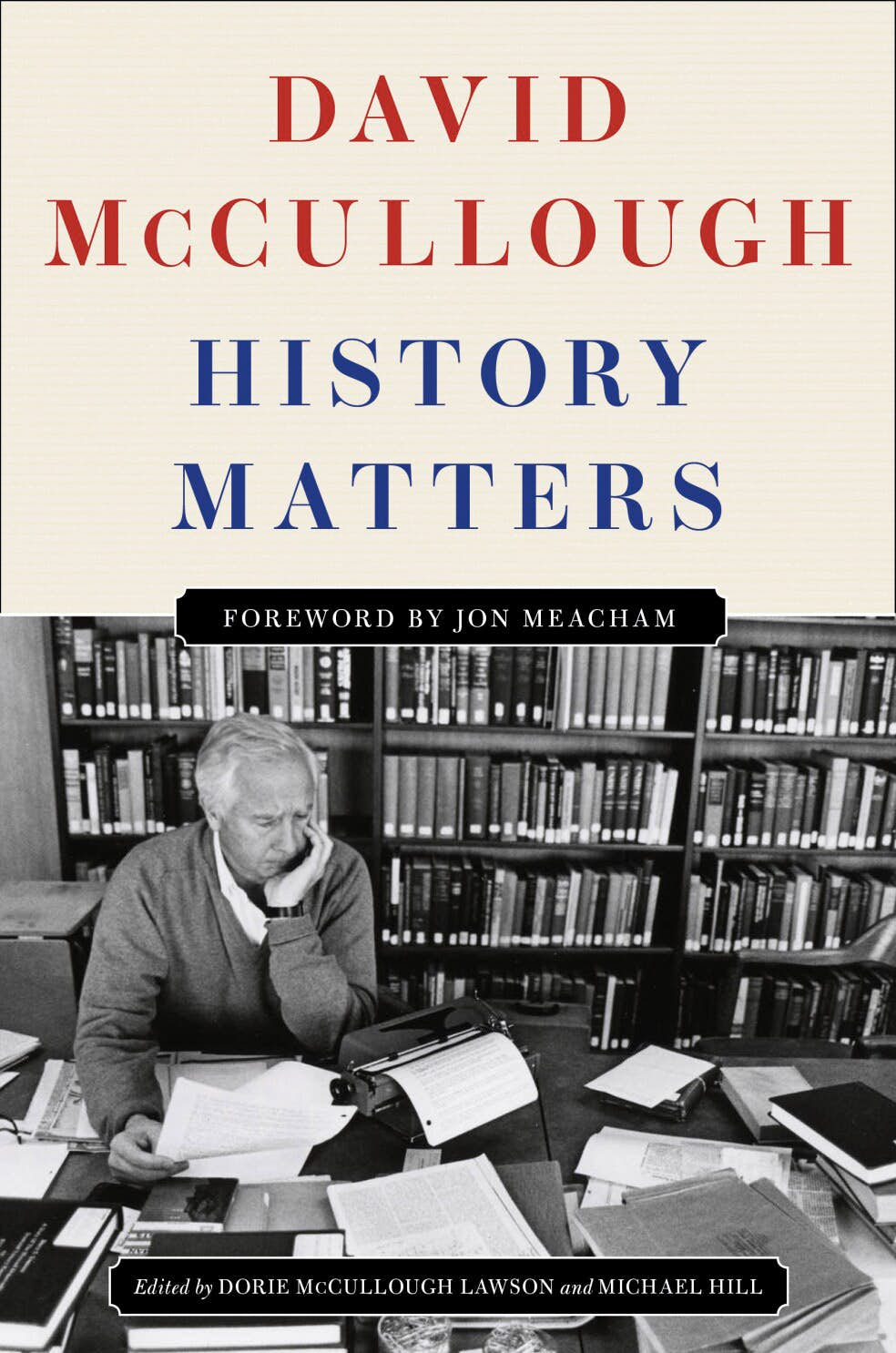
A different examination of the American experience comes courtesy of David McCullough, the brilliant and award-winning historian who died in 2022. Described as a “master of the art of narrative history”, his magnificent writing and scintillating storytelling wove people, places and things of the past into present-day discourse. In the pointedly titled History Matters, his daughter Dorie McCullough Lawson and his longtime researcher Michael Hill have gathered an exceptional collection of his writings, many previously unpublished, as a final testament to that powerful personal credo.
History mattered to McCullough in all senses of the word. As historian Jon Meacham noted, to McCullough “history was a story, an unfolding drama in which the men and women of a given moment could not know how everything turned out — whether the waters would recede, or whether the plane would fly, or whether the battle would be won”. It falls to historians to render these past stories in as vivid and memorable a form as possible.
“Why do we care so, you and I, about history?” McCullough asked the National Preservation Conference in 1991. “Is it just because we are Americans and we care about our country, because we love our country as we would care about the past, the beginnings of someone we love? Or is it larger than that?” McCullough was keen to answer the “old human instinct” of “not wanting to be in a rut” of the here and now.
Because “fate or God or whatever it is has placed us in this particular time very briefly, we do not see why the limit of our experience as human beings should be contained within just that time”.
McCullough believed that the biggest reason why the past pulls at our heartstrings is “change” — “what is new, not what is old”. To prove this point, he juxtaposed the magnificent Great Dome in Florence, Italy, “which was something new, different than anything”, with San Francisco’s Golden Gate Bridge, which was built “almost exactly” five hundred years later. In his estimation, “both of these huge and monumental and memorable structures are symbols of affirmation”, as well as, in the bridge’s case, American accomplishment.
Is the Golden Gate Bridge really on the same level as Filippo Brunelleschi’s Great Dome? I don’t think so. Nevertheless, McCullough’s point that they’re both historical marvels for these respective time periods is valid. History is part affection, part infatuation and, yes, part interpretation.
History and change recurred when McCullough spoke about American artist Thomas Eakins in 1985. “Not one author or critic thought enough of Eakins or his work to write even a single magazine article about him” before his death in 1934. Yet, this formerly “comparative nobody” is a “huge somebody today”.
What changed? Taste in art is surely a factor, but McCullough identified something different: it was the “subject matter he chose, most especially whom he painted” — his wife, physicians, scientists and the clergy. This wasn’t the subject matter his contemporaries created, but Eakins “saw his paintings as an enduring historical record”. He wasn’t “painting for the moment” but to show that life itself is an “act of courage”.
Art is in the eye of the beholder. Would McCullough have suggested the same thing about an artist he didn’t particularly like? Probably not. Then again, the modern world flocks to see Vincent van Gogh’s paintings — and he only sold one work, The Red Vineyard, in his lifetime. McCullough’s decision to praise Eakins shows that the path to the right side of history can sometimes be stuck in left gear.
George Washington proved a particularly revealing subject for McCullough’s speech at the Library of Congress in 1999. He acknowledged that the first American president wasn’t an “easy oratorical virtuoso”, “highly educated”, “a great military genius” or “a natural-born politician”. Instead, he sided with Abigail Adams’s astute observation that Washington was “polite with dignity, affable without familiarity, distant without haughtiness, grave without austerity, modest, wise, and good”.
In McCullough’s eyes, Washington was the “real thing … the authentic great man, a true American hero, a figure of world importance”. He was, quite simply, a human being whose greatness as president shaped American history for generations to come.
It’s rare to find public intellectuals like Isaacson and McCullough who speak about the state of history with such adoration and affection. To both, history really does matter, and they have shown others why it should matter to them, too.