This article is taken from the February 2026 issue of The Critic. To get the full magazine why not subscribe? Get five issues for just £25.
The Bookseller — always amusing if you can get hold of a copy — has recently been working itself up into paroxysms of anxiety over “the future of publishing”.
Scarcely a day goes by without some excitable tweet advertising a debate about whether the independent bookshop revival has gone as far as it can go, if consolidation has reached its zenith or the probable impact of AI (to which the respective answers are “One hopes it hasn’t”, “One hopes it has” and “Calamitous.”)
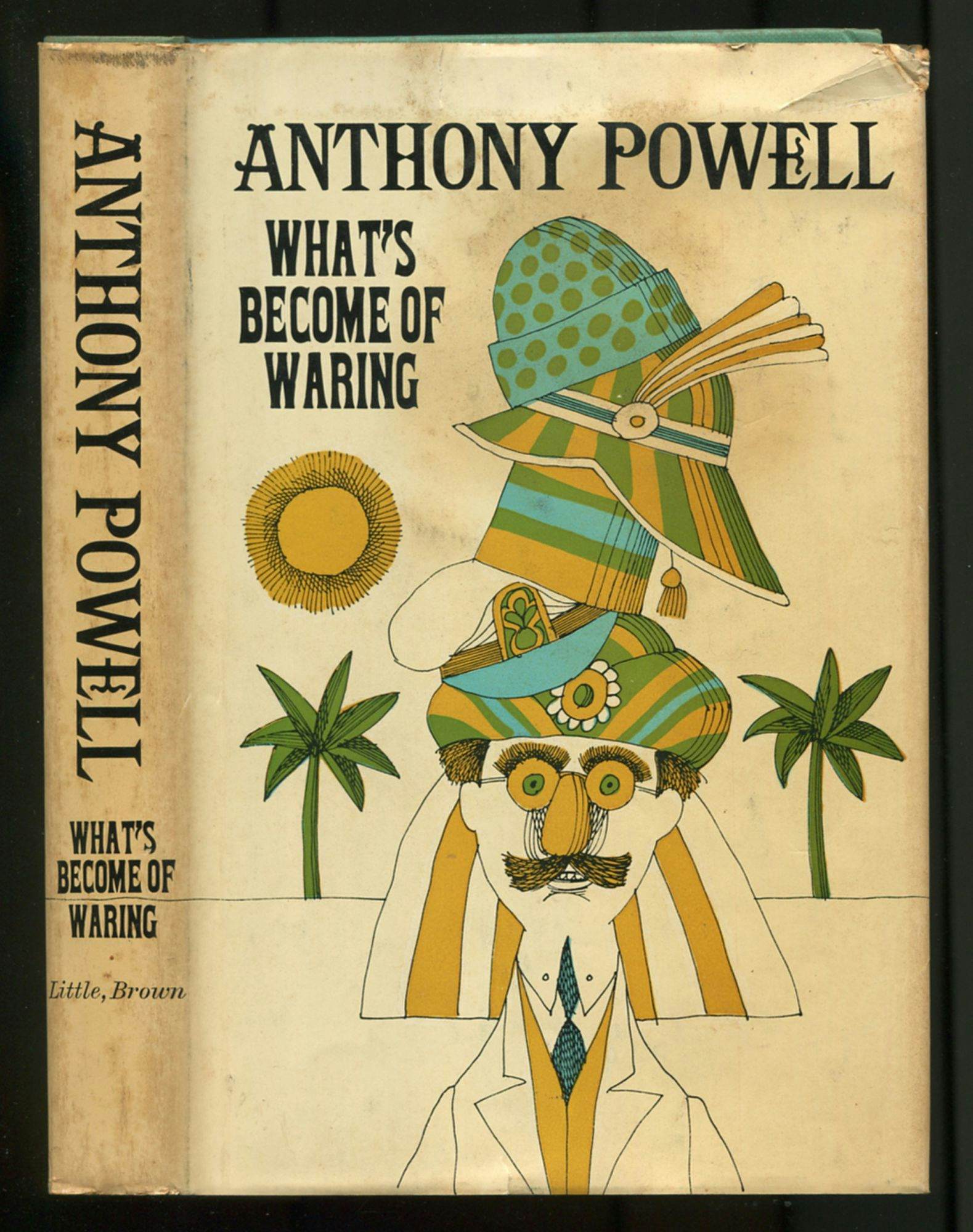
Seeking a respite from all this prophetic horror, the Secret Author spent a fallow day in between Christmas and the New Year re-reading one of his favourite novels, Anthony Powell’s What’s Become of Waring (1939).
Written a dozen years before the advent of A Dance to the Music of Time, its commercial prospects stymied by the Second World War — exactly 999 copies were sold of the first edition — Waring belongs to the long-since superannuated subgenre known as the “publishing caper”.
Narrated by an anonymous young man who works as “reader” to the firm of Judkins & Judkins and, when not labouring through the slush pile, is engaged on a book entitled Stendahl: And Some Thoughts on Violence; its plot turns on the death of a celebrated travel writer, T.T. Waring, and the firm’s efforts to shore up his reputation by commissioning a biography of his short but infinitely mysterious life.
This is not as easy as it sounds, as “Waring” is ultimately revealed as a spectacular fraud: an exiled remittance man, writing under a pseudonym and living shadily in the South of France, each of whose books turns out to have been plagiarised from an existing work. The project runs out of steam when Captain Hudson, an army officer to whom Judkins & Judkins have allotted the task, makes the painful discovery that “T.T.” is, in fact, an old schoolfriend and the disgraced brother of the girl he eventually marries.
All this is done with Powell’s customary attention to ironic detail, and yet Waring’s comic genius lies in its incidental remarks about how you went about publishing books in the 1930s.
Judkins & Judkins’s authors are a varied lot. Amongst their number are Redhead, the firm’s one bona fide bestseller; the thrice-married Mrs Oenone Gulliver-Lawson, publicised as “the woman who has been everywhere and done everything”, and an elderly man of letters named Minhinnick, author of, amongst other works, an epic poem entitled Aristogeiton: A Harmony, 1,326 remaindered copies of which are sitting in the warehouse waiting to be pulped.
Even funnier than this galere are the salacious American bestsellers — these have titles such as “Campus Stooge” and “Lot’s Hometown” — which have to be carefully edited for a more prudish domestic market (“I don’t feel happy about the chapter where Irving and Wayne listen to the whip-poor-will.”)
Over the entire enterprise hangs a desperate feeling of ennui, the thought that every book that Judkins issues represents, in its own special way, a kind of imposture.
And so, bidden by his boss to comb through the firm’s catalogue in the hope of identifying a potential biographer, the narrator reflects that “There seemed no one on the list capable of writing a saleable book, far less a satisfactory life of T.T. Waring.” Misfortunes tend not to come singly, as on the day when a series of disasters took place at the office. News arrived of the liquidation of an important North Country bookseller who had just received a large consignment of Judkins & Judkins’s stock, Redhead’s manuscript came in 30,000 words too short and entitled Than Whom What Other, the telephone was out of order from eleven o’clock to three thirty-five and the office boy gave notice because he said that one of the invoice clerks was “always on at him”.
A major client gone west, a bestselling author not delivering the goods, a malfunctioning communications system, human resources problems … It has to be said that, mutatis mutandis, all this sounds horribly familiar. Something very like it is probably happening at the offices of messrs Penguin Random House at this precise moment.
And yet the real similarity between the firm of Judkins & Judkins — a dead ringer for Gerald Duckworth Ltd, where Powell worked for several years — has less to do with the working conditions than with the sheer unpredictability of the trade.
Publishing, thankfully, has never been an exact science. You can spend countless thousands on a dazzling new manuscript, boost it to the skies and then watch it sell a few hundred copies.
Equally, you can issue a tiny edition of some outwardly unprepossessing work in the hope that it will appeal to a cognoscenti and look on in bewilderment as it charges up the bestseller lists like a mountain goat.
There is something wonderfully reassuring about this contradistinction. All of which suggests that What’s Become of Waring is a far more reliable guide to the profession than The Bookseller’s latest despatches from the AI battlefront.