This article is taken from the February 2026 issue of The Critic. To get the full magazine why not subscribe? Get five issues for just £25.
In Giuseppe di Lampedusa’s epic tale of Risorgimento Sicily, The Leopard, Tancredi tells his uncle, Prince Fabrizio, “If we want things to stay as we are, things will have to change.”
What became known as the Lampedusa Strategy, for saving the most sacred tenets of a civilisation at a time when Garibaldi’s red-shirted Thousand were rampaging across the two kingdoms, has modern parallels with our own three kingdoms. For Nigel Farage’s turquoise army now besieges and slights the historic fortresses of both Labour and the Conservatives with remorseless ferocity. It appears that the people, if not their princes, agree with Tancredi’s paradox that “if everything is to remain the same, everything must change”.
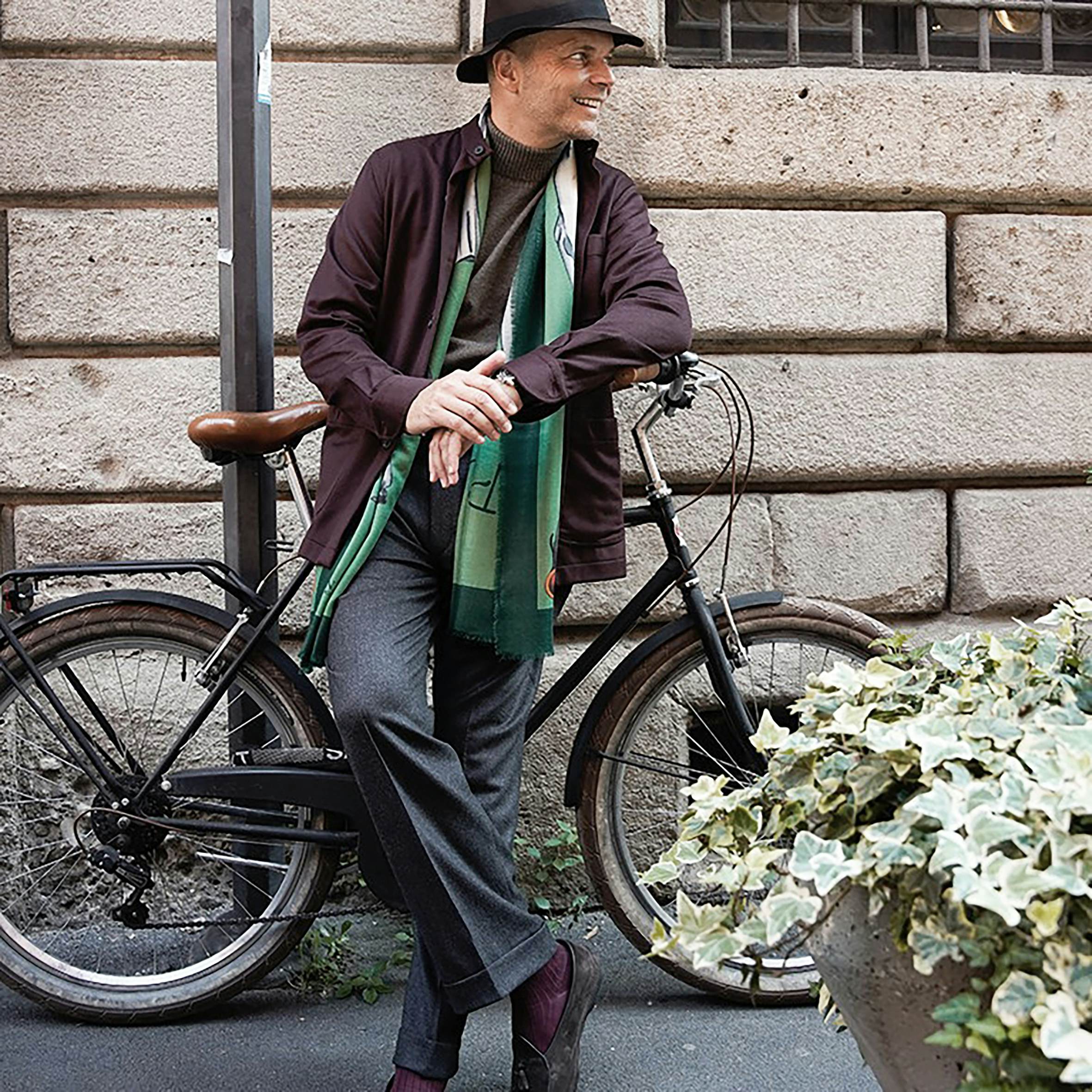
Italy is the cradle of change insofar as it is the birthplace of the Renaissance. Her influence looms large over our art, our architecture, our political literature and also our couture. For it is in Italy where the seeds of style were first sown (and sewn). And there are few Italian stores more stylish than Rubinacci on the Viale Gramsci, Naples.
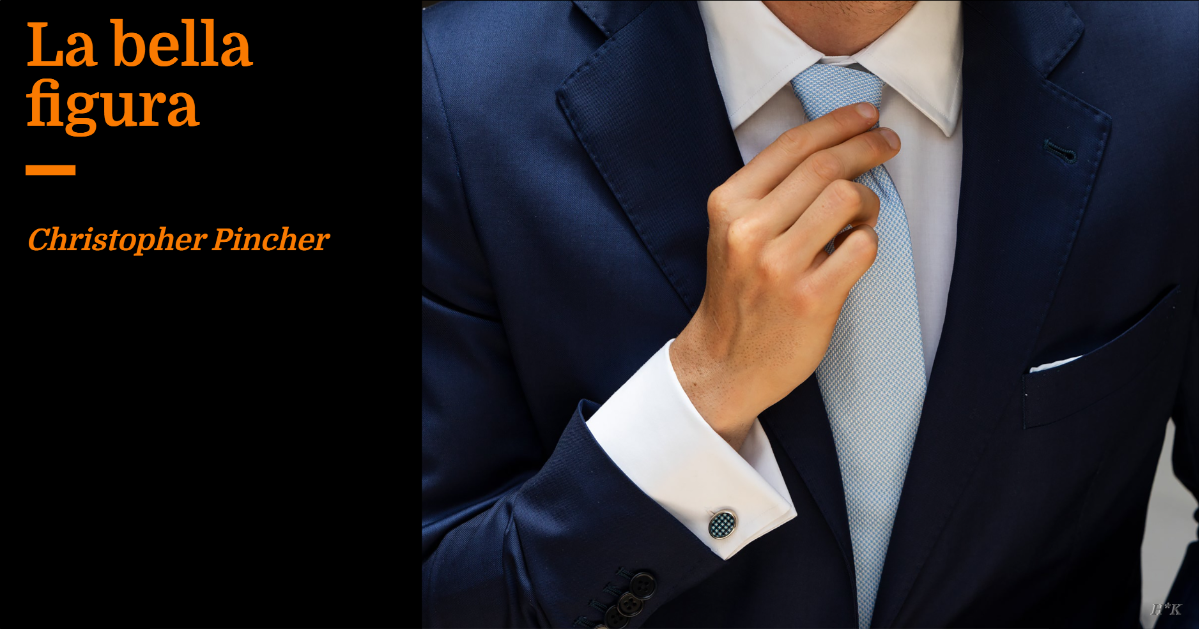
Rubinacci represents the epitome of Neapolitan elegantiae for gentlemen of discernment. They can kit a man from top to toe in the most exquisite ensemble, including a range of cotton saharianas rakish enough to make Roger Moore blush. Rubinacci jackets are single-buttoned, clean-contoured and fully-lined, and their finish, handstitched, is immaculate. Asked to choose favourites, I would pick the midnight blue pure cotton velvet and the hazelnut wool coats. Both are masterpieces.
Yet the pezzi forti of Rubinacci are their handkerchiefs. These sizeable silken squares are a riot of colour and will set off any Rubinacci breast pocket and smother the largest Roman nose.
The Artemide e Apollo design is the apotheosis of antiquity meeting modernity, and everyone who is anyone should own one. Now that Luca Rubinacci, the third generation and much in the mould of Tancredi Falconeri, has taken the helm and opened an outpost in Mount Street, Mayfair, the firm’s future seems secure.
But Rubinacci does not carry the Neapolitan torch alone. In a small corner of the Via Riviera di Chiaia, E. Marinella is probably Italy’s best kept cravat secret.
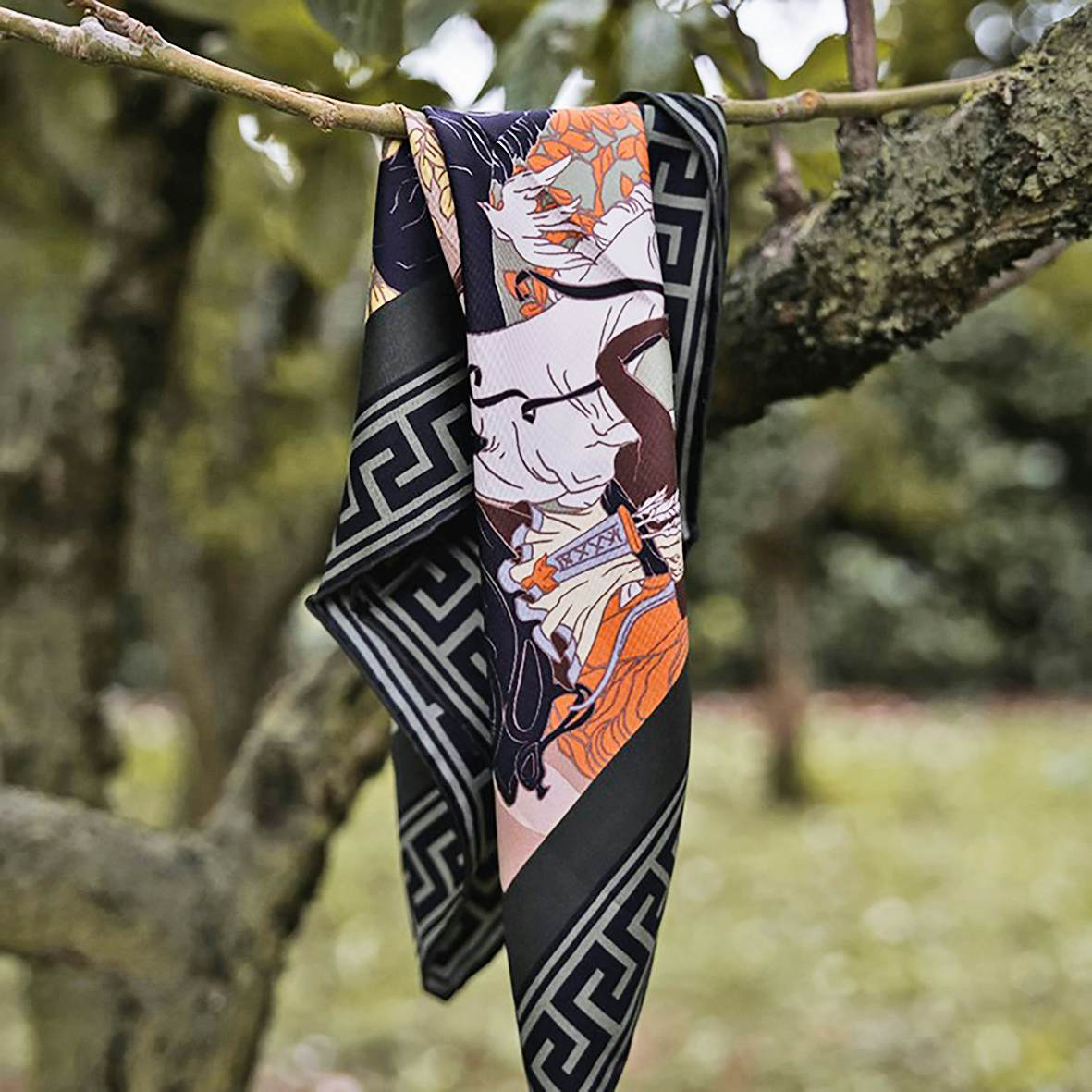
Setting up shop on the eve of the Kaiser’s war, Marinella has become a byword for craftsmanship. Not only do they make ties with three folds, the classic pattern, they make them with five, seven and even nine folds in jacquard and foulard silk.
But as much as Marinella is renowned for ties, their most handsome neckwear is their scarf collection. Wool, cashmere, silk and cashmere, the materials are as endless as the gorgeous motifs. My favourite is a brown field of double silk against which are picked out tiny blue daisies. Marinella makes scarves with matchless chic.
These designs are fitting testament to Piero Tosi, the costumier who decorated Visconti’s cinematic adaptation of The Leopard. Yet remember what happened at the end. The relics of the palace chapel were found by the visiting vicar general to be forgeries and the stuffed animals, emblematic of former glories, were defenestrated as the Falconeri family displaced the Salinas. An allegory for our times?
On the matter of vicars general, my old friend, HH Judge Nigel Seed KC, formerly chancellor of the Diocese of London, is a man of impeccable taste, including a taste for clerical combinations: he orders his socks from Gammarelli, vestimentieri to the Vatican. Gammarelli’s tailoring tradition stretches back to 1798, the year another revolutionary force, the French, took possession of the Eternal City.
Since then, they have been cutting cloth for all manner of canonical costumes including sashes, hats, shoes and cufflinks, of which the Keys & Tiara gold links are first amongst equals.
The Gammarelli approach to art is reminiscent of the ultimate Renaissance Man, Leonardo da Vinci, whose philosophy needs no translation. La semplicità è l’ultima sofisticazione.