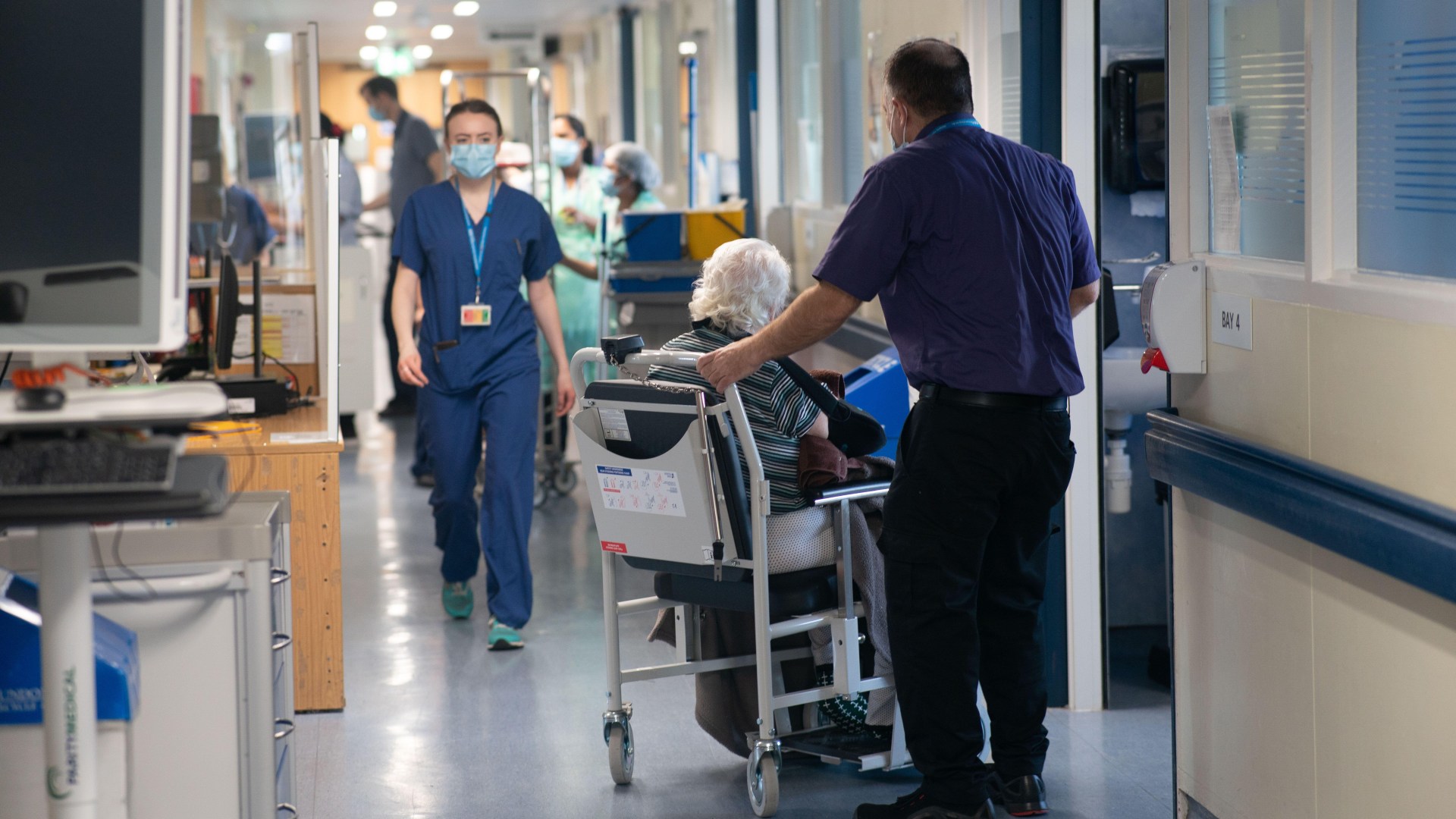
The number of people requiring emergency hospital care for crippling pneumonia has soared 25 per cent in just a year, figures show.
The potentially life-threatening lung infection contributed to 579,475 emergency hospitalisations in England between April 2024 and March 2025.
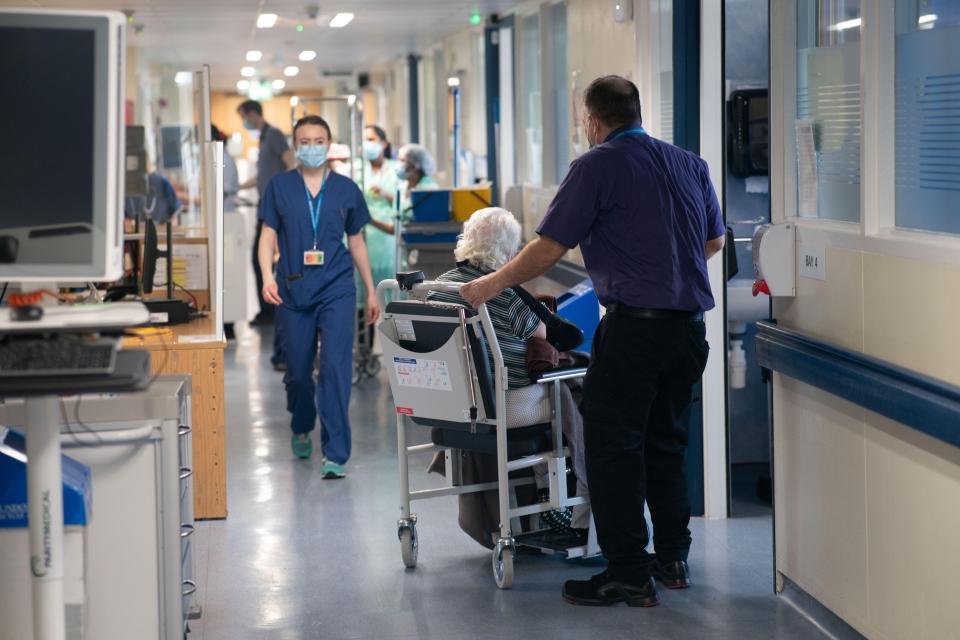
By comparison, the figure stood at 461,995 cases over the same time period in the previous year.
This includes both those rushed to hospital with the condition and people who caught pneumonia while already in hospital and then needed further emergency care.
But cases have likely risen even higher, the charity Asthma + Lung UK, which carried out the analysis of NHS England data, warned.
Between April 2022 to March 2025 more than 97,000 people died of pneumonia after ending up in hospital.

Dr Andy Whittamore, the clinical lead at Asthma + Lung UK, said: “These alarming figures are the result of respiratory care being neglected and deprioritised for too long.
“Catching pneumonia is often seen as inevitable, but we forget that most people who are hospitalised with the condition have pre-existing conditions such as Chronic Obstructive Pulmonary Disease (COPD).
“I’ve seen first-hand with my patients the dramatic effect good basic care has on reducing hospital admissions.
“However, too often we’re not getting the basics right and the result is increasing A&E and hospital pressures, rising healthcare costs and people with lung conditions left to deteriorate without support.”
Pneumonia can be caused by a group of bacteria called streptococcus pneumoniae – of which there are about 90 strains which range from causing mild to severe symptoms.
While anyone can catch it, babies and the elderly are most at risk of being badly affected – it is mostly spread when infected people talk, cough or sneeze.
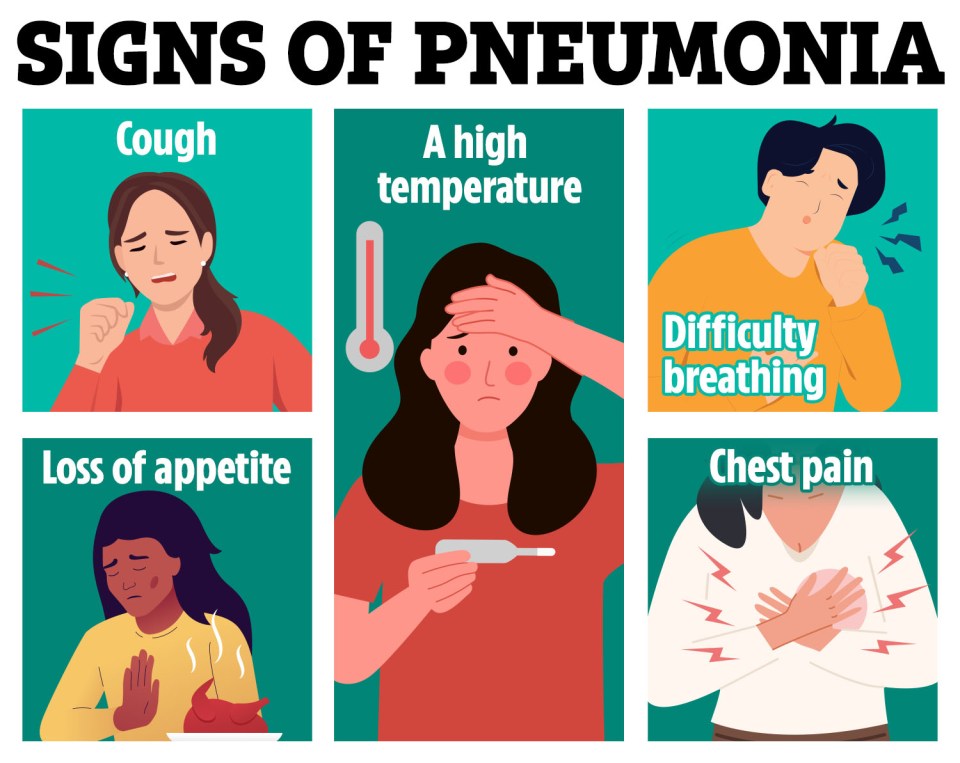
WHAT ARE THE 9 SIGNS OF PNEUMONIA?
Symptoms of pneumonia can start suddenly or gradually over a few days.
They include:
- a cough – you may cough up yellow or green mucus (phlegm)
- shortness of breath
- a high temperature
- chest pain
- an aching body
- feeling very tired
- loss of appetite
- making wheezing noises when you breathe – babies may also make grunting noises
- feeling confused – this is common in older people
A key change from a normal respiratory illness, such as a cold or the flu, from pneumonia is the development of significant shortness of breath and chest pain.
Unlike typical colds or flu, pneumonia often causes difficulty breathing and a sharp or stabbing pain in the chest that worsens with deep breaths or coughing.
If these symptoms appear, it’s important to seek medical advice promptly.
In an emergency, always call 999.
Studies show over 65s are ten times more likely to end up in hospital with pneumonia than those aged 18-50.
About a third of cases come from a virus – such as flu, RSV or Covid – which makes its way into the lungs.
However, the majority of severe cases of pneumonia are caused by bacteria and are likely to severely affect people who are suffering from other diseases, and therefore have a weakened immune system.
Research suggests that people with COPD are four times more likely, and those with asthma three times more likely, to catch pneumonia than the general population.
Once in the body, pneumonia bugs can cause further lung damage and even trigger sepsis – a potentially fatal condition in which the immune system overreacts to an infection and starts to attack healthy tissue.
Asthma + Lung UK has called for a national strategy for respiratory illness to implement better basic care provision for people with lung conditions in community settings, such as GP practices.
Basic care includes regular treatment reviews, action plans created with clinicians to know what to do when your condition gets worse, and vaccinations, including the RSV, flu and pneumococcal vaccine.
Dr Jonathan Fuld, the national clinical director for respiratory disease at NHS England, said: “The NHS is working to improve how we proactively support people with respiratory disease during winter, with a greater emphasis on remote monitoring and strengthened community support to help people manage their conditions and reduce pressure on hospitals.
“We are also investing to support health systems in delivering innovative projects that transform asthma and COPD care in the community, alongside rolling out new medicines for patients.”
A Department of Health and Social Care spokesperson said: “As Asthma + Lung UK has recognised, this government is shifting from sickness to prevention as part of our 10-year health plan.
“We agree more needs to be done to stop conditions escalating into pneumonia.
“The NHS is focusing on protecting those at most risk of pneumonia including through pneumococcal vaccines and the UK National Screening Committee has opened a consultation on evidence relating to screening for COPD.”
Who can get a pneumonia vaccine?
Those who are eligible can get a one-off pneumonia vaccine (pneumococcal vaccine).
The pneumococcal vaccine helps protect against meningitis and sepsis too.
Sarah Sleet, CEO at Asthma + Lung, said: “The best thing you can do if you have a lung condition is make sure your vaccines are up to date, including the flu jab, and if you are eligible the Covid and pneumonia vaccine.
“It could save your life.”
Those eligible for a free pneumonia vaccine on the NHS include:
- Adults aged 65 or older
- Adults and kids with a long-term health condition including COPD, pulmonary fibrosis and severe asthma
- Adults at occupational risk, such as metal workers and welders
- Babies as part of their usual vaccination schedule.
Find out more on the NHS website.